Non-oil sector drives balanced growth in GCC economies: GCC-Stat
Real GDP up 5.2% as GCC shifts toward broader, service-led economic base
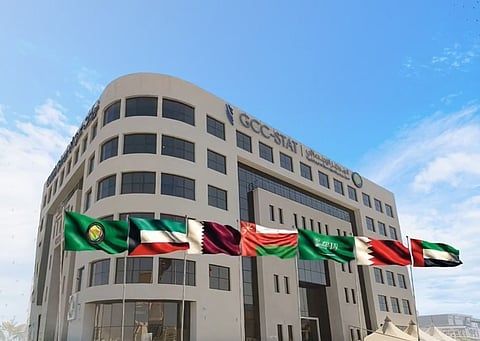
MUSCAT: Data issued by the Statistical Centre for the Cooperation Council for the Arab Countries of the Gulf indicate that the GCC economies recorded positive and balanced performance during the third quarter of 2025, with the non-oil sector leading balanced growth alongside the continued structural shift toward diversifying sources of income.
The data indicate that the nominal GDP of the GCC reached approximately $595.8 billion, compared to $583.0 billion in the corresponding quarter of 2024, achieving an annual growth rate of 2.2%.
As for real GDP, it reached US$474.4 billion, recording real growth of 5.2%, a clear indication that economic growth was not driven solely by price increases, but by an actual expansion in economic activity.
The GCC economy also recorded quarterly growth (compared to the second quarter of 2025) of 1.6 % in real terms, reflecting continued economic momentum.
The data showed an acceleration in the shift toward a non-oil economy, with the non-oil sector accounting for 78% of nominal GDP, compared to 22% for the oil sector.
Non-oil sector
At the real GDP level, the non-oil sector accounted for 70.7%, compared to 29.3% for the oil sector.
This shift reflects a reduced relative dependence on oil and the success of economic diversification policies in the GCC countries.
The data showed that the GCC economy has become more diversified, with the contributions of economic activities (at current prices) distributed as follows: 12.4% for manufacturing, 9.7% for wholesale and retail trade, 8.4% for construction, 7.5% for public administration and defence, 7.0% for financial and insurance activities, 5.8% for real estate activities, 27.3% for other activities, and 22% for oil and gas extraction, highlighting the broadening of the production base and the increasing role of service and industrial sectors in supporting growth.
Non-oil activities also recorded strong growth rates, notably real estate activities at 10.2 percent, accommodation and food services at 8.2 percent, wholesale and retail trade at 8.0 percent, electricity, water and gas at 7.4 percent, and other services at 7.3 percent, reflecting the vitality of the service economy and the growing domestic and tourism demand.


