Global award puts palladium at the centre of future tech
Palladium award honours research in clean energy, medicine, and advanced materials
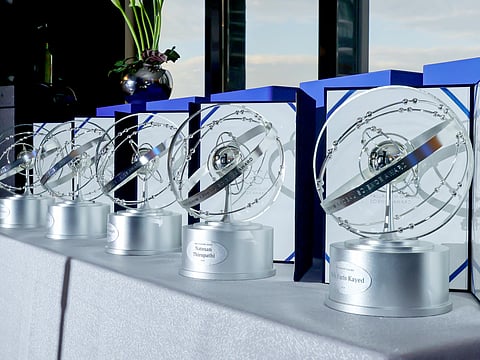
Hong Kong marked a major milestone in scientific and industrial innovation with the inaugural Palladium Global Science Award, the first global award programme dedicated entirely to advancing the role of palladium in high-impact technologies. Five scientists from Canada, Japan, India, the United States, and Saudi Arabia were honoured on November 21 across three categories, sharing a combined prize fund of $350,000.
The award was launched with the support of the China Precious Metals Industry Committee (CPMIC), along with contributions from Shanghai Metals Market, North-West University in South Africa, and MDX Research Center for Element Strategy in Japan. It aims to spotlight ideas that will expand palladium’s role beyond its conventional applications, particularly in catalysis, electronics, energy transition, and environmental protection.
The ceremony drew leading scientists, business leaders, policymakers, and global industry partners, reaffirming the strategic importance of palladium as a metal that can accelerate decarbonisation, drive green manufacturing, and unlock new frontiers in medicine and materials science.
A strategic prize for a strategic metal
For CPMIC, the launch of this award is a response to a rising global imperative: to push precious metals into new future-shaping applications. As Bian Jiang, Executive Chairman of CPMIC, explained: “Palladium is widely known as a powerful catalyst and an essential component in alloys for high-tech industries and clean manufacturing. It is also the largest market metal within the platinum group. Expanding its applications is crucial for ensuring the sustainable development and long-term growth of the industry.”
He emphasised that the initiative serves as a bridge between research institutions and real-world industry needs. “The Palladium Global Science Award was created to address this very need. It provides a unique platform to stimulate the scientific community, identify promising technologies, and support research teams pushing the boundaries of what palladium can achieve.”
Submissions exceeded expectations in diversity and scale, with nearly 100 projects from more than 30 nations. For Jiang, this reinforces a simple truth: “All of these projects show that palladium, when positioned correctly within a technological architecture, becomes a natural amplifier of innovation.”
Importantly, Jiang noted that the award also aims to stabilise palladium’s role within the future industry. “This is precisely why the Palladium Global Science Award is so important: it helps shift the focus from short-term price volatility to the long-term intrinsic value of palladium.”
Power to reshape industries
The competition’s International Expert Council was chaired by Professor Francis Verpoort, who highlighted the rigorous balance the jury applied. “We recognised that true innovation lies not just in groundbreaking ideas, but in their potential to make a tangible impact,” he said. “Ultimately, the strongest applications were those where elegant science met practical engineering. These are the developments that not only advance knowledge but also have the power to reshape industries, enhance sustainability, and expand the role of palladium in addressing global challenges.”
Verpoort also believes what begins this year will shape global R&D momentum. “We believe the Palladium Global Science Award has the potential to play a crucial role in shaping the future of R&D. What begins here in 2025 could very well define how the world harnesses this remarkable metal for decades to come.”
Winners redefining palladium’s future
Best Scientific Developments in New Palladium Applications: First place – Prof. Chao-Jun Li, McGill University, Canada
Prof. Li achieved a breakthrough in activating methane and CO₂ simultaneously — both highly inert molecules — using a palladium-doped semiconductor under light irradiation.
“The biggest scientific challenge that we had to overcome is to simultaneously activate methane and CO2 (two very inert molecules) at a comparable rate,” he explained. “A semiconductor doped with palladium as a catalyst under light irradiation overcomes this challenge.”
A McGill spin-off, CataLum Inc., has already licensed the technology for early scaling. “We foresee that it will be particularly applicable to places with a mixture of CO2 and methane, for example, the waste gas in oil fields/refinery, currently being flared, or remote low content situations (such as biogas).”
The sustainability implications, capturing harmful waste gases and upcycling them into methanol, are profound.
Best Scientific Developments in New Palladium Applications: Second place – Prof. Makoto Fujita, University of Tokyo & Institute for Molecular Science, Japan
Prof. Fujita’s work on palladium-based self-assembly gave rise to the crystalline sponge method, a technology that can transform pharmaceutical research. “Through my research on palladium-based self-assembly, I have constructed a wide range of large cage structures,” he said. “The greatest scientific challenge I have continually faced is how to endow these structures with specific functions. Out of such challenges arose the crystalline sponge method, a molecular structure analysis technique that, I believe, is poised to be a game changer in a wide array of studies involving molecular systems.”
Best Scientific Article: First Place – Prof. Natesan Thirupathi, Delhi University, India
Prof. Thirupathi’s award-winning article explored cyclopalladation processes that can accelerate drug development and promote greener pharmaceuticals. “Our objective was to utilise Pd(II) carboxylates as precursors in the cyclopalladation of picolinoyl tethered N-aryl guanidines to investigate how subtle variation of the substituents in the reactants influences the course of the reaction,” he explained.
Best Scientific Article: Second Place – Prof. Michael Joseph Krische, University of Texas at Austin, USA
Prof. Krische’s focus is on safer, greener routes to vital medical compounds. “It’s our hope that the direct formate-mediated cross-couplings of aryl halides will provide safer and cheaper routes to human medicine and that the palladium global science award will raise awareness of this important advance,” he said.
Best Applied Concept: First Place – Associate Professor Safa Faris Kayed, Prince Sattam Bin Abdulaziz University, Saudi Arabia
Her project, PalladClear, tackles a critical environmental challenge: industrial wastewater. “The specific industrial problem we are addressing is the lack of effective, scalable, and sustainable technologies for degrading hazardous dyes and pharmaceutical residues discharged by the textile and pharmaceutical industries,” she explained. “Conventional treatments often fail to remove these persistent pollutants completely, leading to serious environmental and health concerns. The next crucial step is to move from laboratory proof-of-concept to pilot-scale deployment.”
A platform for future breakthroughs
The inaugural award does not end with recognition. CPMIC stresses that industrial partnerships and commercialisation efforts will continue, ensuring novel ideas do not remain confined to labs. “We are building an ecosystem where scientists, entrepreneurs, and industry experts can exchange knowledge, collaborate, and develop new technologies together,” Jiang said.
With the next edition launching in spring 2026, the momentum is clear: Palladium’s role in sustainability and advanced technology is rapidly expanding. From clean energy solutions to cutting-edge medical innovation, palladium is stepping into the spotlight, not as a commodity, but as a catalyst for the industries of the future.
– In association with China Precious Metals Industry Committee

