Railway in Myanmar’s Yangon a slow-paced window into past
Long overdue for upgrades, the 46km line slowly trundles through 38 stations around the city
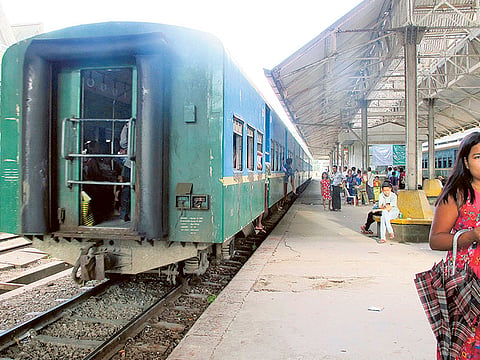
Yangon, Myanmar: Myanmar’s commercial capital is fast shedding its sleepy backwater trappings as the city builds new roads, hotels and office buildings, but the Circle Line railway remains a world apart from the traffic jams and chaos of Yangon’s streets.
Long overdue for upgrades, the 46-kilometre line slowly trundles through 38 stations around the city, past tin shacks and fields of watercress, palm trees and bananas, gated communities and factory zones.
The railway opened in 1877 when Myanmar, then known as Burma, was a colony of Britain. British forces destroyed Yangon’s ornate central station in 1943 during World War II, as they fled the city ahead of Japanese troops.
The station appears little changed since it reopened in 1954. At 100 kyats to 200 kyats (28-57 fils or 8 US cents to 16 US cents) a ride, depending on distance, it’s the cheapest public transport option for travelling around the city of 7.4 million, carrying more than 100,000 people a day.
Commuters traipse across its tracks, squatters bed down on the train platforms. Hawkers board to sell fish, tangerines, SIM cards, and then climb back off to wait for more customers.
A group of kids, not quite teenagers, climbs aboard, hauling homemade bird houses left over from a day of peddling downtown. Back and frothing through the carriage, they take turns gazing out the door before eventually alighting, chattering and laughing, at a stop far out in the suburbs.
Japan’s aid agency has drawn up a master plan for rebuilding Yangon station and modernising the trains. Yangon invited tenders for the project, but progress has lagged.
Only travelling at most a bit over 20 kilometres an hour, the train is clean but no-frills, its open windows the only breeze on a stuffy evening. The view: an intimate glimpse into kitchens, open-air sports bars packed with men watching soccer on big screen colour TVs, fathers holding toddlers up to watch the train pass.


