Leasehold or freehold? Philippine law unlocks 99-year land leases for foreign investors: Why RA 12252 matters
Long-term land leases are now legal, what the new Philippine law really changes
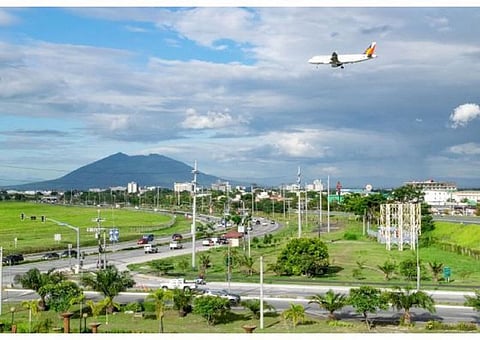
Manila: The Philippines has unlocked 99-year land leases to foreign investors with Republic Act No. 12252, signed in September.
It's deemed a "game-changer".
For one, it creates certainty for capital-intensive projects spanning decades, thus giving investors — and jobs — more predictability.


It also allows the country to groove with the ASEAN squad, aligning with Singapore and Malaysia, where 99-year leases are standard.
In recent years, the Philippines has lagged in foreign direct investment (FDI) inflows, especially when compared to Vietnam and Indonesia.
Manila's key goals: spur job creation, economic growth, and development in priority sectors.
Here’s an explainer on Republic Act No. 12252, entitled “An Act Liberalizing the Lease of Private Lands by Foreign Investors, Establishing the Stability of LongTerm Lease Contracts, amending for the purpose Republic Act No. 7652, otherwise known as the ‘Investors’ Lease Act’”.
What is Republic Act No. 12252?
RA 12252 is a new Philippine law that liberalises private land leasing for foreign investors. It allows longer lease terms and strengthens safeguards to ensure land is used only for legitimate, productive investments.
When does RA 12252 take effect?
RA 12252 was signed into law on 3 September 2025 and takes effect 15 days after its complete publication in the Official Gazette or a newspaper of general circulation.
What is the most significant change under the new law?
Longer lease terms: Foreign investors may now lease private land for up to 99 years (aggregate).
This replaces the previous rule under RA 7652, which allowed:
50 years initial lease
Renewable once for 25 years (75 years total)
Who is allowed to lease land under RA 12252?
Only qualified foreign investors with approved and registered investments, such as those covered by:
RA 7042 (Foreign Investments Act)
RA 11534 (CREATE Act) and RA 12066 (CREATE MORE)
Or as determined by the relevant Investment Promotion Agency (IPA)
Leasing is tied to approved investments, and is therefore not "open-ended".
Are there restrictions on how the land can be used?
Yes.
The land must:
Be used only for the approved investment purpose
Be proportionate to the project’s actual requirements
The lease must also be registered with the Registry of Deeds and annotated on the land title to be binding on third parties.
But why does RA 12252 matter?
For investors, RA 12252 offers:
Greater predictability for long-term projects
Stronger legal security for large-scale investments such as:
Industrial parks
Tourism estates
Agro-industrial ventures
Sustainability and ecological projects
At the same time, it preserves Philippine constitutional limits (1987 Charter) on land ownership and strengthens State oversight.
Can foreign lessees sublease the property?
Yes.
Under the following conditions:
The landowner (lessor) consents, and
The sublease complies with registration and annotation requirements
Are there deadlines for starting the project?
Yes.
Investors must commence the project within three (3) years from lease execution.
Agencies such as the Board of Investments (BOI) or the Fiscal Incentives Review Board (FIRB) may:
Require explanations for delays
Set revised timelines
Recommend revocation if non-compliance continues.
Is it a freehold law or a leasehold law?
Republic Act 12252 is a leasehold law, not freehold.
What happens if the law is violated?
RA 12252 imposes strong penalties:
Lease contracts that violate the law (e.g., exceeding 99 years or illegal land use) are void from the beginning
Responsible officers may face:
₱1 million–₱10 million fines, and/or
6 months to 6 years imprisonment
How does the law protect contract stability?
Once a lease is properly registered, it:
Cannot be altered or canceled arbitrarily
May only be modified or terminated through formal legal proceedings
This provides stronger legal certainty for both investors and landowners.
How does RA 12252 affect existing land lease contracts?
Existing leases under RA 7652 remain valid under their original terms\
The law does not automatically extend old leases to 99 years
Any renewal or extension must comply with RA 12252
Existing registered leases remain enforceable unless parties agree to a new contract
What safeguards prevent abuse of the law?
RA 12252 includes several protections:
Investment-based leasing: lease rights exist only alongside registered investments\
Mandatory registration and title annotation to prevent hidden or fraudulent deals
Ongoing monitoring by BOI, FIRB, and IPAs
Strict penalties for misuse
Purpose-driven clauses allowing termination if projects stall or deviate from approved use.
Who oversees compliance and resolves disputes?
There is no single “land lease regulator,” but oversight is shared:
Investment Promotion Agencies (IPAs) and the BOI monitor project compliance
FIRB reviews incentives, advises on lease duration, and may recommend limits for national security reasons
Courts provide final legal protection—registered leases may only be challenged through due process
Agencies may initiate termination or revocation proceedings for serious violations, subject to due process.
What are the targeted sectors?
Foreign investors can now lease land for industrial estates, factories, agro-industrial projects, tourism (with $5 million minimum for some), agriculture, eco-tourism, and ecological conservation.
Leases require Department of Trade and Industry-Board of Investments (DTI-BOI) approval, must match project needs (up to 1,000 hectares = 2,471 acres for agribusiness), and include safeguards like termination for non-use or withdrawal.
Why is it a game-changer?
The extended terms provide tenure security.
This reduces mid-project risks, potentially unleashing large-scale investments in manufacturing, renewable energy, and smart farming, as seen in recent Japanese and South Korean deals.
Paired with tax pers from the CREATE MORE Act, cheaper power from renewables, easier permits, it could unleash the ultimate investor party, positioning the Philippines as Southeast Asia's hottest investor and job creation playground.
Potentially, this could reverse 2024's $8.9 billion FDI shortfall and a relatively poor $5.5 billion FDI net inflow (Jan-Sept 2025), vs $28.5 billion snagged by Vietnam over the same period.
Challenges such as corruption, especially in infrastructure, persist.
Results of the drive to cut infra scams, pulled off by lawmakers, public works officials and contractors, may not be felt immediately.
But streamlined approvals, especially under the new Right-of-Way Law (Republic Act 12289), also signal reforms to unlock the country's huge potential.
What are Investment Promotion Agencies (IPAs)?
The implementing rules and regulations (IRR) issued by the Philippine Board of Investments, the Department of Trade and Industry and the Lanrd Registration Authority (LRA) defines an Investment Promotion Agency (IPA) as:
“Any government entity created by law, executive order, decree, or other issuance, in charge of promoting investments, granting and administering tax and non-tax incentives, and overseeing the operations of the different economic zones and freeports in accordance with their respective special laws.”
These include the following:
BOI
Bangsamoro Board of Investments
Bangsamoro Economic Zone Authority
Philippine Economic Zone Authority
Bases Conversion and Development Authority
Subic Bay Metropolitan Authority
Clark Development Corporation
John Hay Management Corporation
Poro Point Management Corporation
Cagayan Economic Zone Authority
Zamboanga City Special Economic Zone Authority,
PHIVIDEC Industrial Authority,
Aurora Pacific Economic Zone and Freeport Authority,
Authority of the Freeport Area of Bataan,
Tourism Infrastructure and Enterprise Zone Authority (TIEZA)
Bulacan Special Economic Zone and Freeport Authority
All other similar existing authority or agency that may be created by law.


