Prosecutors build case against Sara Duterte in Senate impeachment trial: 16 votes needed for a conviction?
Senate wraps first week as prosecutors press case over alleged public threats
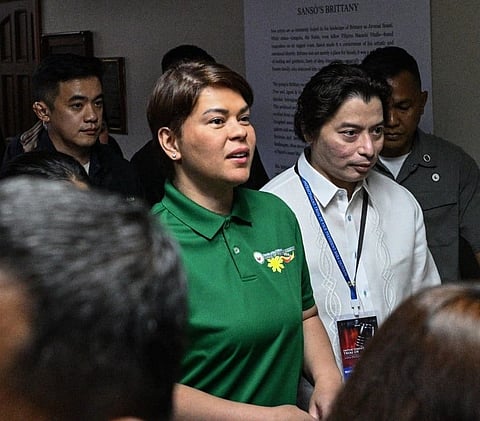
The Philippine Senate impeachment court wrapped up its first week of hearings with prosecutors continuing to build their case under Article IV, which centres on Vice President Sara Duterte's alleged threats against President Ferdinand Marcos Jr., First Lady Liza Araneta-Marcos and other officials.
Get updated faster and for FREE: Download the Gulf News app now - simply click here
Proceedings remained focused on documentary and video evidence rather than live witness testimony, while both sides continued to spar over the interpretation and legal significance of the evidence.
Key highlights
Week 1 concludes: Friday marked the fifth day of trial and the close of the impeachment court's opening week. Senators are expected to continue hearing evidence when proceedings resume next week.
Focus remains on Article IV: Prosecutors continued presenting evidence related to Duterte's alleged public threats against President Marcos, First Lady Liza Araneta-Marcos and former House Speaker Martin Romualdez, arguing the statements constituted a culpable violation of the Constitution and betrayal of public trust.
Video evidence remains central: The prosecution continued relying on Duterte's recorded public remarks, maintaining they demonstrated intent and were made by a sitting vice president, making them particularly serious in the impeachment context.
Defence maintains political persecution claim: Duterte's legal team reiterated that the impeachment case is politically motivated and aimed at preventing her from seeking the presidency in 2028. Malacañang rejected that allegation Friday, insisting the proceedings are being driven by evidence and the rule of law rather than electoral politics.
No final rulings yet: The impeachment court has not ruled on the merits of the charges. Proceedings remain in the prosecution's presentation of evidence, with witnesses and additional documentary evidence expected in the coming weeks.
Trial exapected to last months
The impeachment trial, which opened on July 6, is expected to last several months.
Duterte faces allegations that include misuse of confidential funds, unexplained wealth, corruption and public threats against top government officials.
She denies all wrongdoing and has portrayed the proceedings as an attempt to derail her widely anticipated 2028 presidential bid.
16 votes needed to convict?
Conviction requires the votes of at least 16 of the Senate's 24 members and would remove her from office while permanently disqualifying her from holding public office.
Given absences in the Senate (Senators Jinggoy Estrada and Rodante Marcoleta as detained over plunder, while Senator Bato dela Rosa is in hiding), the number may be contested in the Supreme Court.
Why it matters
The case has become the defining political battle of 2026, deepening the rift between the Marcos and Duterte camps and carrying major implications for the country's political landscape ahead of the 2028 presidential election.
Beyond determining Duterte's political future, the trial is widely viewed as a test of the Senate's independence and the Philippines' constitutional accountability mechanisms.


