World’s most prominent hunger strikers
A look at how fasting has evolved as a form of non-violent protest around the world
Thubten Ngodup
Thubten Ngodup was born in 1938 in Gyatso in the Shigatse region of Tibet. He became a monk and was admitted to the Tashilhunpo Monastery in Shigatse. In 1959, he fled Tibet through Sikkim in north-east India. In October 1963, he enrolled in the Tibetan wing of the Indian army. He retired from the army in 1986. He came to Dharamsala monastery in Himachal Pradesh around 1988 and worked as a cowherd.
In 1998, he participated in peace marches and hunger strikes demanding independence of Tibet. During the unto-death hunger-strike, he looked after the six hunger strikers, fanning them, shading them from the sun at his own expense. His name was listed in the second batch of hunger-strikers if the members of the first batch were to die. But Ngodup decided to immolate himself in the morning of April 27 and died two days later at a hospital when the police swooped on the remaining hunger strikes to rush them to hospital. He left Rs500 (Dh27.5) to be donated for the long-life prayer offering for His Holiness the Dalai Lama.
Cesar Chavez
Born on March 31, 1927, Cesar Chavez was an American farm worker, labour leader and civil rights activist, who founded the National Farm Workers Association. His public relations approach to unionism and aggressive but non-violent fasting tactics made the farm workers’ struggle a moral cause with nationwide support. Chavez undertook a number of “spiritual fasts”, regarding the act as “a personal spiritual transformation”.
In 1965, Filipino American farm labourers in Delano, California, initiated a strike for better wages, and Chavez supported them and soon led grape pickers on a march to the state capitol. The strike would run for five years. In 1968, he fasted for 25 days, promoting the principle of non-violence. His hunger strike helped turn the tide of the legislative battle in favour of the workers. In 1970, Chavez began a fast of “thanksgiving and hope” to prepare for pre-arranged civil disobedience by farm workers. Also in 1972, he fasted in response to Arizona’s passage of legislation that prohibited boycotts and strikes by farm workers during the harvest seasons. In 1989, Chavez participated in another hunger strike, this one lasting 36 days, which he called his “Fast for Life” and used to protest the use of dangerous pesticides on farms. His actions diffused some of the tension, draw the workers closer together, and drew greater attention to their cause. His fasting was influenced by the Catholic tradition of penance and by Gandhi’s fasts and emphasis of non-violence.
Mohammad Allan
Israel has held 31-year-old lawyer Mohammad Allan on administrative detention since November 2014, with neither charge nor trial, on suspicion of involvement in terrorism and of membership in the Islamic Jihad group — a claim his lawyer and his family deny. In protest, Allan began a hunger strike on June 16 this year, only drinking water. His strike was aimed at his administrative detention, which allows Israel to hold someone for security reasons for renewable six-month periods. Allan wants to be charged, to be released, or to die.
It was one of the longest hunger strikes conducted by a Palestinian prisoner in years, and the most severe — Allan lost consciousness, and his doctors said that he may have suffered brain damage. He was released last week when the Israeli Supreme Court said his health had so deteriorated during his fast that he no longer posed a threat. Allan was first jailed by Israel in 2006 for trying to recruit a suicide bomber to carry out an attack in Israel, and was held for three years. He was briefly detained a second time by Israel in 2011, without charges, and soon after he was released he was detained by Palestinian intelligence officials. While in prison in 2012, Allan found common cause with a fellow prisoner, Khader Adnan, an Islamic Jihad activist, who conducted a 66-day hunger strike with him against their detention.
Benigno “Ninoy” Aquino Jr
On April 4, 1975, Filipino freedom fighter Benigno “Ninoy” Aquino, Jr., declared a “fast to the death” to protest the injustices of his military trial under his main tormentor, dictator Ferdinand Marcos. Ten days into his hunger strike, he instructed his lawyers to withdraw all motions he had submitted to the Supreme Court. As weeks went by, he subsisted solely on salt tablets, sodium bicarbonate, amino acids and two glasses of water a day. Marcos jailed Aquino based on “evidence” that Aquino had orchestrated the bombing of a political rally in Plaza Miranda on August 21, 1971, a year before Marcos declared Martial Law and dissolved Congress. Aquino was also seen behind the growing communist insurgency. On May 13, 1975, the 40th day of fast, his family and several friends begged him to end it — pointing out that even Christ fasted for 40 days. He agreed, thinking he already made his point. Six months later, on November 25, 1977, a government-controlled tribunal headed by a military general found Ninoy guilty of all charges. He was sentenced to death by firing squad. Marcos, who was from Ninoy’s fraternity from the University of the Philippines law school, allowed Ninoy to go into exile in the US. On August 21, 1983, Ninoy was assassinated soon after he landed in Manila from exile. His death propelled his widow Cory to the presidency in 1986. Their only son, President Benigno Simeon “Noynoy” Aquino III, is today widely credited for the Philippines’ economic turnaround and a sustained drive against corruption.
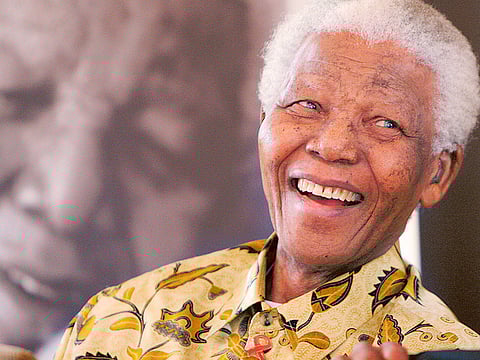
Nelson Mandela
Nelson Rolihlahla Mandela was born on July 18, 1918. He was a South African anti-apartheid revolutionary, politician, and philanthropist who served as President of South Africa from 1994 to 1999. He was the country’s first black chief executive, and the first elected in a fully representative democratic election.
Through protest fasting, Mandela helped bring an end to apartheid. A member of the African National Congress party beginning in the 1940s, he was a leader of both peaceful protests and armed resistance against the White minority’s oppressive regime in a racially divided South Africa. His actions landed him in prison for nearly three decades and made him the face of the anti-apartheid movement both within his country and internationally. In 1964, Mandela and his co-accused, described by the government as “violent communist saboteurs”, were transferred from Pretoria to the prison on Robben Island. These political prisoners, led by Mandela, used hunger strike as an effective tool to gain many concessions from the South African government. As a result of these hunger strikes, from 1967, prison conditions improved; black prisoners were given trousers rather than shorts, games were permitted, and the standard of their food was raised.
Alice Paul
An American suffragette, Alice Paul, born on January 11, 1885, fought to get women the right to vote with passion and tenacity. Hunger strikes were a powerful tool for suffragettes, and Paul went on one while imprisoned in 1917 at Virginia’s Occoquan Workhouse to protest the poor prison conditions.
She had been arrested for “obstructing traffic” with a protest. Her hunger strike got her a ticket to the prison psychiatric ward, where she was force-fed raw eggs, but her protest served a larger purpose by helping fan the flames of public opinion. Paul’s hunger strike, combined with the continuing demonstrations and attendant press coverage, kept pressure on the Woodrow Wilson administration. In January 1918, President Wilson announced that women’s suffrage was urgently needed as a “war measure,” and strongly urged Congress to pass the legislation. The House of Representatives passed a Constitutional amendment for woman suffrage that month. In response, Paul’s National Woman’s Party (NWP) stopped picketing, but when the Senate failed to pass the amendment in September, they returned, staging hunger strikes and more confrontational demonstrations through the winter of 1918-19. NWP women now climbed statues, chained themselves to fences, burned ‘watch fires’ in front of the White House while Wilson went to Versailles. In June 1919, the Senate passed the suffrage amendment.
Medha Patkar
Born on December 1, 1954, Medha Patkar is an Indian social activist and social reformer-turned-politician. She is the founder member of Narmada Bachao Andolan and was National Convener of National Alliance of People’s Movements (NAPM), an alliance of progressive people’s organisations. She was a representative to the World Commission on Dams, to research the environmental, social and economic impacts of the development of large dams globally.
Patkar initiated and is still working with Narmada Bachao Andolan with a mass base in tribal and peasant communities in Maharashtra, Madhya Pradesh and Gujarat, and support groups with more than 30 centres all over India. Through a series of fasts, she has protested the proposed construction of Narmada river dam project. As Patkar remained immersed in the Narmada struggle, she chose to quit her PhD studies and focus entirely on the Narmada activity. Thereafter in 1985, she organised a 36-day solidarity march and token hunger strike among the neighboring states of the Narmada valley from Madhya Pradesh to the Sardar Sarovar dam site. In April, 2013, a demolition drive took place in Golibar area of Mumbai, Maharashtra evicting 43 houses and displacing more than 200 people. Patkar, with more than 500 slum dwellers, sat on an indefinite fast to protest against any further demolition. She alleged corruption and “atrocities” by builders in the city’s slum rehabilitation scheme, and called for the halting of six projects by the Slum Rehabilitation Authority.
Joshua Wong
Born on October 13, 1996, Joshua Wong is a Hong Kong-based student activist who is the convenor and founder of the Hong Kong student activist group Scholarism. Wong is most notable for leading fellow Hong Kong students in a massive protest in 2014 that demanded genuine universal suffrage.
On December 2, 2014, Wong and two other students began a hunger strike for an indefinite period to demand renewed talks with the Hong Kong government. However, four days into the strike, he decided to end it due to strong urging from the doctor. Later Wong was arrested for his involvement in civil-disobedience offences during the Umbrella Revolution. He was denied entry into Malaysia on May 26, 2015, as he was considered ‘a threat to Malaysia’s ties with China’, largely due to the ‘anti-China’ stance shown by his role in organising demonstrations in the 2014 Hong Kong protests. On August 19, 2015, Wong was charged formally by Hong Kong police with inciting other people to join an unlawful assembly. Due to his influence in Hong Kong’s pro-democracy movement, he was named as one of TIME magazine’s ‘Most Influential Teens of 2014,’ nominated for TIME’s ‘Person of the Year 2014’ and listed by Fortune Magazine as one of the ‘World’s Greatest Leaders in 2015.’
Irom Sharmila
Known as the ‘Iron Lady of Manipur’ or ‘Mengoubi’ (the fair one), Irom Sharmila, born on March 14, 1972, is a civil rights activist, political activist, and poet from Manipur. On November 2, 2000, she began a hunger strike which is still ongoing. Her primary demand to the Indian government has been the repeal of the Armed Forces (Special Powers) Act (AFSPA). Having refused food and water ever since, she is the world’s longest hunger striker. On International Women’s Day, 2014 she was voted the top woman icon of India by MSN Poll.
In 2014, two political parties asked her to stand in the national election, but she declined. She was then denied the right to vote as a person confined in jail cannot vote according to law. On August 19, 2014, a court ordered her release from custody, subject to there being no other grounds for detention. She was re-arrested on August 22, 2014 on similar charges to those for which she was acquitted, and remanded in judicial custody for 15 days. Amnesty International has declared her a “prisoner of conscience.”
Ansar Burney
Born on August 14, 1956, Ansar Burney is a leading Pakistani human rights and civil rights activist. He is a graduate of Masters and Law from Karachi University and honorary recipient of a PhD. in Philosophy. He is widely accredited as being the first man to introduce the concept of human rights in Pakistan nearly 30 years ago.
On August 22, 2011, Burney announced that following the Eid Al Fitr celebrations at the end of Ramadan, he would initiate an anti-corruption movement in Pakistan based on the popular movement of Anna Hazare in India. In 1991, due to his extraordinary work and achievements in the field of human rights at a young age, particularly his efforts for prison reforms and release of innocent prisoners, he was awarded the ‘Outstanding Young Person of the World’ Award by the world famous human rights organisation Junior Chamber International (JCI). Due to his outstanding achievements in the field of human and civil rights, Burney was the first man to receive the Pakistani National Civil Award — Sitara-i-Imtiaz — on March 23, 2002. This was the first occasion in the history of Pakistan that such an award was awarded in the field of human rights.
Aung San Suu Kyi
Born on June 19, 1945, Aung San Suu Kyi is a Myanmarese opposition politician and chairperson of the National League for Democracy (NLD) in Myanmar. Winner of the 1991 Nobel Prize for Peace, Suu Kyi had returned to Myanmar in 1988, after years of living and studying abroad, only to find widespread slaughter of protesters rallying against the brutal rule of dictator U Ne Win. She spoke out against him and initiated a non-violent movement and several hunger strikes towards achieving democracy and human rights.
In 1989, the government placed Suu Kyi under house arrest, and she spent 15 of the next 21 years in custody. After several hunger strikes and peaceful protests, she was finally released from house arrest in November 2010. Interestingly, in the 1990 general election, the NLD had won 59 per cent of the national votes and 81 per cent of the seats in Parliament. Suu Kyi, however, had already been detained under house arrest before the elections. She remained under house arrest in Myanmar for almost 15 of the 21 years from July 20, 1989 until her release on November 13, 2010, thus becoming one of the world’s most prominent political prisoners.
Amarajeevi Potti Sriramulu
Born on March 16, 1901, Amarajeevi Potti Sriramulu was an Indian revolutionary who died after undertaking a hunger strike for 58 days in 1952 after Indian independence in an attempt to achieve the formation of a separate state, to be known as Andhra State. In an effort to protect the interests of the Telugu people in Madras Presidency, and to preserve the culture of Andhra people, he attempted to force the government to listen to public demands for the separation of the Andhra region from the Madras Presidency, based on linguistic lines and with Madras as its capital. He went on a lengthy fast, stopping when Prime Minister Jawaharlal Nehru promised to support creation of Andhra State. Despite this concession, little progress was made on the issue. With the Andhra State still not granted, Sriramulu resumed his hunger strike on October 19, 1952. He died during the night of December 15, 1952.
But his sacrifice became instrumental in the linguistic re-organisation of states. He is revered as Amarajeevi (immortal being) in Coastal Andhra for his sacrifice. As a devout follower of Mahatma Gandhi, he worked for much of his life to uphold principles such as truth, non-violence and patriotism. A devout follower of Gandhi, he worked for much of his life for humanitarian causes, including support for the “Dalit community. Commenting on Sriramulu’s dedication and fasting ability, Gandhi once said, “if only I have eleven more followers like Sriramulu I will win freedom from British rule in a year.”
Anna Hazare
Magsaysay Award winner activist Anna Hazare, born on June 15, 1937, is an Indian social activist who led movements to promote rural development, increase government transparency, and investigate and punish corruption in public life. In addition to organising and encouraging grassroots movements, Hazare frequently conducted hunger strikes to further his causes — a tactic reminiscent of the work of Mahatma Gandhi.
Hazare launched an indefinite hunger strike on April 5, 2011 protesting the Prime Minister’s refusal to include civil society members in the formulation of the Lokpal Bill. The fast ended on April 9, 2011, the day after all of Hazare’s demands were agreed by the government of India. Hazare wanted an empowered committee to draft a bill that had more stringent penal provisions and gave more independence to the Lokpal and Lokayuktas (ombudsmen in the states). However, later dissatisfied with the government, Hazare threatened on July 28, 2011 to proceed with his fast-unto-death on the Jan Lokpal Bill issue. On August 16, 2011, Hazare was arrested, four hours before the planned indefinite hunger strike. On December 27, 2011, Hazare began a three-day hunger strike in Mumbai to demand a stronger Lokpal bill than was in debate. He ended the fast on December 28, after his doctors said that his kidneys might fail if he continued.
Bobby Sands
Robert Gerard Sands was born on March 9, 1954. In October, 1972, he was arrested for the first time for possession of four handguns and spent the next three years in Long Kesh prison where he was regarded as a political prisoner. During this time, Sands used his imprisonment to learn Irish and read widely.
A volunteer with the Irish Republican Army (IRA), Sands became famous for leading a hunger strike in the Maze prison in 1981. In March of that year, Sands began the strike with a simple refusal of food. He also decided that other prisoners should perform hunger strikes at staggered intervals to draw out the strike and create maximum impact. The strike revolved around a series of demands, notably the prisoners’ desire to wear their own clothes and be free to associate with other prisoners and receive visitors and post. One of the things that made Sands such a famous hunger striker was the fact that he actually ran for and won position as a Member of Parliament in the United Kingdom, an event that prompted the British government to pass the Representation of the People Act, which bars prisoners serving a term longer than one year from being nominated in elections. Sands’ strike lasted 66 days before he died; he was 27 years’ old. His death sparked riots, and more than 100,000 lined his funeral route.
Mahatma Gandhi
Born on October 2, 1869, Mohandas Karamchand Gandhi, also known as Mahatma Gandhi, was the prominent leader of the Indian independence movement in British-ruled India. Employing non-violent civil disobedience, Gandhi led India to independence while inspiring movements for civil rights and freedom across the world.
Gandhi was imprisoned in 1922, 1930, 1933 and 1942. He went on several hunger strikes in his life. In the fall of 1924, he underwent a three-week fast in an attempt to reconcile warring factions of Hindus and Muslims that had grown apart since he had been in prison. In 1932, when the Indian government established separate electorates for “untouchables,” Gandhi underwent a six-day hunger strike that led to better and more equal arrangements. He also performed a three-week hunger strike for purification in spring of 1933. He used fasting liberally as a way to make a political statement and call attention to his crusade for political equity. Though Gandhi sat on many hunger strikes, one of his important fasts was in 1943. He was on fast for 21 days as a “penance for deadlock” between the Viceroy and Indian leaders. This was a turning point in the freedom struggle.

