Stress on care for those beyond cure
Charity strives to change attitude to palliative programmes for terminally ill
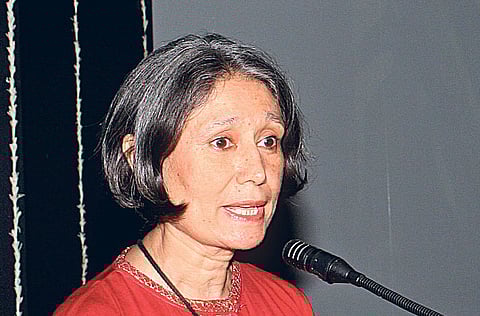
New Delhi: Harmala Gupta believed in fighting the battle of the mind. And survived. Learning from her personal experience, she has been providing both physical and emotional support to cancer-stricken people for nearly two decades.
Founder of CanSupport, a non-profit organisation pioneering home-based palliative care programme in India, Harmala believes that the cure for the disease is as much about changing attitudes as it is about administering drugs.
She is offering free home care and day-care in Delhi to people in advanced stages of cancer. Her aim is to instill in survivors and their relatives the need to fight back, learn more about their illness and maintain the will to live.
The President of CanSupport speaks to Gulf News, in an exclusive interview.
GULF NEWS: A survey shows that the risk of cancer in India is one in eight for females and one in nine for males.
HARMALA GUPTA: This is likely to be true for urban areas. The tragedy in India is that the majority of patients (almost 80 per cent) reach hospitals with advanced and incurable cancers. Unfortunately, despite this, they continue to be treated with curative intent with the consequence that not only is the patient's quality of life compromised with toxic treatments but scarce resources are spent on futile treatments. When it is clear that they are terminal, though doctors in government hospitals ask patients not to come back, those in private hospitals continue to prescribe expensive treatments until the patients run out of finances. Only then are they told nothing more can be done and are left to their fate.
What role does CanSupport play?
The purpose behind setting up CanSupport is to bring palliative care home. It helps patients with advanced and terminal cancer to avoid the frantic search for a last-minute miracle that inevitably leads many of them into penury. In India, few avail themselves of medical insurance. So, by the time the treatment is concluded, most families are virtually drained of their finances.
Palliative care is a cost-effective option. It's a philosophy of concern that places the patient and his/her family centre stage and seeks to provide relief from pain and other physical symptoms as well as emotional and social support. Although it neither prolongs life, nor hastens death, it helps people to cope with a difficult period in their lives. It includes medication, nursing and counselling.
Which sections of the society does your organisation cater to?
The majority of our patients belong to the economically disadvantaged sections, which is why our services are free of charge. Those referred to us are usually beyond any hope for a cure and discharged from a hospital. We send our home care teams to visit them regularly and offer continuing medical and nursing care and to counsel them. Currently, we have 11 home care teams operating out of seven field centres. While we initially began with a volunteer nurse and counsellor, now we have professionally trained doctors, nurses and counsellors looking after almost 600 patients.
Do hospitals refer cases to CanSupport?
Yes. Besides the All India Institute of Medical Sciences, patients are referred to CanSupport by other hospitals around the city. We also get referrals through our telephone helpline and the families of our previous beneficiaries. Recently, we employed community networking officers who visit low-income housing clusters, including slums and make residents aware of our services.
Our teams routinely visit each patient living in New Delhi and the National Capital Region at least once a week (Monday to Friday). Should patients require additional care or moral support the team visits more frequently.
Are people able to understand the genuine concern you have for cancer patients and their families?
Over the years there has been an immense change. Many consider CanSupport's entry into their life as a high point. But all this did not happen overnight. Earlier, when people were not aware of what we were doing they would get very annoyed when we approached them. The general feeling was that we had some kind of a hidden motive. But with patience and perseverance each member of our team has ably guided and assisted people to the best of their abilities.
The initial visits to the patient and his/her family help the home care teams identify their needs and also slowly build a rapport. It plays the role of a guiding force and works alongside the family. While the doctor prescribes medicines and looks after the physical side of comfort, the nurse guides the family on issues related to diet and wound dressing. The counsellor helps the patient and the family deal with the emotional issues that accompany a terminal diagnosis — shock, denial, anger and grief.
In all these years has awareness of the disease among the people increased?
It has, but there is still much more that needs to be done. There are times when a patient just needs someone to talk to and share his/her anxiety, but few find a shoulder to lean on. Very often the patient's family members are anxious to know whether cancer is contagious or hereditary.
Despite your efforts, in what situations you feel frustrated?
In cases where the earning member of a family is diagnosed with cancer, the situation gets complicated, as he/she is considered unemployable. It's a painful state. In India, there is no national or state policy that addresses employment problems faced by cancer survivors. Also, there is no protection for those who are unable to perform their earlier tasks because of the effects of the toxic treatments they have received. People working in shops and private establishments are particularly vulnerable during and after their treatments. This is not because they will no longer be able to perform their duties as efficiently as before, but because there is a stigma attached to cancer. As a result, it's difficult for a survivor of the disease to live with dignity.
Do other countries have better provision for the patients?
In the US the situation is different. Employers cannot discriminate against a person with cancer. Also, committed to prove that they can lead a normal life, cancer survivors' records show that their attendance rates are higher than those of the normal population.
Funds: Too little spent for terminally ill
- Official estimates say that 2.5 million people have cancer in India and 180,000 new cases occur annually.
- Although 80 per cent of patients are diagnosed with late-stage disease, 80 per cent of the funds under the Cancer Control Programme continue to be spent on treatment facilities.
- The remaining goes towards awareness programme and detection facilities.
- Palliative care hardly figures in the equation, even though 6,500 cancer patients in Delhi alone need palliative care. It is not taught in medical schools.
- Almost 80 per cent of the one million people in India diagnosed with cancer annually come to know of their illness too late for curative medical treatment.
- If detected early and treated right, patients have as much a chance of living a life of quality and dignity as anyone else.
Profile: Experience is best teacher
- Harmala Gupta was born in New Delhi.
- Her early schooling was at Loreto Convent in Shimla, Himachal Pradesh.
- Joined Lady Shri Ram College for Women, New Delhi in 1970 and graduated with a B.A. Honours in Economics - 1973.
- Got enrolled in Jawaharlal Nehru University for Master's in International Politics - 1974. And did an M.Phil in Chinese studies.
- Left for McGill University in Montreal, Canada, for a Ph.D. programme in Political Science - 1977.
- Returned in 1985 with her husband and three-year-old son to continue with her Ph.D.
- Found herself fighting for life in a hospital bed at the Princess Margaret Hospital (PMH) in Toronto - 1985.
- Diagnosed with Hodgkin's lymphoma (a cancer of the lymphatic system) having malignant lymph nodes in her chest.
- Returned to Delhi after completing treatment at PMH - 1987.
- Founded CanSupport, an organisation pioneering home-based palliative care programme in the North of India - 1991.


