Shiny new cup, same bitter brew
Hopes crumbling on Tea Plantations despite promises to help workers escape poverty
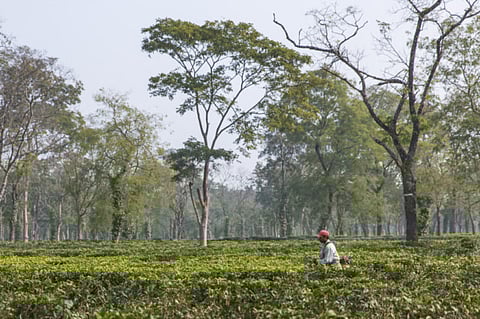
NAHORANI TEA ESTATE
For a century and a half, Madhu Munda’s forebears toiled on the same tea plantation that she lives and works on now. Belonging to central Indian tribes brought to what is now the northeastern state of Assam by the British in the mid-19th century, they and millions of other plantation workers survived as little more than indentured servants, even as the British Raj gave way to Indian democracy.
So when Amalgamated Plantations took over the plantation in 2008, Munda and her fellow workers had high hopes for change. The company’s investors said they planned to transform this sprawling tea estate into a model for sustainable and responsible labour policy through an employee shareholding program. The International Finance Corp, a branch of the World Bank partly funded by the US government, lent the new company legitimacy with a sizeable investment. In approving funding, the International Finance Corp. stated that Amalgamated promised to “create opportunities for people to escape poverty and improve their lives.”
But that early optimism has evaporated. Despite pledges of better working and living conditions, Munda, 45, finds herself living a life not dissimilar to that of her grandparents. Her family shares a cramped and crumbling house with three other families. The well outside is filled with murky water, and a nearby latrine is rank and overflowing. Munda says she has been emptying a bucket filled with the water that leaks through her roof for 15 monsoon seasons.
No protective equipment
In interviews at two of the company’s plantations, workers said their overseers treated them harshly and denied them basic benefits. Munda said that to qualify for a paid sick day, workers had to report to the plantation clinic three times a day to prove their illness. Raju Mantra, the son of two plantation workers, said that protective equipment was withheld from workers.
“When big people come to visit, they give it to us,” he said of equipment like gloves and masks to protect from pesticides, “but then they put it back in storage, saying that if we wear it every day, it will wear out.”
Last week, the Human Rights Institute at Columbia Law School released a 110-page report on Amalgamated’s operations, which employ more than 30,000 people on 24 plantations in Assam and neighbouring West Bengal.
The report paints a grim portrait of life on the tea plantation: dilapidated and crowded housing, hazardous water and sanitation conditions, the denial of basic benefits like health care for workers’ dependants, widespread disregard for occupational safety measures, and pitifully low wages.
Amalgamated denies any wrongdoing. The company claims it was not given enough time to fully review the Columbia report before its release. But it issued a statement saying that the report was “incorrect and misleading in some parts,” and said that some issues, like wages, were dictated by an industrywide recession that necessitated conservative spending.
Amalgamated’s oceanic plantations of undulating green tea bushes employ thousands of workers each. The plantations used to be owned by the Tata Group, a vast Indian conglomerate that, along with the International Finance Corp., created Amalgamated during a restructuring process in the late 2000s. Now, Amalgamated provides tea leaves primarily to Tata Global Beverages, whose Tetley and other brands of tea are widely consumed across the world. Assam’s almost 1,000 plantations produce around one-sixth of the world’s tea.
Last week, the International Finance Corp.’s internal compliance and accountability office announced that it would be conducting a full investigation into the “IFC’s environmental and social performance in relation to its investment in A.P.P.L.,” the abbreviation for Amalgamated.
Plantations Labour Act
In an email response to questions, Amalgamated’s spokesman said the allegations made by workers on the company’s plantations were untrue. The company said it adhered strictly to the Plantations Labour Act, an Indian law that requires plantation owners to supplement wages, which can be set below state minimums, by providing tea workers with housing, schools, health care and other basic needs.
Tea worker’s rights groups say the Plantations Labour Act has perpetuated the feudal system created by British companies when they first developed the plantations. Today’s plantation workers descend almost exclusively from tribal populations transplanted in the colonial era, having inherited jobs from their parents.
The manual labour they perform has changed little in 150 years. Last December, women in saris moved slowly down the rows of bushes, pruning them with machetes.
Workers said managers treated them with contempt. A group of women at one plantation said their supervisors used language with them so vulgar they could not repeat it. Mantra later said that local stereotypes of tribal people as promiscuous figure heavily in taunts, and workers who show up late are insultingly questioned.
Leaving the plantations is only a vague dream for most. Local advocacy groups say schools on plantations go up to only the fourth grade, and in some schools, there are up to 250 students for each teacher. Most tea workers remain illiterate, the advocates say. Beyond the fences of Assam’s plantations, where tea workers seldom go, there is little demand for unskilled labour.
The poverty that besieges tribal populations throughout India more harshly circumscribes mobility for those on Assam’s plantations.
Many here said they would like to continue going to school or seek care at hospitals outside their plantations, but transportation is too costly for those who earn so little. Plantation workers like Munda can make 89 rupees (Dh5.26 or $1.43) a day picking tea leaves or performing other tasks, provided they meet their productivity quotas.
Mantra said that to get by, most tea workers ate simple meals of rice sprinkled with salt most days, splurging for eggs or fish only on paydays.
— New York Times
News Service


