Rs 9.4m Patek Philippe luxury watch seized at Delhi airport: What India's customs rules say
India's customs rules lead to seizure of Rs9.4m luxury watch in Delhi
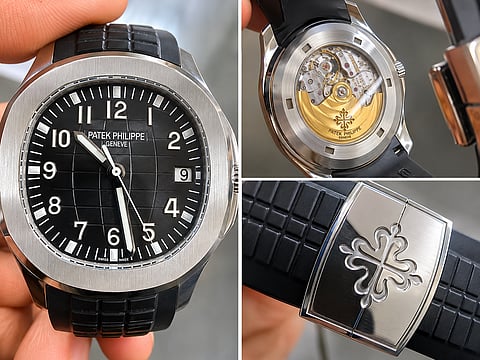
An Indian passenger arriving from the Gulf was arrested at Delhi’s Indira Gandhi International Airport after customs officers seized a pre-owned Patek Philippe Aquanaut watch valued at Rs 94 lakh.
The incident has raised questions about whether expensive watches, even used ones, can be brought into India without paying customs duty.
How was the luxury watch discovered?
According to Delhi Customs, the passenger arrived at Terminal 3 on November 11 aboard SpiceJet flight.
Acting on intelligence, officers intercepted him in the Green Channel and directed him for X-ray screening and a personal and baggage search.
A door-frame metal detector sounded an alert, prompting officers to recover the Swiss-made luxury wristwatch.
A chartered engineer subsequently authenticated the watch and assessed its value at Rs 94 lakh.
Customs seized the timepiece under Section 110 of the Customs Act, 1962, and arrested the passenger under Section 104. Officials announced the case on November 17 and said investigations were continuing.
What do India's latest baggage rules say?
India's Baggage Rules, 2026, which came into effect on February 2, 2026, provide a general duty-free allowance of Rs 75,000 for Indian residents, tourists of Indian origin, and foreigners holding valid visas other than tourist visas, arriving by air or other modes of transport, except at land borders.
Foreign tourists are entitled to a duty-free allowance of Rs 25,000. Passengers arriving by land are not eligible for the general duty-free allowance.
The rules also permit duty-free clearance of used personal effects that passengers reasonably require for their personal use during the journey, subject to prescribed conditions. However, a luxury watch does not automatically qualify for exemption simply because it is pre-owned. Customs authorities assess whether it qualifies as a bona fide personal effect or falls under the general duty-free allowance.
New articles, including wristwatches, may qualify under the general duty-free allowance, subject to the applicable value limit and conditions. For eligible Indian residents and tourists of Indian origin, this limit is Rs 75,000. Any dutiable goods beyond the permitted allowance must be declared to customs officials.
Passengers carrying goods that require customs clearance should use the Red Channel rather than the Green Channel, which is meant for passengers without dutiable or prohibited goods..
When must passengers declare valuables?
Travellers carrying dutiable goods must declare them and use the Red Channel. The Green Channel is intended for those with nothing dutiable to declare.
The seized watch's assessed value greatly exceeds the standard allowance, but its price alone does not establish a customs offence.
Authorities have not publicly clarified whether the passenger declared the watch, how it was being carried or which specific violation is alleged.
Delhi Customs has urged international passengers to declare dutiable items to avoid legal trouble when entering the country.
When can customs arrest a passenger?
The CBIC's ( Central Board of Indirect Taxes and Customs) arrest guidelines under the Customs Act, 1962, identify unauthorised importation of goods in passenger baggage, including cases involving transfer of residence, with a market value of Rs 50 lakh or more, as an exceptional circumstance in which arrest may be considered.
However, crossing the Rs 50-lakh threshold does not automatically result in arrest. The guidelines require authorities to consider the nature of the alleged offence, the individual's role, the available evidence and the circumstances of the case. Arrest must be exercised with caution and in accordance with the law.
With inputs from Agencies


