Paralysing disorder GBS spreads in India’s Pune in rare outbreak
47 patients are in intensive care units and 21 are on ventilator support in city hospitals
Pune: The western Indian city of Pune is seeing an unusually large cluster of cases of a paralysing neurological disorder, in what’s becoming one of the worst global outbreaks of this rare condition.
Over 180 suspected cases of the Guillain-Barre Syndrome have been reported in Pune over the past month, out of which 155 have been confirmed, according to a February 9 status report by the Integrated Disease Surveillance Programme, which is overseen by the federal health ministry.
There have also been six deaths — of which one has been confirmed to be from GBS, a disorder where the body’s immune system mistakenly starts attacking the peripheral nerves, leading to muscle weakness and sometimes paralysis.
Guillain-Barré Syndrome (GBS)
What is Guillain-Barré Syndrome (GBS)?
GBS is a rare neurological disorder in which the body’s immune system mistakenly attacks the peripheral nerves, leading to weakness, numbness, and, in severe cases, paralysis.
What causes GBS?
The exact cause is unknown, but GBS is often triggered by an infection, such as a respiratory or gastrointestinal infection. Some cases have been linked to viruses like influenza, Epstein-Barr virus, Zika virus and even vaccinations, though the risk is very low.
Is GBS contagious?
No, GBS is not contagious. It cannot be spread from person to person. It is an autoimmune response triggered by an infection or other factors.
What are the early symptoms of GBS?
Early signs include:
Tingling or numbness in the hands and feet
Muscle weakness, starting in the legs and spreading upward
Difficulty walking or maintaining balance
Pain, especially in the lower back
Fatigue
How does GBS progress?
Symptoms typically worsen over days to weeks, and in severe cases, GBS can cause paralysis, breathing difficulties, and loss of reflexes. However, most patients recover with proper treatment.
Is there a cure for GBS?
There is no specific cure, but treatments like plasmapheresis (plasma exchange) and intravenous immunoglobulin (IVIG) can reduce severity and speed up recovery. Physical therapy also helps regain strength.
What is the recovery time for GBS?
Recovery varies. Most patients start improving within a few weeks to months, but some may take a year or longer to regain full strength. A small percentage may experience long-term weakness.
Can GBS be fatal?
GBS can be life-threatening if it affects breathing muscles or the autonomic nervous system. However, with intensive medical care, the survival rate is high.
Can GBS recur?
Recurrence is rare, but in a small percentage of cases, GBS can return, requiring further treatment.
Also, 47 patients in Pune are in intensive care units and 21 are on ventilator support. The surge in the city, which is a three-hour drive from Mumbai, has been linked to water contaminated with Campylobacter jejuni bacteria, according to local media reports.
The magnitude of the outbreak is “unusual”, said Gareth Parry, emeritus professor of neurology at the University of Minnesota, who has researched this syndrome.
For a city with about 7 million residents, Pune should statistically expect about 140 cases in a year, he said.
‘Quite startling’
“It is more than a 10-fold increase,” he said. “It is really quite startling.”
GBS outbreaks are described as “very rare” by the US Centers for Disease Control and Prevention since it affects typically one or two in a population of 100,000.
The Pune episode underscores the mounting challenges for public health surveillance globally as uncommon disorders are spotted more often, newer disease strains emerge and centuries-old afflictions see a resurgence.
After the Covid pandemic in 2020 caused by a novel coronavirus, outbreaks of old-era diseases like whooping cough to polio have been reported across continents.
Newer complications of existing ailments are also on the rise.
Japan saw a record number of streptococcal toxic shock syndrome (STSS) cases last year where people were dying within 48 hours. The Democratic Republic of Congo saw a mysterious ‘Disease X’ afflicting more than 500 in December, soon after it was ravaged by a new mutated strain of mpox.
Contaminated water
Pune’s GBS outbreak is the first in Asia in recent years, with previous surges recorded in South America. It shows the urgent need to ramp up urban development in India’s rapidly expanding cities, which are sometimes unable to provide even the basic facilities like cleaning drinking water. About half of Pune’s GBS cases have been detected from newly added villages in the city municipality.
While the origins of this life-threatening condition is not entirely clear, most GBS cases follow a bacterial or viral infection.
Aradhana Chauhan, neurologist at Sahyadri hospital in Pune said that the syndrome was predominantly preceded by diarrhea in the GBS cases she had seen.
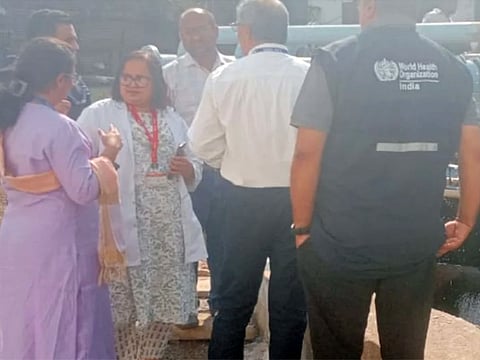
City authorities are working with state and federal medical teams as well as the World Health Organisation to trace and treat the suspected cases.
Biochemical analysis of water samples from across the city is also underway and 55 samples were found contaminated, according to the February 9 note.
WHO aids response
WHO is assisting health authorities in Pune, Maharashtra, to tackle suspected and confirmed cases of GBS. WHO teams are on the ground training health workers, conducting active case searches, and ensuring timely diagnosis and treatment.
Working closely with Pune Municipal Corporation and state authorities, WHO medical officers are analyzing epidemiological trends, mapping disease spread, and tracking new cases. They are also validating household visits, monitoring response efforts, and participating in high-level health reviews.
WHO remains committed to strengthening surveillance and response to contain the outbreak effectively.
Multiple pathogens
This is the third disease outbreak for the Indian city over the past year, after Zika virus and Chikungunya cases surged in 2024.
There could be more than one pathogen at play in Pune that led to the spike of GBS cases in the aftermath, according to Carlos A. Pardo-Villamizar, professor of neurology and pathology at Johns Hopkins University School of Medicine.
“In the particular case of Pune, I think that the epidemiologist and clinicians need to be open-minded about the possibility that other infectious factors may be involved,” said Pardo-Villamizar, who has studied GBS outbreaks in Peru.


