India government moves Supreme Court against Delhi HC order on consular, passport and visa outsourcing services
Supreme Court to hear plea against fresh tender process for Indian missions abroad
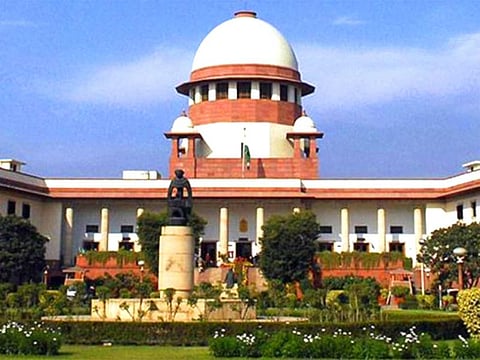
The India government on Friday approached the Supreme Court against the Delhi High Court's decision to cancel the technical evaluation process for outsourcing Consular, Passport and Visa (CPV) services at Indian missions in UAE, Kuwait, Singapore and Canberra.
Solicitor General Tushar Mehta mentioned the matter before a Bench headed by Chief Justice of India Surya Kant and sought an urgent hearing on the Centre's appeal. The Chief Justice assured that the case would be taken up on Monday.
Get updated faster and for FREE: Download the Gulf News app now - simply click here.
The government is challenging the Delhi High Court's July 15 judgment, which found serious flaws in the way bids submitted by private companies were evaluated for the outsourcing contracts.
High Court flags lack of transparency
The High Court had ruled that the technical evaluation process was unfair and lacked transparency, holding that it violated Article 14 of the Constitution, which guarantees equality before the law.
A Division Bench of Justices Anil Kshetrapal and Shail Jain delivered the verdict while allowing petitions filed by E Trav Tech Limited and Verasys Limited. The two companies had challenged their disqualification during the technical bid stage of tenders floated by the Ministry of External Affairs (MEA).
The court observed that although the government later disclosed the marks awarded to bidders, it failed to explain how those scores were calculated. As a result, bidders had no way of understanding why their proposals were rated lower than competing bids.
Fresh tenders ordered
The High Court also pointed to inconsistencies in the evaluation process, saying similar proposals had received significantly different scores across the four Indian missions without any recorded reasons.
It set aside the technical evaluations and cancelled the contracts awarded to successful bidders. The court directed the MEA and the concerned Indian missions to issue fresh Requests for Proposal within a month and complete the tender process as quickly as possible.
At the same time, it allowed existing service providers to continue operating until new contracts are finalised, ensuring passport, visa and consular services remain uninterrupted.
- With inputs from agencies


