Cyclone Arnab bears down on India: 136,000 evacuated as Andhra, Odisha on alert
Trains cancelled, shelters opened as storm threatens floods, power cuts and destruction
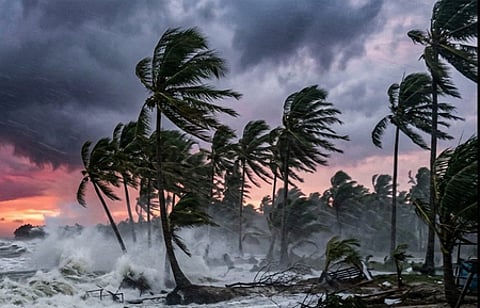
Dubai: More than 136,000 people have been evacuated from vulnerable coastal areas in India’s Andhra Pradesh and Odisha states as Cyclone Arnab approaches the eastern coast, threatening destructive winds of up to 150km/h, torrential rainfall and widespread flooding.
The very severe cyclonic storm is expected to make landfall along the Andhra Pradesh coast near Yanam on Wednesday morning, October 28, according to the India Meteorological Department (IMD).
The cyclone is forecast to cross the coast between Bapatla and Visakhapatnam, close to Yanam, with sustained winds of 125–135km/h and gusts reaching 150km/h.
Authorities have stepped up evacuations, cancelled dozens of trains, mobilised disaster response teams and opened hundreds of emergency shelters as heavy rain and strong winds begin affecting coastal districts.
At least 89,000 people have been evacuated in Andhra Pradesh, according to an official statement cited by Associated Press, while Odisha authorities reported moving another 47,830 residents to safer locations.
More than 12 million people live along the cyclone’s expected path in Andhra Pradesh, the state’s disaster management authority said.
Warning of destructive winds and flooding
IMD Director General Mrutyunjay Mohapatra warned that the cyclone could cause significant damage to infrastructure, disrupt electricity and communication networks, and devastate standing crops.
He said extremely rough sea conditions had already developed in the Bay of Bengal, with waves reaching heights of up to 14 metres, making maritime operations dangerous.
The combination of powerful winds, heavy rainfall and tidal surges could also inundate low-lying coastal communities.
East Godavari district faces a particularly serious threat, with storm surges expected to raise water levels by 1 to 1.5 metres, potentially pushing seawater into residential and agricultural areas.
Heavy to extremely heavy rainfall is forecast across parts of Andhra Pradesh and Odisha on Tuesday and Wednesday.
The cyclone was moving at approximately 20km/h over the west-central Bay of Bengal, according to meteorological officials.
Why is Cyclone Arnab named so?
The name Arnab, meaning “ocean” or “sea” in Bengali, was proposed by Bangladesh and included in an official cyclone naming list adopted in April 2020 by the World Meteorological Organisation (WMO) and ESCAP.
The list contains 169 names submitted by 13 countries, including India, Pakistan, Saudi Arabia and the UAE.
The India Meteorological Department assigns these names in sequence to cyclones forming over the Bay of Bengal and Arabian Sea.
Naming cyclones helps authorities issue clear warnings, track individual storms and avoid confusion when multiple weather systems develop.
Thousands moved to shelters
Andhra Pradesh authorities have established more than 2,000 cyclone shelters across 20 districts, while emergency warnings are being sent to millions of mobile phones.
Officials said more than 30,000 fishing boats had been secured along the coast and nearly 1,100 medical teams deployed to provide emergency assistance.
In Visakhapatnam, six of the city’s 10 administrative zones have been classified as highly vulnerable.
Municipal Commissioner Ketan Garg said authorities had identified 122 low-lying areas and approximately 57 rehabilitation centres, with residents being encouraged to move to safer locations.
Twenty rapid response teams have been positioned across the city, equipped with machinery to clear fallen trees, remove debris and restore essential services.
The city’s emergency operations centre has been functioning around the clock since Monday evening.
Officials have urged residents to avoid unnecessary travel and stay away from beaches.
Odisha evacuates nearly 48,000
Neighbouring Odisha has also intensified preparations, evacuating 47,830 people from high-risk districts.
Revenue and Disaster Management Minister Suresh Pujari said the state had prepared 466 flood and cyclone shelters and allocated Rs190 million to eight vulnerable districts for evacuation, food supplies and emergency operations.
The largest evacuations have taken place in Gajapati, Nabarangpur and Malkangiri districts.
Malkangiri is expected to experience the cyclone’s strongest effects in Odisha as the weather system moves inland towards Chhattisgarh.
Authorities are also prioritising pregnant women.
Of approximately 3,000 expectant mothers identified as potentially requiring evacuation, 1,614 have already been moved to safer locations. More than 20 have delivered babies safely at community and primary health centres, officials said.
Odisha has deployed disaster response and fire service teams, with additional personnel on standby.
Disaster teams deployed across five states
National Disaster Response Force Deputy Inspector General Mohsen Shahedi said 31 NDRF teams had been deployed across Andhra Pradesh, Odisha, Telangana, Chhattisgarh and the Union Territory of Yanam.
The deployment is part of a coordinated effort involving national and state disaster management authorities to minimise casualties.
Additional state disaster response teams have been mobilised, while emergency planning meetings have been conducted at the national level.
Shahedi said the priority was to ensure evacuations were completed before flooding and destructive winds made movement dangerous.
Trains cancelled, roads waterlogged
Transport services are already being disrupted.
The South Central Railway’s Vijayawada Division has cancelled 53 local trains and 11 long-distance services as a precautionary measure.
Railway authorities have deployed patrol teams and safety personnel to monitor vulnerable sections of the network.
In Visakhapatnam, intense rainfall has caused waterlogging at the vehicular subway beneath the railway tracks at Convent Junction, disrupting traffic.
Heavy rainfall is also expected in parts of Telangana, particularly Mulugu, Bhadradri Kothagudem, Mahabubabad and Khammam districts.
— With inputs from IANS and ANI.


