After 31 years in jail, Rajiv Gandhi case convict becomes High Court lawyer
After release, he studies law, clears Bar exam and begins practice at Madras High Court
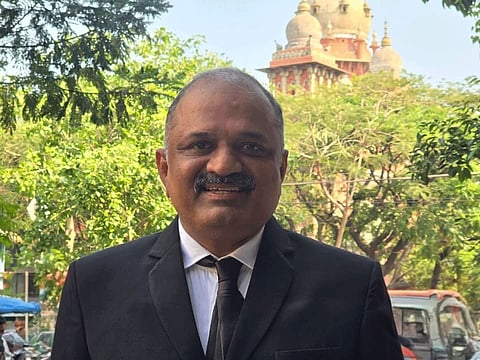
Dubai: For over three decades, A.G. Perarivalan knew the courtroom from the accused’s dock — waiting, hoping, fighting for freedom. This week, he walked back in wearing a black robe.
Perarivalan, one of the life convicts in the assassination of former Prime Minister Rajiv Gandhi, has enrolled as an advocate with the Bar Council of Tamil Nadu and Puducherry, marking a remarkable turn in a life defined by one of India’s most high-profile cases.
Released in 2022 after spending 31 years in prison, he now plans to practice at the Madras High Court — focusing on legal aid for prisoners who, like him once, wait in silence for justice, PTI reported.
A life paused at 19
Perarivalan was just 19 when he was arrested in 1991, accused of supplying a nine-volt battery allegedly used in the bomb that killed Rajiv Gandhi.
What followed was not just a trial, but a lifetime behind bars.
Convicted under anti-terror laws, he was sentenced to death in 1998 — a punishment later commuted to life imprisonment by the Supreme Court after an 11-year delay in deciding his mercy plea.
For years, his world shrank to prison walls, court hearings and appeals.
But it did not end there.
Learning behind bars
Prison became his classroom.
Denied freedom, Perarivalan turned to education — completing degrees in computer applications, earning diplomas, and even topping courses conducted by Tamil Nadu Open University.
He studied while under the shadow of a death sentence. He studied while waiting for a decision that never seemed to come, Indian Today said.
And when freedom finally arrived in 2022 — granted by the Supreme Court using its extraordinary powers — he chose to begin again.
A new beginning in law
He enrolled at Dr B.R. Ambedkar Law College in Bengaluru, completed his law degree, and passed the All India Bar Examination in 2025.
On April 27, he donned the black gown — not as a symbol of authority, but of purpose.
“My ambition is not to become a famous criminal lawyer,” he said. “I want to be a voice for prisoners who have no legal help,” he told PTI.
Turning experience into advocacy
Perarivalan says his years behind bars reshaped his understanding of justice — and injustice.
He now plans to focus on cases involving wrongful detention, delays in trials and the rights of undertrials, hoping to turn personal experience into legal advocacy, India Today reported.
His journey, in many ways, has come full circle.
The system that once held him captive is now the one he seeks to work within — and perhaps, change.
More than a personal story
Perarivalan’s story is not just about one man’s release.
It reflects a larger reality — of delayed justice, overcrowded prisons, and countless inmates who remain unheard.
For him, the courtroom is no longer a place of waiting.
It is a place of action.
The road ahead
At 54, Perarivalan is starting over — not with bitterness, but with intent.
From a teenager taken in for questioning to a man who spent three decades behind bars, his journey is a reminder that justice can be delayed — but the fight for it can take unexpected forms.
And now, as he steps into court once again, it is not to defend himself.
It is to defend others.


