Venezuela earthquake death toll passes 1,700 as UN continues to scale up response
Thousands injured and displaced as search teams comb rubble across Venezuela
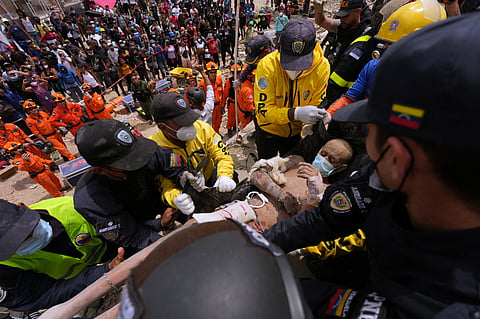
CARACAS: Five days after powerful earthquakes struck central-northern Venezuela, the death toll continues to climb along with the intense rescue operation and the UN coordinates humanitarian assistance, warning that recovery “is going to take time.”
Venezuelan authorities confirmed on Monday that at least 1,719 people have died following the earthquakes of 24 June, with some 5,000 more injured. Around 12,000 people have been displaced, and officials have yet to confirm a figure for the missing.
In a press briefing for correspondents in New York, UN Resident and Humanitarian Coordinator in Venezuela, Gianluca Rampolla, said that seven people were pulled alive from the rubble on Sunday as search efforts continue.
Get updated faster and for FREE: Download the Gulf News app now - simply click here
He also reported that the UN and Venezuelan authorities had agreed to procure 10,000 body bags in anticipation of the death toll rising further.
Seven states have been affected, but the greatest concentration of casualties is in La Guaira state and the Distrito Capital of Caracas. Around 2,500 structures were damaged, many of which have collapsed entirely.
Conditions on the ground remain hazardous. Approximately 500 aftershocks have been recorded since the initial earthquakes, including a magnitude 5.2 tremor in the early hours of Monday morning, while a tropical wave is threatening to bring heavy rains to affected areas.
More than 2,000 rescue workers from 27 countries – along with over 160 search dogs – are currently deployed across more than 40 teams.
“We continue to operate in a high-risk environment,” Rampolla said.


