Scientists discover how a tiny volcano mouse survives where humans can't
Researchers uncover remarkable adaptations in one of the world's highest-living mammals
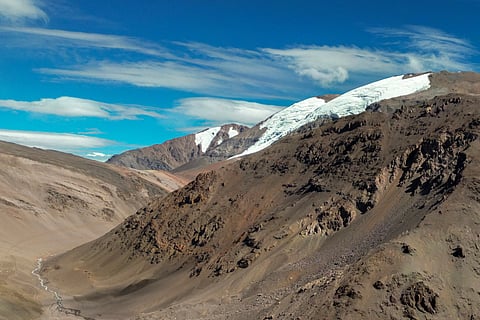
At more than 6,000 metres above sea level, oxygen levels are roughly half of what they are at sea level. Temperatures plunge below freezing. Winds are relentless. For most mammals—including humans—survival is nearly impossible.
Yet one tiny mouse has made the volcanic peaks of the Andes its home.
Get updated faster and for FREE: Download the Gulf News app now - simply click here.
Now scientists believe they have uncovered how the Andean leaf-eared mouse (Phyllotis vaccarum) manages the feat, revealing extraordinary biological adaptations that allow the animal to thrive across one of the widest elevation ranges ever recorded for a mammal.
The findings help explain how the species can live from coastal deserts to volcano summits exceeding 6,700 metres—higher than the camps used by many Everest climbers.
Built for thin air
Researchers found the mice possess a remarkable ability to adjust how their bodies use oxygen.
Unlike many mammals that struggle as oxygen becomes scarce, the volcano mice rapidly alter their metabolism and blood chemistry, allowing vital organs to continue functioning even in extremely thin air. Genetic analyses also revealed changes linked to energy production and oxygen transport that appear to have evolved over thousands of years.
Scientists say these adaptations allow the animals to remain active while foraging and reproducing in conditions that would quickly overwhelm most mammals.
Living where almost nothing else does
The discovery builds on earlier expeditions that stunned biologists by finding the mice living on the slopes of some of the world's highest volcanoes.
At those elevations, vegetation is scarce and food appears almost nonexistent, raising longstanding questions about what the animals eat and how they obtain enough energy to survive. Researchers believe the mice likely take advantage of windblown plant material, insects and other organic matter carried upslope by powerful mountain winds, although many aspects of their ecology remain a mystery.
Why it matters
Beyond satisfying scientific curiosity, the findings could help researchers better understand how mammals—including humans—respond to chronic oxygen deprivation.
The work may eventually contribute to research into high-altitude illness, cardiovascular disease and other conditions linked to reduced oxygen supply.
For now, the tiny volcano mouse remains an evolutionary outlier: a creature weighing little more than a golf ball, quietly thriving where even experienced mountaineers need bottled oxygen simply to stay alive.


