Hantavirus: Symptoms, spread, treatment, prevention — the story so far
MV Hondius sails Antarctic routes: rodent exposure risks seen from wildlife or ports
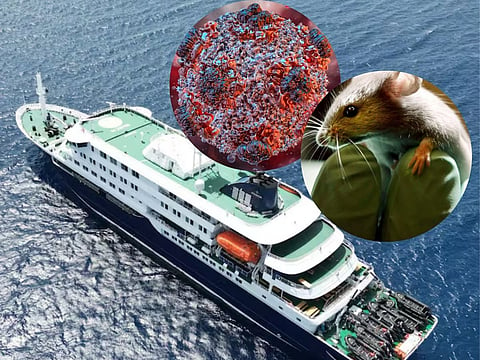
A Dutch cruise ship, MV Hondius, remains anchored off Cape Verde's coast after a hantavirus outbreak killed three passengers and sickened others among its 147 passengers and crew.
The cruise ship sails Antarctic routes where rodent exposure risks may arise from ports or wildlife contact, according to the Harvard Medical School publication.
Experts at the World Health Organisation (WHO) noted that the 'Andes' strain detected in MV Hondius is a rare hantavirus variant endemic to parts of South America — especially Argentina and Chile.
More cases could emerge
On Thursday, the WHO said more hantavirus cases could emerge, but it expected the outbreak to be "limited" — if precautions were taken.
Another sick passenger from the MV Hondius landed in Europe earlier on Friday, as the vessel headed to the Spanish Canary Islands and health officials scrambled to map the outbreak of the potentially deadly human-to-human strain.
The fate of the MV Hondius sparked international concern after three people travelling on it died.
Health officials have downplayed fears of a wider global outbreak from the rat-borne virus.
On Thursday, WHO chief Tedros Adhanom Ghebreyesus told journalists in Geneva that five confirmed and three suspected cases had been reported overall, including the three deaths.
“Given the incubation period of the Andes virus, which can be up to six weeks, it’s possible that more cases may be reported,” he said, referring to the rare Andres strain detected aboard the Hondius.


Here's what we know so far:
What is hantavirus?
Hantaviruses, part of the Bunyavirales order, cause severe respiratory diseases like hantavirus pulmonary syndrome (HPS) after exposure to infected rodents' urine, faeces, or saliva.
WHO official said the Andes strain of hantavirus is "less contagious" than SARS-CoV-2, the virus that causes COVID-19.
When was hantavirus identified?
First identified near Korea's Hantaan River, a US strain emerged in 1993's Four Corners outbreak, linked to deer mice booming after drought-rain cycles; it killed several healthy adults in the before the US Centres for Disease Control and Prevention (CDC) identified it.
What are the symptoms?
Early signs mimic flu: fatigue, fever, muscle aches (thighs, back), headaches, chills, nausea, vomiting, and diarrhea, appearing 1-8 weeks post-exposure. Later, coughing and shortness of breath signal fluid-filled lungs, leading to shock.
How does it spread?
Most hantaviruses are spread to people from rodents, not from person to person. The Andes variant (suspected here due to South America ties) enables rare person-to-person spread via close contact in prodromal phases, as in Argentina clusters.
WHO experts pointed out that unlike most hantavirus strains, the Andes strain has occasionally shown limited human-to-human transmission among close and prolonged contacts, they added.
What is the risk of a larger contagion?
WHO experts and officials, including Director-General Tedros Adhanom Ghebreyesus, stress that the overall global risk of an Andes strain outbreak remains "low".
Timeline: MV Hondius hantavirus outbreak voyage
April 1 — Departure
MV Hondius leaves Ushuaia, Argentina, for a South Atlantic/Antarctic expedition.April 11 — First death onboard
A passenger dies at sea after falling ill during the voyage.April 24 — Medical evacuation from St Helena
The wife of the deceased passenger is flown from Saint Helena to Johannesburg for treatment.April 26 — Second death off ship
The woman dies in Johannesburg; testing later confirms hantavirus infection.May 2 — Another passenger dies onboard
A second passenger death occurs on the ship as more illnesses are reported.May 3 — Arrival at Cape Verde
The vessel reaches waters near Cape Verde amid growing health concerns and docking uncertainty.Due within days — Sailing to the Canary Islands
The ship is expected to proceed to Canary Islands for medical response, disinfection, and further investigation.
What happened on the ship?
The MV Hondius departed Ushuaia, Argentina, on April 1, 2026, en route to the Canary Islands via remote Atlantic stops including Antarctica and Saint Helena.
Illnesses began April 6 with fever, diarrhoea, and respiratory distress; by May 4, WHO reported seven cases — two confirmed hantavirus, five suspected — including three deaths and one critically ill patient in South Africa.
Is there treatment?
No specific antiviral exists; ribavirin aids some kidney strains but not HPS. Care focuses on oxygen, ventilation, fluids, and ICU support — early intervention boosts survival from up to 50% fatality.
While there is no specific treatment for hantavirus infection, the Harvard Medical School stated that an antiviral drug called ribavirin is sometimes recommended as it has proven effective for a specific type of hantavirus that causes kidney failure.
"However, it has not been proven effective for lung and heart involvement," according to the article reviewed by Dr Robert H Shmerling, Senior Faculty Editor, Harvard Health Publishing and Editorial Advisory Board Member of Harvard Health Publishing.
How can it be prevented?
There are a number of practical ways to prevent their spread:
Seal homes against rodents, trap them, clean with wet methods (no sweeping), and ventilate.
On ships or travel: use distancing, masks, hand hygiene
Monitor symptoms 45 days post-exposure.
INCUBATION PERIOD: The time between when a person is infected and when they begin to experience symptoms - is usually in the range of two to three weeks, but may be as long as eight weeks.
How do you get hantavirus?
Human-to-human spread of hantavirus is "unusual," as per the Harvard Medical School publication.
The WHO has stated that hantavirus infections are not considered a significant risk to the public because of how rare they are and how rarely the virus spreads from person to person.


