FNC endorses 16 recommendations to boost birth rates
Council proposals focus on health, housing, work-life balance and fertility support
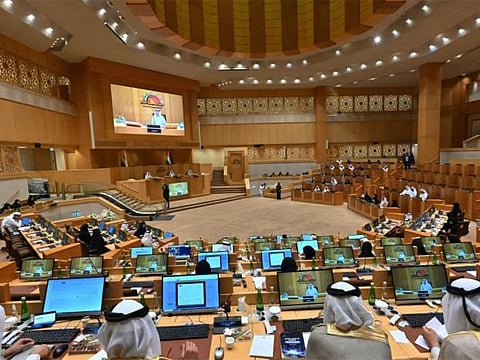
Dubai: The UAE’s Federal National Council (FNC) has approved 16 recommendations aimed at strengthening national birth rates, forwarding them to the government for consideration following earlier deliberations held in the presence of ministers and senior officials.
The recommendations, discussed during a previous council session on population growth, focus on health, social and economic measures designed to encourage family formation and childbearing across the country.
According to Al Khaleej newspaper, seven recommendations relate to national policies and strategies for increasing birth rates. These include the development of a comprehensive, targeted national strategy with clear performance indicators to measure the effectiveness of government programmes and initiatives, drawing on leading international and local experiences.
The council also called for expanded government initiatives to encourage and facilitate early marriage among young Emiratis, and for the development of qualitative and quantitative indicators to assess the effectiveness of existing health policies. This would require closer coordination between the Ministry of Family, the Ministry of Health and Prevention, and local health authorities.
Among the health-related recommendations was a proposal to study the establishment of a federal fertility centre, taking into account the geographic distribution of existing facilities, as well as a call for insurance coverage of fertility treatments across all emirates.
The council also urged the government to adopt a comprehensive plan to attract specialised fertility professionals, expand medical education and continuous training programmes, and establish specialised academic programmes in cooperation with local and international universities to ensure the availability of qualified Emirati professionals in assisted reproductive medicine.
In addition, the council stressed the need to strengthen regulatory oversight and inspection of all assisted reproduction centres, in coordination with relevant local authorities.
A further nine recommendations addressed the economic and social factors influencing birth rates. These included a review of Cabinet Resolution No. 6 of 1981 governing social allowances for employees’ children, with a proposal to extend benefits to the children of retirees and to increase allowance amounts to reflect current economic conditions.
The council also recommended linking housing loan instalments to family size and loan repayment periods, and coordinating with local authorities to review land and housing allocation policies in a way that supports extended family structures.
Other proposals focused on work-life balance, including a review of maternity leave and breastfeeding hours stipulated under federal human resources and labour laws, drawing on international best practices. The council also called for a study into granting child-care leave for working mothers in both the public and private sectors, and for examining the feasibility of reducing working hours for employed mothers and its impact on career progression and financial benefits.
The recommendations further urged a review of remote working policies to prioritise working mothers for flexible and hybrid work arrangements, in line with the nature of their roles. The council also emphasised the importance of expanding research into factors affecting birth rates, alongside the launch of a national awareness and education plan highlighting the importance of family growth and the risks associated with delaying marriage and childbearing.
Finally, the council called for the effective implementation of Cabinet Resolution No. 19 of 2006 concerning the establishment of nurseries within ministries, government entities and public institutions, in coordination with relevant federal and local authorities.
The recommendations have been referred to the government, which will determine the next steps for implementation.


