UAE back-to-school health guide: Rules on sleep, screen time, schoolbags and nutrition
Ministry outlines five key habits to boost students’ wellbeing and focus
Abu Dhabi: The Ministry of Education has outlined a set of health indicators to help organise students’ daily routines as they return to school. Key recommendations include ensuring that a schoolbag weighs no more than 10–20 per cent of a child’s body weight, reducing screen use 30 to 60 minutes before bedtime, engaging in at least 60 minutes of physical activity every day, and ensuring sufficient sleep ranging from eight to 13 hours, depending on the student’s age.
The Ministry urged families to reset children’s daily routines in line with school schedules, establish clear rules for the use of electronic devices, and pay close attention to the quality of food, water and snacks children take with them during the school day. It also stressed the importance of choosing an appropriate schoolbag and ensuring that it is carried correctly.
Stop screens before bedtime
These recommendations form part of the “Healthy Back-to-School Guide 2026–2027”, circulated by the Ministry of Education to school administrations. Prepared by the Emirates Health Services (EHS), the guide provides practical recommendations for students and parents aimed at supporting children’s physical and mental wellbeing, helping them readjust to the school routine and maintain their energy and vitality throughout the academic year.
The guide places particular emphasis on setting limits on recreational screen time and establishing clear rules and plans for device use during the school year, agreed upon with children in advance.
It stresses the importance of reducing screen use during the 30 to 60 minutes before bedtime, as screen use can make it more difficult to fall asleep. This highlights the importance of incorporating device management into the family’s daily routine during school days.
Healthy sleep for children
With regard to sleep routines, the guide recommends gradually adjusting children’s sleeping hours to a schedule that aligns with school timings, helping to avoid negative effects on their health, behaviour and academic performance.
It sets out recommended sleep durations according to age. Children aged 3 to 5 require around 10 to 13 hours of sleep a day, including naps, while school-age children between 6 and 12 need approximately 9 to 12 hours. For adolescents aged 13 to 18, the recommended duration decreases to around 8 to 10 hours of sleep each night.
Physical activity
The guide recommends that children engage in at least 60 minutes of moderate to vigorous physical activity every day, such as brisk walking, running or sports. The activity can be spread across different periods before, during and after school.
Physical activity can help reduce anxiety and improve children’s ability to concentrate at school, making it an essential part of a student’s daily routine rather than an activity limited to specific days of the week.
On nutrition, the guide recommends establishing healthy eating habits that include fresh fruits and vegetables, grains, dairy products and lean meats, while limiting saturated fats, added sugars and sodium.
Schoolbag weight
The guide also sets out a number of requirements for choosing and preparing a schoolbag. Most importantly, a backpack should weigh no more than 10 to 20 per cent of the child’s body weight. Parents are advised to choose a bag with wide, padded shoulder straps and a padded back.
The guide also recommends organising the contents of the bag and making use of its different compartments, placing heavier items close to the middle of the back, and checking the bag’s contents with the child every week to remove unnecessary items and keep its weight down.
Children should always use both shoulder straps, rather than carrying the bag on one shoulder, as this can place additional strain on the muscles. The bag should also be adjusted so that its lower section rests around the child’s waist.
What should go into a school lunch bag?
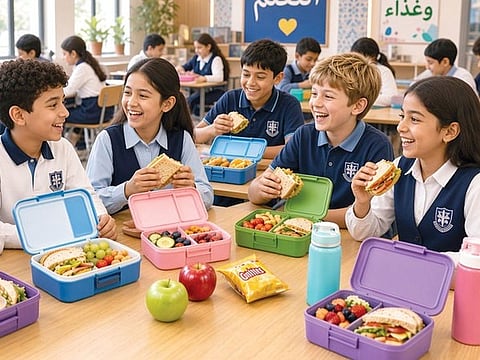
The guide devotes part of its recommendations to school lunch bags, advising parents to include a variety of foods from different food groups, including fruits, vegetables, whole grains, protein and dairy products, to provide students with balanced nutrition throughout the school day.
It also highlights the importance of ensuring that children drink enough water, particularly during the summer. Water helps cool the body, supports blood circulation and aids digestion, and should be the student’s primary beverage throughout the school day.
By contrast, the guide recommends avoiding or limiting sugary drinks as much as possible, including soft drinks, sweetened juices and energy drinks.
It suggests a range of healthy snack options that parents can pack for their children, including sliced fruit, vegetable sticks with hummus, yoghurt with granola and unsalted nuts. Sugary and highly processed snacks should be limited, with fresh or minimally processed foods given priority whenever possible.
Everything you need to know about school health
Five essential rules for a healthy and safe return to school.. As the new academic year begins, families’ preparations go beyond buying school supplies and uniforms. They also include preparing children physically, mentally and emotionally for a healthy and safe start to the school year.
Experts emphasize that a number of simple daily habits can help improve students’ concentration and energy levels while reducing health problems associated with returning to school.
Parents should focus on five essential rules:
1. Healthy and balanced nutrition
Parents should ensure that children start their day with a balanced breakfast and have access to a variety of foods containing vegetables, fruits, grains and proteins. Foods high in sugar and fat, as well as sweetened beverages, should be limited, while children should be encouraged to drink sufficient water throughout the day.
2. Establishing a healthy sleep routine
Regular and sufficient sleep helps improve concentration, memory, mood and academic performance. Parents are therefore advised to establish consistent bedtimes and wake-up times and gradually adjust children’s sleep schedules before and during the first days of school. The use of electronic devices before bedtime should also be avoided.
3. Limiting excessive screen time
It is important to establish clear rules for the use of computers, tablets and mobile phones, particularly outside study hours. Children should be encouraged to take regular breaks from screens and engage in physical activity and social activities, while avoiding prolonged, uninterrupted periods of device use.
4. Monitoring schoolbag weight
Parents should check the contents of schoolbags regularly and ensure that children carry only the books and supplies they need. This can help prevent excessive weight that may place strain on the back and shoulders.
Parents should also ensure that the schoolbag is appropriate for the child’s body and is worn correctly, using both shoulder straps.
5. Paying attention to the school lunch bag
A child’s lunch bag is an essential part of their health during the school day. Parents should therefore monitor its contents regularly and choose nutritious, varied and easy-to-eat meals, while avoiding foods and beverages that are high in sugar, salt and fat.
Attention should also be given to food safety, proper storage, the cleanliness of the lunch bag and the child’s water bottle.
By following these five rules, families can create a healthy environment that helps children transition smoothly into their school routine and enhances their ability to concentrate, learn and remain active. This can make the return to school a healthy and positive beginning to a successful academic year.


