Zayed National Museum to showcase 7,000 years of camel history in landmark exhibition
Tracing 7,000 Years of Camel History at Zayed National Museum
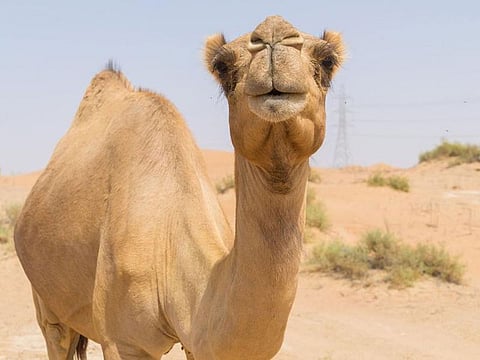
Abu Dhabi: More than 6,000 years ago, a wild camel died on the coast of what is now Abu Dhabi. Its bones lay in the ground at Baynunah until archaeologists dug them up. This December, they will go on public display for the first time.
They are among the centrepieces of Tracks Through Time: The Camel in Society, Trade and Art, the first temporary exhibition at Zayed National Museum, opening in early December.
The museum said it is the first show anywhere to explore more than 7,000 years of camel history.
A vanished animal
The camels of today have a wild ancestor that no longer exists. According to a 2025 study by researchers at UAE University, published in the journal Heritage, the dromedary was first domesticated in the south-east of the Arabian Peninsula, in what is now Oman, Saudi Arabia and the UAE, between 1100 and 1800 BCE.
A 2016 genetic study in the Proceedings of the National Academy of Sciences, recovered ancient DNA from wild dromedary bones up to 7,000 years old, including remains from UAE sites such as Al Sufouh, Tell Abraq and Al-Buhais. The researchers compared it with genetic material from 1,083 camels alive today.
They found that wild dromedaries from the south-east coast of Arabia were among the founders of the domestic camel’s gene pool. These animals are thought to have fed among coastal mangroves, where salt was available. Within less than two millennia of the domestic form appearing, the wild camels were gone.
The museum’s phrase for its Saruq Al Hadid bones, “some of the earliest evidence in the world”, sits inside this debate.
The PNAS authors describe the dromedary as the animal that carried salt, incense and spices across Arabia, the Near East and North Africa. They note that caravans sometimes numbered thousands of animals and persisted into the 20th century. Trade between south-west and south-east Arabia, they write, was “almost certainly camel-borne”.
From survival to spectacle
What the camel is for has changed more in one lifetime than in a thousand years.
Camels were once a source of transport, milk, meat and hides, and were at times used to pay zakat. Today the UAE’s camel population is rising from 430,372 in 2015 to 569,527 in 2022, according to a 2025 study by researchers at UAE University. Almost 90 percent are in Abu Dhabi, and about 85 percent are female.
The industry has found new markets. Sector data cited shows the UAE produces more than 7,000 tonnes of pasteurised camel milk a year, and sells it in the EU, China and the US. In February, the Codex Alimentarius Commission approved a UAE proposal to develop the first international standard for pasteurised camel milk.
Racing and beauty contests are part of how the camel earns its keep today, and the exhibition gives them prominence. Magee said that the exhibition traces the camel’s story up to “the prestige of Al Hejin camel racing and Mazayna beauty competitions”.
A 2025 study by researchers at UAE University found that these beauty contests now reward specific physical features, pushing breeders towards selective breeding and driving up prices for camels that fit the standards.
What the museum is betting on
Magee said that the exhibition moves from wild camels in the UAE thousands of years ago, through domestication and the bonds between people and animals in daily life, to the prestige of Al Hejin racing and Mazayna beauty competitions.
Archival photographs and film footage run alongside the objects, as do oral testimonies from camel herders and community members, and recordings of Taghrooda and Alheda’a, camel-calling traditions inscribed on UNESCO’s list of intangible cultural heritage. Other objects include an 1840s children’s book on camel species and their uses, rock art from Fujairah some 3,000 years old, and camels on UAE postage stamps.
Outside the museum, the camel is still everywhere in the UAE: on racetracks, in supermarket fridges, on stamps. Inside, visitors will meet it as it was before any of that.

