Abu Dhabi professor develops groundbreaking system to tackle carbon emissions and crine waste
Abu Dhabi innovation reduces CO₂ by 99% and brine salinity by 40%
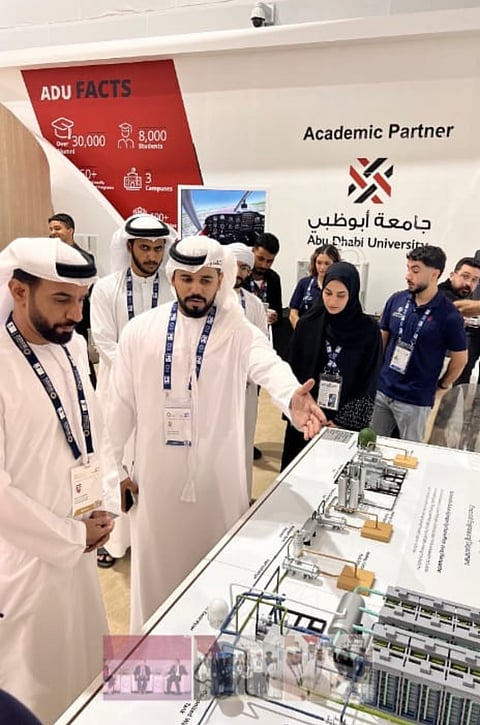
Abu Dhabi: A professor at Abu Dhabi University has won a US patent for a system that tackles two environmental problems at once, but the technology has so far only been tested in the lab.
“A patent is one milestone in a longer journey. Demonstrating performance, understanding the technology’s environmental footprint and identifying viable routes to implementation are essential,” said Professor Omar Chaalal, the man behind the invention.
Every day, desalination plants in the Gulf produce drinking water. They also produce huge amounts of brine, a concentrated salt water that can harm marine life if it is dumped back into the sea. At the same time, power plants and heavy industry send carbon dioxide into the air.
Now Professor Chaalal says he can deal with both problems in one go.
Numbers from the lab
His system brings CO₂ into contact with the brine. A chemical reaction turns part of the gas into solid mineral compounds, a process known as mineral carbonation. In the process, the water also becomes less salty. The university says the invention is a first for the UAE.
According to the university, experimental trials showed that CO₂ emissions could be reduced by up to 99 percent and that the salinity of the water dropped by around 40 percent. Up to 28.45 percent of the material was converted into solid form.
The figures come from the university’s own research, and the university itself says further development is needed before it is clear how the technology performs at commercial scale.
The process relies on ammonia, but according to Professor Chaalal, it is recovered, cleaned and used again. That creates a closed-loop system, he explains, which reduces the need for continuous chemical replenishment and helps limit secondary chemical pollution.
Students on board
The timing is no coincidence. Abu Dhabi has set a goal of cutting carbon emissions by 22 percent by 2027, and the UAE aims to reach net zero by 2050.
The plan is to build modular units for commercial use. The university is working through the clean-technology company Global Green Global and is looking for industrial partners. Possible sites include oil fields, coastal desalination plants and heavy manufacturing, although it remains to be seen whether the technology can be fitted into existing facilities.
Two engineering students, Saeed Alhmoudi and Mansour Alhashmi, are working with the professor on a separate project: producing green methanol through carbon sequestration. A patent application has been


