The Fitbit Versa 4 still wins in 2026: A four-year-old workhorse that isn’t a mini smartphone on your wrist
It tracks your health, without demanding much attention
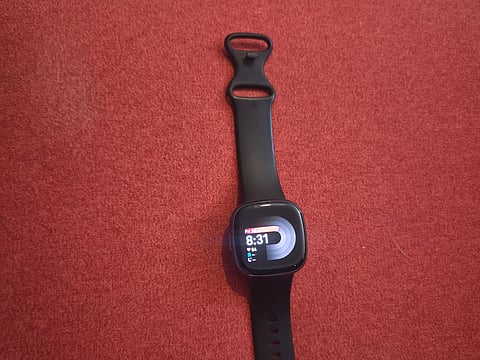
I have never been completely committed to smartwatches, till now at least. Most of the time, I would have misplaced the charger, or I lost the watch itself, which was once during a marathon sprint across the Istanbul airport during a last-minute gate change.
But surprisingly, the Fitbit Versa 4 that I have now, has survived my airport chases and even some particularly painful drops. (I learnt my charger lesson, I don’t take the charger anywhere now). And, for my needs: It works quite well. A daily workout, and my step count that I might do frantically after eating a few office donuts.
Nevertheless, for those coming from the world of full-featured smartwatches, devices that can run apps, store music, and function as an extension of your phone, the Versa 4 will feel deliberately restrained. But if you’re coming from a fitness-first mindset, or you simply want something that tracks your health without demanding constant attention, it settles into a very comfortable middle ground. Not too many complaints.
Design and comfort: Built for everyday wear
One of the most immediately noticeable things about the Versa 4 is how unobtrusive it feels on the wrist. The design is slim and lightweight, and so it doesn’t quite feel as if you’re you’re wearing a piece of tech in the traditional sense; instead, it fades into the background in a way that encourages all-day wear.
That’s an important fact at night: Sleep tracking is still one of Fitbit’s strongest areas, and the Versa 4 benefits directly from its comfort. Unlike bulkier smartwatches that can feel intrusive during sleep, this one is easy to forget you’re wearing, which is exactly what you want if you’re collecting overnight data like sleep stages, restlessness, and heart rate variability.
The strap options are also straightforward and practical, leaning more toward functionality than fashion statements. It’s not trying to be a luxury accessory. That said, I do occasionally take it off just to give my wrist a break, especially after noticing faint marks on my skin.
Another thing: It's waterproof, but it's advisable to take it off before showers and going swimming. I've developed a few skin rashes as the water is trapped beneath the watch and the skin, and festers there.
Battery life: Where it outperforms most smartwatches
The battery life is particularly impressive. I went for a holiday to Delhi without taking the charger, and the battery lasted six days. And, much to my own surprise I went for a run everyday, switching on the running mode for the watch.
So yes, even with more demanding settings like the always-on display enabled, you can still expect several days of use before needing to reach for the charger. Of course, changes how you interact with the device. Instead of planning your charging routine around your watch, it becomes something you occasionally plug in when convenient, not something you worry about daily.
For people who travel, work long hours, or simply dislike the idea of constant charging, this is one of its most practical advantages.
Fitness tracking: Where it actually feels at home
The Versa 4 is, at its core, a fitness tracker, and that’s where it feels most confident. It includes built-in GPS, heart rate monitoring, sleep tracking, stress management tools, and support for around 40 workout modes. These cover everything from running and cycling to more general gym sessions and lifestyle activities.
In use, the tracking is consistent and easy to interpret. You don’t get the overwhelming data overload that some more advanced sports watches provide. Instead, you get simplified, readable metrics that make sense at a glance.
For most users like me, that’s enough. Step counts, active zone minutes, heart rate zones during workouts, and sleep summaries form the backbone of the experience. It’s designed for people who want to stay aware of their activity levels without turning fitness tracking into a second job.
The built-in GPS is also a useful addition, especially for runners, who prefer to leave their phone behind. It’s not positioned as a performance athlete’s tool, but it handles everyday fitness routines reliably.
The return of a physical button: A small but significant fix
One of the more underrated improvements in the Versa 4 is the return of a physical side button. Earlier Fitbit models experimented with a touch-based ‘button’ system that often felt unresponsive or awkward, especially during workouts when your hands are sweaty or you’re moving quickly.
Bringing back a real, tactile button improves usability in a way that doesn’t sound exciting on paper, but makes a noticeable difference in practice. Navigating menus, pausing workouts, or switching screens becomes more intuitive and less frustrating.
For people like me, I do need these simple hardware changes. I would choose them over the flashy software features, any day.
Smart features: Intentionally limited
This is where expectations need to be reset. The Fitbit Versa 4 is not trying to compete with full smartwatches in the traditional sense anymore. With Google now overseeing Fitbit’s direction, the strategy has clearly shifted toward separating fitness-focused devices from more advanced smartwatch platforms like the Pixel Watch.
As a result, the Versa 4’s smart features are deliberately minimal.
There is no third-party app ecosystem. You can’t install apps like Spotify, WhatsApp, or additional productivity tools. You also can’t download music directly to the watch or rely on it as a standalone media device.
Notifications are present, but they’re essentially mirrored from your phone rather than interactive in a deeper sense. You can view messages and alerts, but you won’t be managing full conversations or workflows from your wrist.
Even music control is limited compared to some competitors. In many cases, you’ll still find yourself reaching for your phone to adjust playback or switch tracks.
In short, it handles notifications and basic connectivity, but stops well short of becoming a mini smartphone on your wrist.
Fitbit Premium: Useful, but partially gated
Another layer to consider is Fitbit Premium. While the Versa 4 includes a solid set of free health and fitness features, some of the more detailed insights are locked behind a subscription.
This includes deeper sleep analytics, readiness scores, and more advanced trend-based health data. For casual users, the free tier is likely sufficient. But for those who want a more analytical breakdown of their health patterns over time, the subscription adds meaningful depth.
The challenge is that this creates a slight split in the experience: the hardware itself feels approachable and simple, but the most interesting insights sit behind an ongoing cost.
The trade-off: Clarity over complexity
What defines the Fitbit Versa 4 most clearly is its sense of restraint. It doesn’t try to overwhelm you with features. It doesn’t attempt to replace your phone. It doesn’t push itself as a productivity device.
Instead, it focuses on doing a smaller set of things well: tracking your activity, monitoring your sleep, and providing a general overview of your health in a way that’s easy to understand.
The Fitbit Versa 4 is not for everyone, and it doesn’t pretend to be. If you want a full smartwatch experience, apps, music storage, rich notifications, and deep integration with your phone, this will feel limited fairly quickly.
But if you strip expectations down to what it actually excels at, it becomes much easier to appreciate.
It is lightweight, extremely comfortable to wear all day and night, delivers excellent battery life, and offers reliable fitness and sleep tracking without unnecessary complexity. It also happens to look like a smartwatch, even if it doesn’t fully behave like one.
Ultimately, the Versa 4 works best when you stop judging it as a smartwatch replacement and start seeing it for what it really is: a well-designed fitness tracker that prioritises ease of use and comfort over feature overload.


