Google lets users sign in with selfie videos in password-free security push
New biometric login aims to simplify account recovery while defending against deepfakes
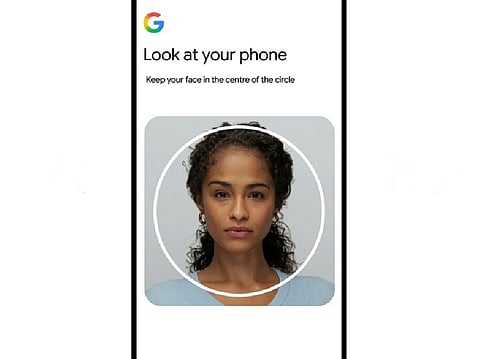
Google has been working to move away from passwords for some time. After rolling out two-factor authentication and passkeys, the company is now encouraging users to verify their identity using their camera.
Google has introduced a new selfie video sign-in option. Eligible users can now regain access to their accounts by recording a short video of themselves, rather than depending only on passwords, recovery codes, or trusted devices. The feature mainly serves as a backup for people who are locked out of their accounts.
Get updated faster and for FREE: Download the Gulf News app now - simply click here.
Setting it up is straightforward. Users record a short selfie video while following instructions on the screen, like turning or tilting their head, so Google can capture different angles of their face. If someone loses access to their password or recovery device, they can record another video. Google’s security checks then compare the new video to the original and confirm the person is really there, not just using a photo, recording, or deepfake.
Advancing beyond passwords
This new feature is another step in Google’s push to move away from traditional passwords, which are still a big weakness in online security.
In 2023, Google made passkeys the default way to sign in for many accounts. This lets users log in with fingerprints, facial recognition, or a device PIN instead of passwords. The selfie video option adds another way to recover accounts when other methods are not available.
Selfie video is not meant for everyday logins like passkeys are. Instead, it is an extra recovery tool for times when users lose their phone, forget their password, or can’t use two-factor authentication.
Anticipated privacy concerns
Using facial biometrics to recover accounts brings up privacy concerns.
Google says that reference selfie videos are encrypted, stored securely, and controlled by users. People can delete their videos whenever they want. By default, the videos are only used for authentication unless users choose to allow other uses.
The company also says its verification system checks for signs of life and uses several anti-spoofing measures to tell a real person apart from photos, recorded videos, or AI-generated deepfakes.
Part of a broader industry shift
Google is not the only company using biometric identity verification.
Apple’s Face ID is now a main way to sign in on iPhones and iPads. Microsoft’s Windows Hello uses facial recognition and fingerprints to unlock PCs. Banks, airlines, and government agencies are also using facial verification for identity checks, showing a bigger shift toward password-free security.
For Google, selfie video is another layer in an identity system that already has passkeys, security keys, trusted devices, and two-factor authentication. It does not replace these methods but gives users one more way to prove who they are, especially if other options are not available.


