AI’s biggest bottleneck is no longer chips — it is electricity
AI’s power hunger strains grids and pushes data centres toward orbit
Data centre builup up is get a bad rap.
In May, Florida Gov. Ron DeSantis banned AI data centres from using up all the water needed by citizens during a drought. The law bans utility companies from charging higher prices because of data centres.
"How are you going to say that somehow the water can go to a data centre when we need to water for our own people and for the core functions of our society?"
Last week, 600 people packed a county gym in Utah to kill a proposed data centre project, with 300 more people assembled outside, chanting “people over profits” and “we want water.”
Get updated faster and for FREE: Download the Gulf News app now - simply click here.
Similar scenes are now playing out all over the place.
Data centres: Power hungry, water hogs
Local rejections of US data centres went from single digits in 2023 and 2024, to about 50 in 2025... and they blew past that number just in the first few months of 2026.
Nearly seven in 10 Americans now say they don’t want one near them.
Thankfully for AI, there are no town councils in space.
No zoning boards, no water authorities, no neighbors to file complaints.
More in my latest: "Space-based AI data centers are coming. Here are 7 stocks that stand to benefit handsomely."
The latest wave of artificial intelligence is pushing data centres to the edge of what water ulitities and power grids can handle, forcing companies to think less about computing speed and more about energy supply.
Power hog
Training and running large AI systems requires huge, constant amounts of power, and that demand is rising faster than utilities can expand capacity.
That is why some observers are starting to talk seriously about placing AI computers in space.
In orbit, solar power is abundant, uninterrupted and free from many of the limits that slow projects on Earth, such as land use, cooling needs and grid congestion.
The idea is not that space will replace terrestrial data centres, but that it could become a practical outpost for especially power-hungry computing if the economics improve.
The concept still faces major hurdles, including launch costs, maintenance and hardware durability.
But the underlying logic is clear: if AI is an electricity business now, then the next frontier may be wherever the power is easiest to secure.
AI’s next frontier may not be faster chips — it may be space
The AI race is running into a new constraint, and it is no longer semiconductor technology. It is electricity.
As AI models grow larger and more computationally demanding, the biggest challenge facing technology companies is securing enough reliable power to run sprawling data centres.
Training frontier AI models and serving billions of user queries require enormous amounts of continuous electricity, pushing power grids to their limits and forcing companies to rethink where the next generation of computing infrastructure should be built.
That growing energy crunch has given new momentum to an idea that until recently sounded like science fiction: placing AI data centres in space.
The concept is based on a simple premise: Orbit offers virtually uninterrupted solar energy, eliminating many of the bottlenecks that constrain terrestrial data centres, including overloaded electricity grids, land availability and local opposition to massive power-hungry facilities.
Instead of transmitting electricity to Earth, orbital computing platforms would process AI workloads in space and beam only the results back to the ground.
The idea has gained attention after Elon Musk argued that electricity — not chips — will become the defining constraint on AI development.
Speaking at the US-Saudi Investment Forum, Musk said the economics of orbital computing could soon surpass those of ground-based facilities because of continuous solar power and the absence of conventional cooling infrastructure.
The lowest-cost way to do AI compute will be with solar-powered AI satellitesElon Musk, Space X/Tesla CEO
He predicted that within four to five years: "the lowest-cost way to do AI compute will be with solar-powered AI satellites."
He added that building AI systems requiring hundreds of gigawatts — or eventually a terawatt — of continuous power would be virtually impossible using Earth's existing electrical infrastructure.
The remarks reflect a broader shift in the AI industry, where access to electricity is increasingly viewed as strategically important as access to advanced chips.
Power-hungry AI computers
Nvidia chief executive Jensen Huang agrees that power will become one of AI's defining challenges, although he is far more cautious about moving large-scale computing into orbit.
Huang described space-based AI computing as "the dream," but warned that today's technology is not yet ready.
He noted that modern AI server racks are dominated by cooling systems rather than computing hardware, highlighting how difficult thermal management becomes as AI clusters scale.
Advantages of space-based AI servers
In space, where there is no atmosphere to carry heat away through convection, enormous radiator systems would be required, while launch costs, radiation protection, maintenance and communications remain major engineering hurdles.
Those obstacles mean orbital AI is unlikely to replace terrestrial hyperscale data centres anytime soon. Instead, many researchers see it as a long-term complement to Earth-based infrastructure rather than a substitute.
Still, interest is accelerating.
Governments, aerospace companies and technology firms are increasingly studying orbital computing as launch costs fall and reusable rockets make large-scale space infrastructure more realistic.
The economics remain uncertain. Launching thousands of tons of computing equipment into orbit would still cost billions of dollars, while repairing hardware exposed to radiation and extreme temperatures presents challenges that have yet to be solved.
Experts also point to latency, debris management and thermal engineering as major barriers before orbital AI can become commercially viable.
Yet the conversation itself signals how dramatically AI infrastructure priorities have shifted.
Space-based data centres: From science fiction to reality
A recent Forbes report highlighted renewed interest in orbital data centres, driven largely by concerns over terrestrial power and cooling constraints.
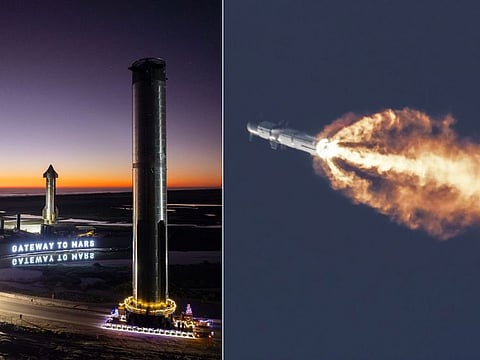
SpaceX has discussed deploying large constellations of computing satellites powered by solar energy in orbit. The concept aims to bypass grid limitations, water usage concerns, and permitting delays that increasingly affect data-center projects on Earth.
IBM CEO's warning
Meanwhile, IBM CEO Arvind Krishna has argued that the current trajectory of AI infrastructure spending may not be economically sustainable.
His concern:
Roughly 100 GW of AI capacity is being planned globally.
Infrastructure costs could eventually approach trillions of dollars.
Investors are assuming future profits will justify those investments.
The business case remains uncertain.
AI infrastructure spending is scaling faster than proven AI revenue. That does not mean AI demand is fake, it means monetisation may lag infrastructure construction.
The energy bottleneck
This is the area where both bulls and skeptics largely agree. The industry's constraint is increasingly shifting from chips (in 2023) to electricity (2026).
Recent forecasts suggest power availability may become the dominant limit on data-centre growth over the next several years. Grid upgrades, transmission lines, substations, and permitting are becoming strategic assets.


