Who is Sarpreet Singh? The Indian-origin ex-Bayern Munich player at World Cup 2026
India can't make the World Cup, but Indian origin players can
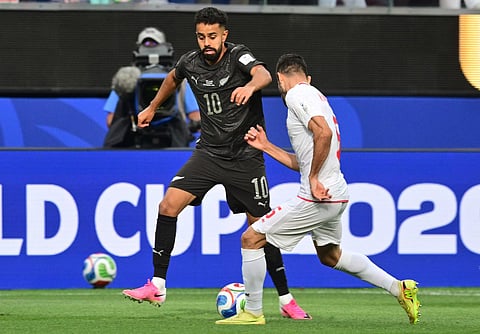
The Indian diaspora continues to make its presence felt at the FIFA World Cup, even as India remains absent from football's biggest stage.
New Zealand midfielder Sarpreet Singh became the latest player of Indian origin to feature at the 2026 FIFA World Cup after playing 92 minutes in his country's Group G clash against Iran.
His appearance came couple of days after Australian winger Nishan Velupillay, who also has Indian roots, made his World Cup debut during the Socceroos' 2-0 win over Turkiye.
Who is Sarpreet Singh?
Born in Auckland on February 20, 1999, Singh was raised by parents who emigrated from Jalandhar, Punjab. His family ran a grocery store in New Zealand, while young Sarpreet quickly developed a passion for football.
He joined the Wynton Rufer Soccer Academy at the age of seven before moving to the Wellington Phoenix Academy in 2015. His talent soon earned him places in New Zealand's youth teams, including appearances at the FIFA Under 20 World Cup.
His performances at the 2019 Under 20 World Cup attracted interest from Bayern Munich, leading to a dream move to Germany. Singh later became the first player of Indian origin to appear in the Bundesliga when he came on as a substitute for Bayern Munich under Hansi Flick.
Injury setback and return
Breaking into Bayern's star studded squad was never going to be easy and Singh spent time gaining experience through loan spells.
A major setback arrived in 2022 when he suffered osteitis pubis just as a move to newly promoted Bundesliga side Werder Bremen was being discussed. The injury kept him out for several months and disrupted his progress.
He returned to action with SSV Jahn Regensburg before later playing for Portuguese side União de Leiria and Serbian club FK TSC. Singh currently plays for Wellington Phoenix on loan from TSC, returning to the club where his professional journey began.
The day he played against India
Indian fans may remember Singh from the 2018 Intercontinental Cup in Mumbai.
The midfielder assisted both New Zealand goals as the All Whites secured a 2-1 victory over India. It remains one of the most notable matches involving a player of Indian origin representing another national team against India.
Singh has often credited his mother, Sarabjit, for helping him pursue his football dream. He has spoken about the sacrifices she made, from driving him to training sessions to supporting his development throughout his childhood.
Indian diaspora shining on the world stage
Singh is one of several players with Indian heritage featuring at World Cup 2026. Velupillay has already made his debut for Australia, while Congo midfielder Samuel Moutoussamy could join the list if he features later in the tournament. Qatar's Jamshid has also been part of the growing group of players with Indian roots to reach the international stage.
Their presence has once again sparked discussion about India's continued absence from the World Cup despite FIFA expanding the tournament to 48 teams. Many supporters view it as a major disappointment that smaller nations with far fewer resources and populations, including island countries such as Cabo Verde and Curaçao, have reached football's biggest stage while India continues to wait for its first World Cup appearance.
Ironically, India did qualify for the 1950 World Cup in Brazil but withdrew due to a combination of travel costs, lack of preparation and the federation's decision to prioritise the Olympic Games. More than seven decades later, the country is still searching for a place among football's elite.
More than 75 years later, players of Indian origin are competing on football's biggest stage for other nations, while India continues its search for a long awaited World Cup appearance. The growing success of the Indian diaspora has also intensified conversations around proposals to allow OCI and PIO players to represent India in the future.


