F1: Japanese Grand Prix review
Let’s take a look at the action and main talking points from the Japanese Grand Prix
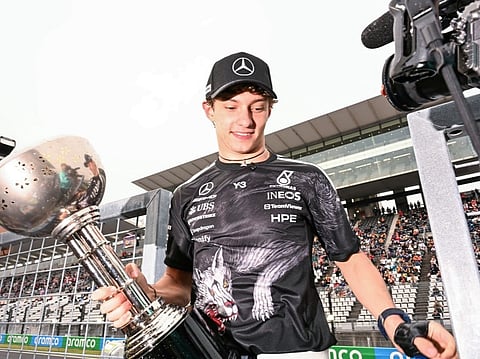
Dubai: Kimi Antonelli secured back-to-back victories following a dominant showing at the Japanese Grand Prix for the Mercedes driver.
Oscar Piastri of McLaren took second place whilst Ferrari's Charles Leclerc rounded out the podium. George Russell came in at fourth, world champion Lando Norris fifth, and Lewis Hamilton sixth.
Antonelli makes history
The Italian sensation became the youngest race winner in F1 history at just 19-years-old with his breakthrough victory in China. He emphatically backed it up with another commanding win in Japan on Sunday.
The teenager secured pole position, the fastest lap, and the race win, completing a successful weekend.
Despite dropping positions at the start, he fought back through the field and capitalised on key moments to take victory ahead of Oscar Piastri and Charles Leclerc.
Within Mercedes, the dynamic between Antonelli and Russell is becoming increasingly important. Russell finished fourth, but Antonelli’s second consecutive win has shifted momentum firmly in his favour. With no team orders in place, the team is allowing both drivers to race freely, setting up the possibility of an intense intra-team title battle as the season progresses.
Safety car drama
It initially seemed set to be a frustrating race for Antonelli after he fell from first to sixth on the opening lap, but everything changed when Oliver Bearman’s heavy crash brought out the safety car.
With Piastri, Russell, and Leclerc having already made their pit stops, Antonelli was able to pit under the safety car with minimal time loss, which vaulted him back into the lead. From that point on, the 19-year-old was in complete control, pulling away from the field to take the chequered flag and become the youngest championship leader in F1 history.
Piastri, who had made an excellent start and taken the lead early on, ultimately lost control of the race due to this timing, turning what looked like a potential win into a second-place finish.
The Australian can be proud of his performance nevertheless as the McLaren driver showed strong pace and racecraft, but once again fell victim to circumstances outside his control. This has become a growing theme for McLaren, clearly competitive on pace, but not always converting that speed into victories.
More frustration for Verstappen and Red Bull
The Suzuka Circuit race highlighted ongoing frustration for Max Verstappen and Red Bull Racing.
The Dutchman has had an underwhelming start to the season and could only manage an eighth-place finish in Japan.
He was again openly critical of both the car’s performance and the broader direction of the sport under the new regulations, particularly the increased focus on energy management.
His comments have added another layer of intrigue to a season where Red Bull no longer appears dominant.
Verstappen claimed he has been asking himself, “is it worth it?” even before the Japanese Grand Prix result.
When questioned about the new rules following the race, the 28-year old said: “Of course I try to adapt to it, but it’s not nice the way you have to race. It’s really anti-driving. Then at one point, yeah, it’s just not what I want to do.”
Also Read: F1: Australian Grand Prix review


