F1: Australian Grand Prix review
Let’s take a look at the action and main talking points from the Australian Grand Prix
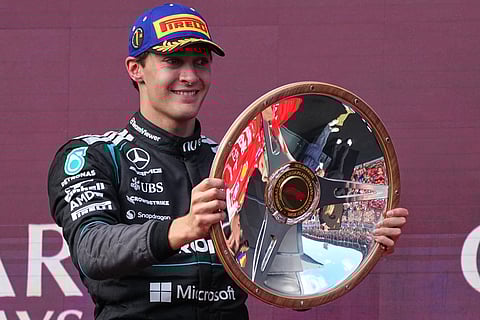
George Russell won the season-opening Grand Prix in Australia as Mercedes ended with a dominant 1‑2 finish. Here are the key takeaways and talking points from an action-packed weekend.
Mercedes win battle with Ferrari
The 2026 Australian Grand Prix delivered a thrilling opening to the season, featuring a highly anticipated showdown between Mercedes and Ferrari, the two teams that had impressed the most during pre-season testing.
From the off, the race was action-packed, with Charles Leclerc surging forward from fourth on the grid to seize the lead from George Russell, kicking off a back-and-forth battle as positions swapped over the opening laps. Mercedes responded strategically, and when a Virtual Safety Car (VSC) was deployed following Isack Hadjar pulling off the track for Red Bull, both Mercedes cars pitted while the Ferraris chose to stay out, immediately raising questions about differing tactical approaches.
Another VSC period soon followed due to Valtteri Bottas’s retirement for Cadillac, during which Leclerc and Lewis Hamilton again stayed on track. When Ferrari eventually made their pit stops, Russell and Kimi Antonelli returned to the front, putting Mercedes in a commanding position. The contrasting strategies created tension, as Ferrari appeared capable of running to the finish without another stop while Mercedes risked having to pit again. However, the Silver Arrows’ decision to stretch their tyres paid off, with both cars holding their positions despite the ageing rubber.
Ultimately, Mercedes executed their one-stop strategy flawlessly, securing a 1‑2 finish with Russell crossing the line 2.9 seconds ahead of Antonelli to claim his sixth career victory. Ferrari’s Leclerc and Hamilton were forced to settle for third and fourth.
Mercedes profit most from rule changes
The Grand Prix was noticeably influenced by the new F1 regulations, which had a major impact on strategy, tyre management, and overall race dynamics.
The aerodynamic and floor changes introduced to improve overtaking meant cars were able to follow each other more closely through corners, leading to more intense wheel-to-wheel battles. This was evident in the opening laps between Russell and Leclerc.
Mercedes’ one-stop plan worked perfectly under the new tyre regulations, allowing Russell and Antonelli to stay ahead despite ageing tyres, while Ferrari’s decision to run longer challenged their pace but ultimately left them unable to close the gap.
Finally, changes to VSC procedures affected how teams timed their stops. Mercedes capitalised on VSC periods caused by Hadjar and Bottas, allowing them to pit efficiently and retain track position, highlighting how understanding the new rules was crucial for success in Melbourne.
Norris keeps Verstappen at bay
Lando Norris and Max Verstappen were racing alone for McLaren and Red Bull after their teammates were forced to retire from the race both due to issues with their cars.
Norris had a disappointing qualifying session and started 13th on the grid, while Max Verstappen struggled even more, crashing out in Qualifying 1 and starting from the back of the grid.
During the race, both drivers made significant progress through the field, with Verstappen particularly impressing as he fought his way forward. In the closing stages, Verstappen engaged in an intense battle with Norris for fifth position, but despite his charge, he could not get past Norris, with both drivers ultimately finishing in the points, highlighting a thrilling end-of-race duel.


