War’s widening cost: How conflict is reshaping the global economy
Strait of Hormuz shock, inflation surge and supply chain strain ripple worldwide
The US-Israel-Iran war has now entered its second month of reciprocal attacks, alongside Iranian strikes on neighboring Gulf states. Its trajectory remains uncertain, caught between a fragile de-escalation that appears difficult to achieve and a new, unpredictable phase. Against this backdrop, the global economy is struggling to absorb the shock, while people everywhere hope the conflict will not further erode their livelihoods, access to food and medicine, or energy costs. In reality, everyone is paying the price of this war, albeit in different ways and to varying degrees.
The conflict has already had adverse effects on major economies, with even harsher repercussions for emerging and developing markets. Energy prices have surged, along with the cost of goods linked to the conflict. The risk of an economic slowdown, potentially tipping into recession, is growing, accompanied by persistently high inflation, weakening employment prospects, and a spillover of slower growth into the private sector. Supply chains are also under strain, with longer delivery times and rising costs for inputs, transport, and operations, which will ultimately be passed on to consumers worldwide.
Risk to nations and populations
The continuation of the war poses a broad risk to both nations and populations. It disrupts food supplies and production inputs, fuels inflation and interest rates, increases borrowing costs, and places additional pressure on public budgets and debt levels. The more economies rely on external sources of energy and production inputs, the greater the impact in terms of rising costs, squeezing profit margins and distorting supply and demand dynamics.
The economic consequences are unlikely to be temporary. While their full extent may take time to materialise, their effects tend to emerge gradually and persist beyond the end of the conflict, creating longer cycles of economic strain.
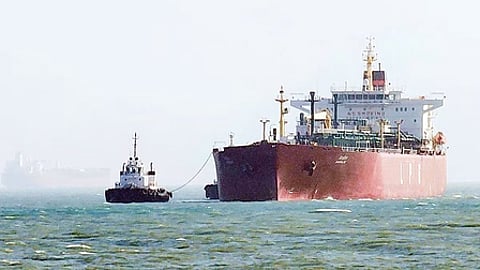
In Europe, the war has delivered a fresh shock to the energy sector, even as the continent has yet to fully recover from the effects of the Ukraine war. The closure of the Strait of Hormuz has significantly slowed global trade flows, particularly between Asia and Europe, adding further pressure on inflation and likely contributing to higher interest rates this year. This comes amid expectations of weakening commercial activity and a contraction in the manufacturing sector.
Inflationary strains
In Japan, which imports nearly 95% of its oil needs from the Middle East, both industrial output and productivity are coming under pressure, adding to inflationary strains and feeding through to higher prices for food and essential goods. As a country heavily dependent on imported raw materials, Japan remains particularly vulnerable to external shocks.
China, meanwhile, has sought to cushion itself through strategic energy reserves. It still relies on roughly 12% of its oil imports from Iran, while also tapping alternative supplies from Russia. However, its industrial sector is likely to be affected by rising energy costs and a potential slowdown in global demand for exports, particularly amid heightened uncertainty, threats to shipping routes, and rising transport costs. This is significant given that exports account for 20% of China’s GDP.
Emerging economies
For emerging economies, a contraction is expected in 2026. Those dependent on imported oil and gas, such as countries in Southeast Asia, could face shocks that exceed their capacity to absorb them, especially if disruptions extend to key sources of external income, including remittances, and to supply chains for essential goods. This would likely push up the cost of staple foods while increasing the burden of accessing new debt at higher costs, alongside existing repayment obligations.
According to the International Energy Agency, more than 20 million barrels of oil pass daily through the Strait of Hormuz, which is also a critical route for liquefied natural gas. Its closure has created significant bottlenecks in global energy supply. As the conflict continues, the risk of a broader global energy crisis intensifies, compounded by disruptions to essential inputs for agriculture and technology manufacturing. The risks are not limited to supply alone; they also extend to insurance and shipping, with rising maritime insurance premiums, higher transport costs, and growing reluctance to cover vessels transiting the region.
Semiconductor industry
The semiconductor industry is also facing mounting pressure, with disruptions to critical inputs such as helium and sulfur, both by-products of oil and gas refining, alongside rising electricity costs. Any further disruption in these supply chains could complicate plans by major technology companies to invest $650 billion in artificial intelligence by 2026, while also threatening key Asian economies such as Taiwan. The impact extends beyond technology to sectors like automotive manufacturing. Compounding the challenge, demand for memory chips already exceeds supply, with prices rising even before the war.
Air freight has also been hit by the conflict. The closure of airspace and disruption of key transit hubs have driven up aviation fuel costs, insurance premiums, and cargo rates. The issue goes beyond flight cancellations to include longer alternative routes. As maritime shipping becomes increasingly disrupted, countries and companies are turning to air freight, despite its higher cost, to transport vital goods such as medicines, food, and electronics. While the partial reopening of some airports and air corridors may ease congestion, the situation remains closely tied to the trajectory of the conflict and regional stability.
Fertilisers hit
Farmers worldwide depend heavily on fertilisers to sustain crop production, and any disruption in supply chains risks triggering food shortages. Around 30% of global supplies of urea, a petrochemical-derived product essential for agriculture, pass through the Strait of Hormuz. The loss of even part of this volume from global markets would have serious implications for food security. Moreover, the targeting of energy facilities in Gulf states, forcing some to declare force majeure, is extending pressure to the agricultural and food sectors across multiple regions, particularly if repairs to damaged infrastructure take time even after the conflict ends.
Healthcare and education
The impact of war does not stop at the economy. It spills over into critical sectors such as healthcare and education, especially in developing countries burdened with high debt levels. Financial resources are often diverted away from human development priorities toward managing fiscal imbalances and servicing debt. At the same time, the fallout affects labour markets, employment levels, and public health, particularly where access to food and medicine is threatened.
Energy remains a central pillar of the global economy and everyday life. A prolonged conflict carries a significant financial cost. While the release of oil reserves can help cushion the immediate shock, and some supplies may find alternative routes bypassing the Strait of Hormuz, such as pipelines, global supply chains remain exposed. Other strategic chokepoints, including the Bab Al Mandeb Strait, linked to the Red Sea and the Suez Canal, could also be drawn into the conflict. If rising prices coincide with slowing economic activity, the result could be recessionary pressures, reduced GDP growth, and weakening labour market indicators.
Prolonged uncertainty
It is increasingly clear that the world has not fully recovered from recent geopolitical, economic, and public health crises before entering a new phase of prolonged uncertainty. In response, central banks are attempting to contain inflation and are likely to raise interest rates, despite earlier expectations of cuts, alongside government austerity measures aimed at mitigating economic fallout. More diversified economies may be better positioned to absorb these shocks and even leverage the situation to strengthen domestic production.
Ultimately, the scale of the war’s impact on the global economy and on people’s lives will depend on the depth of its consequences, particularly developments in energy markets, transport and shipping costs, inflation levels, and damage to infrastructure. All of these variables hinge on when the conflict ends and whether that end proves temporary or lasting. Perhaps the most important lesson is the world’s acute vulnerability to energy disruptions, something Iran is well aware of and continues to exploit as a means of raising the cost of war for all parties. In doing so, it seeks to increase pressure on the United States and Israel to bring the conflict to an end. Yet this approach overlooks the profound and far-reaching consequences borne by populations worldwide, who have no stake in these struggles for influence and expansion.
Fahad Essa AlMahri is Head of the Trends Research and Advisory Dubai Office


