From reactive care to proactive futures: The growing role of genetic counselling in shaping fertility care in the UAE
As precision medicine advances, genetic screening helps families make informed decisions
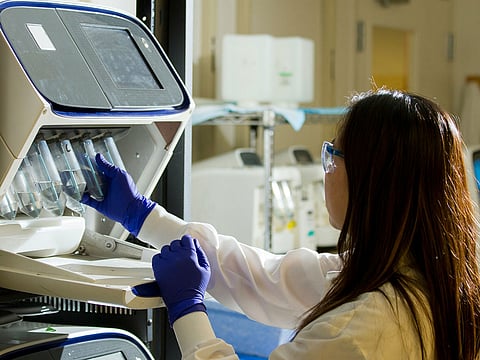
Across the global healthcare landscape, medicine is steadily shifting from a reactive model of care to one rooted in prediction, prevention and personalisation. At the heart of this transformation lies genetic medicine, a field that is redefining how clinicians understand disease risk, guide treatment decisions, and support patients in planning healthier futures.
The growing importance of genetic health is reflected in global data. According to the World Health Organisation, congenital and genetic disorders contribute to hundreds of thousands of infant and childhood deaths annually worldwide (WHO 2026), reinforcing the importance of earlier screening, diagnosis, and intervention. As countries continue investing in precision medicine and genomics, reproductive and genetic counselling are increasingly being recognised as essential components of preventive healthcare, particularly in fertility planning, inherited disease prevention, and maternal health.
Within the Gulf region, these conversations carry even greater significance. The World Health Organisation’s Eastern Mediterranean Regional Office has highlighted the comparatively high prevalence of inherited blood disorders, including thalassaemia and sickle cell disease, across parts of the region. Regional genetic factors can also increase the likelihood of certain autosomal recessive conditions. National premarital genetic screening helps identify carriers and at-risk couples early, supporting informed reproductive decision-making, while newborn screening enables early diagnosis and timely intervention. In this context, fertility services and genetic counselling play an important role in helping families better understand inherited risks and explore appropriate reproductive options. However, IVF with preimplantation genetic testing does not replace premarital, prenatal, or newborn screening, or specialist follow-up. Rather, these measures work together as part of a comprehensive reproductive care
Proactive approach
In the UAE, where healthcare innovation continues to advance under a forward-looking national vision, organisations are helping shape a more proactive and personalised approach to care through integrated fertility and genetic medicine services.
Within this evolving healthcare landscape, these organisations continue to advance a patient-centred model that integrates innovation, multidisciplinary collaboration, and evidence-based care. Through its specialised fertility and genetic services across institutions, they help patients navigate some of the most complex reproductive and genetic challenges with greater precision, reassurance, and hope.
Importantly, genetic counselling today extends far beyond rare disease diagnosis. It is increasingly becoming a foundational component of reproductive medicine, particularly in fertility planning, recurrent pregnancy loss investigations, inherited disease screening, and assisted reproductive technologies such as in vitro fertilisation (IVF) and intracytoplasmic sperm injection (ICSI).
Fertility challenges
For many couples, fertility challenges are often understood only through a physical or hormonal lens. Yet genetics can play a critical, and sometimes hidden, role in infertility, recurrent miscarriages, failed implantation, or inherited reproductive risks. Early genetic screening and counselling therefore provide an opportunity not only to better understand these risks, but also to proactively guide treatment strategies and improve outcomes.
This proactive approach is particularly significant in a region where family wellbeing remains deeply valued, both culturally and socially. When delivered thoughtfully and ethically, genetic counselling allows healthcare providers to support patients with sensitivity, privacy, and informed guidance — principles that remain essential within the UAE healthcare ecosystem.
Clinical case
A recent clinical case across SEHA’s fertility centres illustrates how genetics-led reproductive medicine is transforming patient outcomes in highly complex circumstances.
A couple undergoing fertility treatment discovered through pre-IVF carrier screening that both partners carried a pathogenic genetic variant in the CD36 gene, associated with Platelet Glycoprotein IV (GPIV). Their reproductive journey had already included recurrent miscarriages, an ectopic pregnancy, and longstanding fertility challenges. Through a personalised treatment pathway integrating advanced IVF techniques, Preimplantation Genetic Testing for Aneuploidy (PGT-A), and Preimplantation Genetic Testing for Monogenic Disorders (PGT-M), the couple ultimately achieved a successful pregnancy following the transfer of a carefully selected embryo.
The case underscored the value of combining reproductive medicine with proactive genetic counselling to reduce reproductive risks and improve the likelihood of a healthy pregnancy.
This example reflects a broader shift in healthcare thinking: fertility care is no longer limited to treatment alone. It is increasingly focused on informed planning, early intervention, and personalised decision-making.
Multidisciplinary collaboration
This also reinforces the growing importance of multidisciplinary collaboration in modern medicine. Genetic counsellors, fertility specialists, embryologists, haematologists, and laboratory teams each contribute to a coordinated ecosystem of care designed around the unique medical and emotional needs of every patient.
This integrated approach aligns closely with the UAE’s broader ambitions to become a global hub for advanced healthcare and precision medicine. As the country continues investing in genomics, biotechnology, and AI-enabled healthcare systems, genetic counselling is expected to play an even more central role in preventive medicine and reproductive health strategies.
As medicine becomes increasingly personalised, the future of healthcare will depend not only on treating disease, but on understanding risk before it manifests, preserving options before they are lost, and supporting patients through every stage of their healthcare journey with clarity and compassion.
In many ways, genetic counselling represents exactly that future: one where science, prevention, and personalised care come together to shape healthier generations across the UAE and beyond.

Dr Arianna D’Angelo is Reproductive Medicine Consultant at SEHA’s Corniche Fertility Centre


