Why the future of healthcare in the UAE depends on connected intelligence
The UAE is using digital health and connected systems to build a smarter model of care
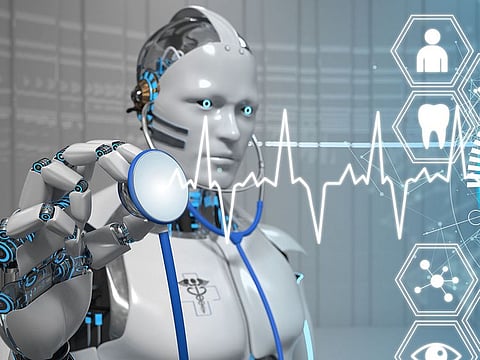
Healthcare across the UAE has entered a defining moment. Historically, medical systems were largely designed to respond to an illness once it occurred; care was often fragmented and resource intensive, placing growing pressure on hospitals, clinicians, and national healthcare systems. But today, a different model is taking shape, which is more connected, predictive, and focused on prevention rather than reaction.
This shift is being accelerated by ambitious national transformation agendas such as We the UAE 2031, strategic investments in digital health, and a growing recognition that healthcare systems must evolve swiftly to meet rising patient expectations, changing demographics, and increasing operational complexity.
Across the UAE, a new wave of strategic investments is rapidly reshaping the nation’s healthcare landscape and accelerating its shift toward innovation driven, preventive, and precision focused models of care. Recent commitments to advance proactive health and performance science highlight Abu Dhabi’s ambition to build world class preventive health capabilities, while major private sector plans to develop large scale healthcare networks reflect growing momentum to expand high quality clinical capacity nationwide.
As the UAE accelerates this transformation, it is important that we remain deeply committed to supporting the nation’s healthcare ambitions. For decades, companies have partnered with UAE health authorities, providers, and innovators to strengthen patient safety, advance clinical excellence, and build the foundations of a more connected, data driven system. Today, that commitment is only growing stronger as these organisations align regional strategy with the UAE’s vision for preventive, predictive, and precision focused care.
Bold ambition
At the policy level, Dubai’s establishment of the Dubai Longevity Authority signals a bold ambition to position the emirate as a global hub for regulated longevity and advanced wellness services. Meanwhile, Abu Dhabi’s newly launched Health, Endurance, Longevity, and Medicine (HELM) cluster, championed by the Abu Dhabi Department of Economic Development, ADIO, and the Department of Health, brings together partners such as MBZUAI and Hub71 to accelerate breakthroughs in AI powered drug discovery, biotechnology, and personalised medicine. Together, these initiatives highlight the UAE’s determination to build a future ready healthcare ecosystem anchored in innovation, investment, and scientific leadership.
Yet the future of healthcare will not be defined simply by how much technology we adopt. It will depend on how effectively we use technology to solve healthcare’s most persistent challenges such as improving patient safety, reducing inefficiencies, empowering clinicians, and enabling faster, more informed decisions. This is where Artificial Intelligence (AI) is beginning to move from ambition to practical application.
Integration of datasets
For several years, conversations around AI in healthcare focused largely on possibility. Today, we are increasingly seeing proof of value. Across hospitals in the region, AI-enabled technologies, automation, and connected systems are being deployed to address critical operational and clinical challenges, particularly in medication safety, workflow efficiency, and care coordination. Increasingly, health systems are also integrating comprehensive datasets such as genotype, phenotype, and wearable derived information into intelligent, AI driven platforms that function as real world evidence engines. These capabilities are accelerating drug discovery, enabling real time assessment of treatment impact, and laying the groundwork for more precise, personalised models of care.
The impact can be significant. AI Agents within Abu Dhabi’s Unified Medical Operations Command Centre (UMOC), which have forty times the manpower of the traditional workforce, are detecting incidents in real-time, enabling faster emergency response, enhanced care within the ambulance, and creating a continuous intelligence loop. And earlier this year, Emirates Health Services (EHS) unveiled ‘Amal’, an AI physician assistant that will conduct interactive pre-consultation interviews with patients to generate accurate and comprehensive medical summaries that support faster treatment decisions and reduce waiting times.
However, AI alone is not enough. Healthcare systems generate extraordinary amounts of data every day, yet one of healthcare’s longstanding challenges has been data fragmentation, where information often exists across multiple systems that do not communicate seamlessly with one another. This lack of cohesion creates gaps that limit the full potential of data-driven decision making. Without interoperability, even the most advanced technologies struggle to deliver meaningful impact.
Connected care
Connected care changes this dynamic by enabling information to flow more seamlessly across systems, devices, and care settings. When clinicians can access integrated, real-time information, they are better positioned to identify risks earlier, make faster decisions, and coordinate care more effectively. For healthcare leaders, connected intelligence also improves visibility into operations, helping optimise resources and strengthen system performance. Perhaps most importantly, connected care is helping healthcare move toward prediction rather than reaction.
In several organisations, this transition is unfolding in real time across the Middle East, Turkiye and Africa where healthcare providers are seeking integrated solutions that connect medication management, infusion systems, monitoring technologies, and clinical data into a more unified care experience. The objective is not technology for its own sake, but empowering clinicians with earlier and clearer insights to improve patient outcomes.
Ultimately, the question is no longer whether healthcare will become predictive and connected; that future is already emerging. The real measure of transformation will not be how digital hospitals become, but how effectively intelligence is translated into action.
The systems that lead will be those that anticipate risk earlier, empower clinicians more fully, and deliver safer, more resilient care at scale. Across the Middle East, this shift is no longer aspirational, it is already beginning to take shape.
Nazih Darwish is President, META at BD


