Dubai and the rise of “Dubai-it”: How a city became a global model
Emirate’s success is no longer measured only in trade, but in its approach to governance
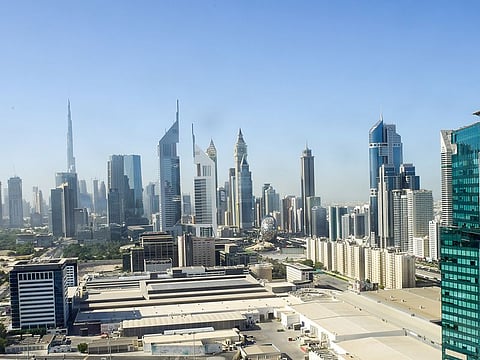
For decades, cities have inspired imitators. Paris symbolised elegance. New York represented ambition. Singapore became synonymous with efficiency. However, few cities have generated their own verb.
Today, policymakers, urban planners, investors, and commentators increasingly speak of “Dubai-izing” or “Dubai-it” when describing efforts to transform cities into globally connected hubs of commerce, tourism, innovation, and investment. Whether discussing Saudi Arabia’s megaprojects, Central Asian modernisation efforts, African special economic zones, or ambitious urban renewal plans elsewhere, Dubai has become more than a city. It has become a model.
That evolution is remarkable considering how often Dubai has been misunderstood.
Beyond the mirage
For many outside observers, Dubai has long suffered from a caricature problem.
To some Western critics, it is little more than a collection of skyscrapers in the desert, a city of luxury hotels, shopping malls, influencers, and artificial islands. Others portray it as an economy dependent solely on real estate speculation or as a transient stopover between Europe and Asia.
These perceptions persist despite being increasingly disconnected from reality.
Dubai today is one of the world’s most diversified urban economies. Trade, logistics, aviation, finance, technology, tourism, healthcare, education, and professional services collectively form the backbone of its economic model. Long before the recent push toward artificial intelligence and digital transformation, Dubai had already established itself as one of the most globally connected cities on earth.
Its success was never simply about building iconic structures. It was about building institutions, connectivity, and confidence.
Under the leadership of His Highness Sheikh Mohammed bin Rashid Al Maktoum, Vice-President and Prime Minister of the UAE and Ruler of Dubai, Dubai embraced a philosophy rare in the region and, indeed, globally: the willingness to continuously reinvent itself.
While many cities rely on geography or natural resources, Dubai has repeatedly sought to create advantages where none naturally existed. It transformed a modest Gulf trading port into a global logistics centre. It turned an airline into an instrument of national branding. It built free zones before they became fashionable. It invested heavily in digital government before “smart cities” became a global trend.
Dubai has built a diversified, globally connected economy designed to absorb geopolitical shocks without becoming overly dependent on any single market, sector, or external partner.
What Dubai actually represents
The enduring appeal of Dubai lies not in its skyline but in the values it projects.
Dubai stands for openness in a region often associated with political uncertainty.
It stands for predictability in a world increasingly characterised by disruption.
It stands for pragmatism over ideology.
Perhaps most importantly, it stands for opportunity.
Beyond economic opportunity, Dubai has built its brand around tolerance, religious coexistence, safety, and multiculturalism. These qualities, combined with exceptionally low crime rates and a forward-looking embrace of smart-city technologies, artificial intelligence, and digital infrastructure.
More than 200 nationalities live and work in Dubai. Unlike many global cities that struggle with demographic decline, ageing populations, or political polarisation, Dubai has positioned itself as a magnet for talent, entrepreneurs, investors, and professionals from virtually every continent.
Increasingly, Dubai is valued less as a market than as a global platform. For multinational companies, entrepreneurs, and investors, the emirate serves as a launchpad into the Middle East, Africa, South Asia, and the wider Global South. Its appeal lies not simply in the size of its economy, but in its ability to connect capital, talent, and ideas to global markets.
The “Dubai-it” phenomenon
The emergence of the phrase “Dubai-it” reflects something deeper than admiration for urban development.
Increasingly, however, Dubai also stands for a distinct philosophy of governance and execution. In June 2026, Sheikh Mohammed formally introduced the concept of “Dubai-it”, transforming the city’s development experience into a defined verb and management philosophy. According to Sheikh Mohammed, to “Dubai-it” means “to achieve something extraordinary with excellence in record time”, a formulation that captures the emirate’s emphasis on ambition, execution, speed, quality, and visible results.
Unlike many development models that celebrate vision alone, Dubai-it places execution at the centre. The philosophy rests on a simple premise: ambition has no value without implementation, speed does not mean recklessness, and quality does not require bureaucratic delay.
The Dubai formula rests on a combination of long-term planning, pro-business policies, strategic infrastructure investment, and global connectivity. Guided by a clear state vision but energised by private-sector initiative, Dubai has developed a reputation for turning ambitious ideas into tangible results.
Cities seeking to “Dubai-it” are not necessarily trying to replicate the architecture of Dubai. They are attempting to emulate a broader governance model.
From the Gulf to Central Asia, from Africa to Southeast Asia, policymakers increasingly reference Dubai when discussing economic diversification, logistics corridors, aviation hubs, free zones, tourism development, and digital government initiatives.
The irony is that many of these admirers are not trying to become “the next Dubai.” Rather, they are attempting to borrow elements of the Dubai playbook while adapting them to local circumstances.
Dubai has become a benchmark against which urban transformation is measured.
Standing apart
Dubai remains unique.
It is arguably the Middle East’s most international city and one of the few places in the world where geography, nationality, and ideology often seem secondary to economic participation.
More interestingly, Dubai increasingly competes not with neighbouring capitals but with global cities.
Its peer group is less likely to be regional capitals and more likely to include Singapore, Hong Kong, London, and New York City.
What distinguishes Dubai is its capacity for execution: the ability to move from concept to implementation quickly, efficiently, and at scale.
Projects move faster. Regulations adapt more quickly. Infrastructure is delivered with greater efficiency. Strategic visions often translate into visible outcomes within years rather than decades.
In an era when many democracies face policy paralysis and bureaucratic inertia, this agility has become one of Dubai’s greatest competitive advantages.
For all the criticism, misconceptions, and scepticism that continue to surround it, Dubai has become one of the most influential urban success stories of the twenty-first century. Its greatest export may no longer be trade, tourism, or finance.
It may be the model itself.
Dr Kristian Alexander is a geopolitical analyst who previously worked as a Senior Fellow and Lead Researcher at the Rabdan Security & Defence Institute (Abu Dhabi), as well as Trends Research & Advisory (Abu Dhabi), and prior to that as an Assistant Professor at Zayed University (Abu Dhabi).


