6 Philippine laws needed to help draw OFWs home
Ultimate reintegration scheme is good governance; best way to ensure it is transparency
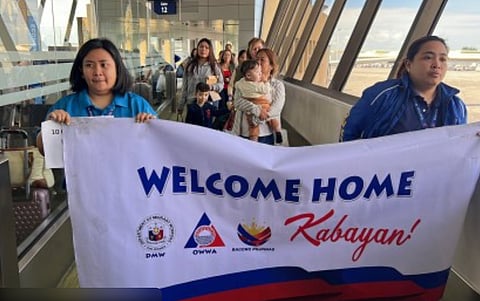
For decades, overseas Filipino workers have been called “modern-day heroes.”
They have kept the Philippine economy afloat through remittances (up 3.3% to $35.634 billion in 2025, from $34.493 billion in 2024), sacrifice, and sheer grit.


But when the contracts end and the "Balikbayan" boxes stop arriving, a hard question lingers: what does “reintegration” really mean?
Sustainable reintegration is not a welcome tarpaulin at the airport.
It is not a one-time livelihood seminar.
It is the creation of a country worth coming home to.
The Philippines has made institutional strides, including the creation of the Department of Migrant Workers (DMW) to consolidate services for OFWs and the OFW Hospital in Clark.
These are important signals.
Fragile reintegration
But reintegration will remain fragile unless we confront the deeper structural issues that push many Filipinos to leave in the first place — weak institutions, corruption, limited economic mobility, and a lack of trust in governance.
#1. Whistleblower Protection Act
Congress must enact a strong Whistleblower Protection Act, similar to those in advanced democracies.
Many OFWs return with savings meant to build businesses or invest in property. But they enter an environment where corruption can quietly eat away at capital — from permits to procurement to taxation.
Without robust protection for insiders who expose wrongdoing, corruption thrives in silence.
We found that to obtain a building permit for a simple, two-storey building project, it took my wife and I four months to complete.
A credible whistleblower law would deter unethical and illegal acts across agencies and send a clear message: the Philippines protects truth-tellers, not wrongdoers.
#2. Update the 1955 Bank Secrecy Act
It's high time to consider amending the 1955 Bank Secrecy Act. Designed in another era, it now often shields ill-gotten wealth more effectively than it protects ordinary depositors.
Aligning it with global anti-money laundering standards would make it harder for corrupt officials to hide stolen funds while improving investor confidence.
OFWs who come home to invest deserve a transparent financial system that does not protect the corrupt under the guise of privacy.
#3. Pass Anti-Dynasty Law
The long-delayed Anti-Dynasty Law — expressly envisioned in the 1987 Constitution — must finally be enacted. Political dynasties entrench patronage systems that weaken accountability, distort local economies and destroy jobs.
When political competition is stifled, reform stagnates.
When nepotism rules a nation, the people lose hope is real merit.
OFWs returning to their provinces need fair governance, not closed political circles that determine opportunity based on lineage rather than merit.
#4. Reform Customs, BIR
Corruption in frontline revenue agencies such as the Bureau of Internal Revenue and the Bureau of Customs must be decisively curbed.
A leaky Customs system, and convoluted Customs laws, distort the local economy, discourages investments and jobs.
These institutions directly affect business formation, trade, and pricing. If returning OFWs encounter arbitrary assessments or illicit “facilitation” demands, their capital will shrink before it grows.
A functioning whistleblower framework would reinforce reforms here, but leadership and digitalization must also reduce discretion and increase transparency.
#5. Boost Ombudman
The Office of the Ombudsman must be strengthened — not weakened — in its capacity to investigate and prosecute erring officials. Swift and credible accountability is essential to restoring public trust.
OFWs who have worked in countries with strict enforcement standards know the difference between symbolic oversight and real consequences.
#6. Human capital investment
Finally, reintegration must include serious human capital investment. Many OFWs return with valuable skills but need retooling for a fast-changing domestic economy.
Expanding online retraining programs — flexible, affordable, and accessible — can bridge knowledge gaps.
These must be paired with provincial, hands-on training through the Technical Education and Skills Development Authority (TESDA), ensuring that returnees outside Metro Manila have real pathways to employment, entrepreneurship, and emerging industries.
Sustainable reintegration is about dignity
It is about ensuring that years spent abroad translate into opportunity at home. If we want fewer Filipinos to feel compelled to leave — and more to return for good — then reform cannot be cosmetic.
The ultimate reintegration program is good governance. The country's productive and creative capacity can only thrive fully in an atmosphere of fairness, opportunities for all, meritocracy and rewarding genuine hard work.
Nepotism, opaque rules, gaming the bureaucracy kills hope in the future, erodes trust in government, and triggers flight in both financial and human capital.
The best way to ensure governance is radical transparency, which while not possible with the current level of legislative support, presents a huge opportunity for massive reform if given the right impetus in law.
These legislations will define the present generation of Filipino lawmakers. Together, they could usher a renewed hope for the people.
Without them, remittances will continue to flow in. But hope will continue to flow out.
What a meaningful OFW reintegration program entails
Over the years, Congress has enacted a set of interlocking laws that collectively aim to turn overseas work into a temporary phase, not a permanent necessity.
These six measures form the inward-looking legal backbone of the country’s OFW reintegration framework.
A truly meaningful OFW reintegration does not begin at the airport — it begins by confronting the very reason Filipinos had to leave.
It is not about welcome banners, token loans, or ribbon-cutting ceremonies. It is about dismantling the system that makes migration-for-work feel like the only viable dream.
Real reintegration needs a change in mindset: It dares to ask why millions must cross oceans to find dignity, stability, and fair pay.
It refuses to accept that exile is destiny.
A meaningful OFW reintegration is one that uproots the soil that forces departure — and finally makes staying home a choice, not a sacrifice.
Either this generation of Filipino lawmakers lead change the name of the game through legislative reforms, or the entire nation of 116 million simply get of the same.


