UAE parents of child stars welcome under-15s social ban despite 'owing careers to social media'
Parents of young stars in UAE say they see a balance between online safety and opportunity
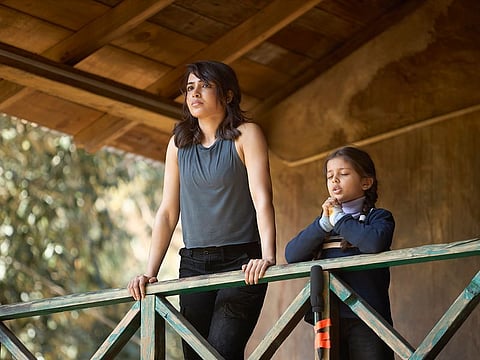
Dubai: For Dubai mother Pratyusha Parekh, mother of UAE-based Bollywood child actor and dancer Kashvi Majmundar, the debate around banning children from social media is deeply personal.
While she welcomes moves to better protect children online, Pratyusha says that social media has played an important role in helping her daughter showcase her talent.
"Social media without parental supervision is terrible. So we welcome the proposed UAE ban and it was much needed, but you have to also remember that Kashvi got opportunities in Bollywood and award shows because of her visibility gained from her Instagram dance reels," Pratyusha told Gulf News.
It's no secret that the award-winning Citadel star Kashvi Majmundar's journey into the Hindi film industry began on social media. On Instagram alone, operated by her mother Pratyusha, Kashvi boasts 170,000 followers.
Her daughter was just seven years old when she began posting videos of herself dancing to hit Bollywood songs online. What started as a fun creative outlet soon opened doors that would have been impossible to imagine.
Her performances caught attention online, and over time, opportunities began to follow, including Bollywood actress and dancer Nora Fatehi personally selecting her to perform at an awards night IIFA in Abu Dhabi.
"While I welcome the move to ban social media for kids under 15 in the UAE, you cannot ignore the fact that social media opened many doors for her," Pratyusha tells Gulf News.
"In a way, we owe Kashvi's Bollywood career to social media that I have been monitoring and operating closely."
Today, Kashvi has already played the young Priyanka Chopra in the spy thriller series Citadel: Honey Bunny, streaming on Prime Video, and continues to build a career in entertainment.
As countries around the world debate tighter restrictions on children's access to social media, parents of young performers and influencers are discussing how to balance online safety with opportunities for their young talents.
On one hand are legitimate concerns around trolling, validation-seeking behaviour and online safety. On the other are the undeniable opportunities social media can create for talented youngsters.
Majmundar believes parental involvement is key.
"Parents should be watchful of child influencers. Children shouldn't be seeking validation online and they shouldn't be exposed to trolling. We strictly monitored her account."
She wonders how future regulations might affect young performers who currently use social media to showcase their work.
"For children in the performing arts, social media often works like a digital portfolio. Casting directors, brands and production houses can see their work instantly. That's how many opportunities came Kashvi's way, but it was always under our supervision as parents," she says.
"Young children should never be left to manage their own social media accounts. Parents need to be involved every step of the way to make sure they are protected."
A similar view is shared by Dubai-based entrepreneur Purwanti Paille, whose daughter, singer Celinedee Matahari, has built an audience through social media while pursuing a career in music. Her career folklore is all about Oscar-winning AR Rahman discovering her her. A reel posted of their interaction went viral and helped her nab projects in India. Born to an Indonesian mother and a French Father, that video of her playing for AR Rahman went viral and she is in an all-India music tour.
"As parents, we closely monitored her social media account when she was young. But there's no denying that social media virality of that AR Rahman reel gave her many career breaks," said Purwanti to Gulf News.
That visibility helped propel Celine's career. Videos of her performances spread online, helping her reach wider audiences and opening doors to major opportunities.
"She went viral through Instagram and TikTok," says Celindee's mother. "Indirectly, social media played a big role."
Now 18, Celine has already completed tours across India, performed at Comic Con events and continues to pursue opportunities in the entertainment industry, with Bollywood among her future ambitions.
"If it is related to talent, parents have to monitor it all the way," says Frederic. "There should be regulations."
The family also believes that educating children about online behaviour is important.
"If you're in the public eye, you shouldn't worry too much about what people say," she says.
"We educated her about trolling. We tell her those comments are not real and not to let them affect her confidence."
For many parents of young performers, social media serves a practical purpose beyond popularity. It acts as a direct connection between artists and audiences.
"Instagram and TikTok allow her to connect with people through her singing," explains Kashvi's mother.
"That is the main purpose."
The conversation is playing out in other countries too. In Australia, where social media restrictions for minors have already taken effect, parents of influencers have reported mixed experiences, with some welcoming the reduction in screen-time pressures while others worry about children losing important social and career connections.

