The Flash at 12: The highs, lows and beautiful mess of the CW series
From lightning strike to finale: The CW's Flash races through 12 years
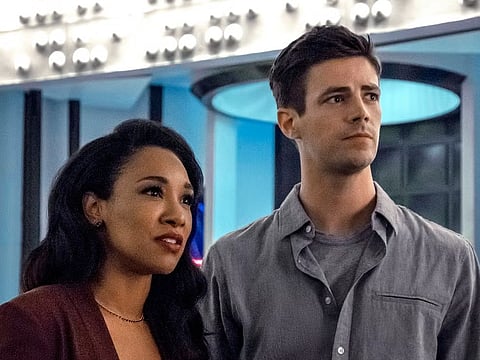
The fastest man alive, and he will never let you forget it.
Twelve years ago this week, a lanky CSI got struck by lightning and The CW got the second-most-watched pilot in its history, behind only The Vampire Diaries. Nine seasons and 184 episodes later, the show crossed the finish line on May 24, 2023, the last Arrowverse series standing. For a show about the fastest man alive, it took a remarkably scenic route.
Ask ten fans about The Flash and you get two answers. Seasons 1 to 3 (or 4, depending on how forgiving you are) were appointment TV. Everything after is either an underrated comfort watch or a cautionary tale about what happens when you run in circles long enough to wear a groove in the Speed Force.
The ratings tell the story without any opinions attached. Season 1 averaged 4.62 million viewers; Season 4 fell to 3.04 million; Season 5 dropped to 2.43 million. By the four-part series finale, the audience averaged roughly 430,000. That's a time remnant of a decline.
The best: When the show was faster than its own plot holes
1. The Harrison Wells reveal (Season 1). Tom Cavanagh spent half a season as Barry's kindly mentor, then stood up out of a wheelchair and became Eobard Thawne, the man who killed Barry's mother. It remains the Arrowverse's single best twist. Cavanagh went on to play a small multiversal army of Wells variants, but Season 1 Eobard is the one that still gives people chills.
2. "Fast Enough" (Season 1 finale). Barry finally runs back to the night his mother died, and chooses not to save her. He sits with her instead and tells her he's okay. Superhero shows rarely let the hero lose on purpose, and this one wrecked a generation of viewers.
3. "Flash of Two Worlds" (Season 2). The show opened the multiverse with John Wesley Shipp's Jay Garrick, a nod to Shipp's own 1990 Flash. It was nerdy, sincere and confident, which is the Flash formula at its best.
4. Zoom kills Henry Allen (Season 2 finale arc). Barry's dad, played by that same John Wesley Shipp, dies in front of him. Grant Gustin's scream was the moment fans realised this was more than a cheerful CW procedural.
5. "Duet" (Season 3). A full musical crossover with Supergirl, Gustin and Melissa Benoist both Glee alumni. It should not have worked. It absolutely did.
6. "Enter Flashtime" (Season 4). A nuclear bomb goes off in Central City, and the whole episode happens in the split second before it destroys everything. Barry, Jay and Jesse Quick fight time itself. Critics singled it out as one of the best hours of that season, and it is the strongest argument that Season 4 had more in the tank than its reputation suggests.
7. Oliver's last visit (Season 9). Stephen Amell returned in "It's My Party and I'll Die If I Want To". Several finale reviewers argued this episode felt more like a proper send-off than the actual finale. It played like a reunion with an old friend who still owes you a favor.
The worst: When Barry tripped over his own timeline
1. Flashpoint and its hangover (Season 3). Barry saves his mom, breaks reality, then un-saves her. The fallout killed Cisco's brother and gave Caitlin ice powers, and Barry spent the season apologizing. The show learned the wrong lesson: time travel became a reset button instead of a sin.
2. Savitar is... Barry (Season 3). A deity of speed in spiky armor turns out to be a time remnant of the hero. After Reverse-Flash, Zoom and now Savitar, the "evil speedster who is secretly someone we know" pattern was running on fumes.
3. The Thinker's endless back half (Season 4). DeVoe started as a refreshingly cerebral villain. Then the show stalled, and reviewers at the time complained the episodes were treading water before a finale that had to cram everything in. Also, Iris telling everyone "we are the Flash" became a meme that still haunts fan forums.
4. Iris stuck in a mirror (Season 6). The show's female lead spent much of the season replaced by a Mirrorverse double. It was meant to be a slow-burn mystery. It was just a slow burn.
5. The Forces (Season 7). A Sage Force, a Strength Force and a Still Force all arrived at once, alongside a rebooted Speed Force that looked like Barry's mom. Critics noted the arc tried to cram too many plot points into eight episodes, so nothing ever felt at stake. Somewhere a physics teacher is still sighing.
6. The finale's speed-run fight (Season 9). Eddie Thawne's return as Cobalt Blue was a genuinely smart full-circle idea, and Rick Cosnett was terrific. But his legion of Reverse-Flash, Zoom, Savitar and Godspeed went down so fast that one review called the finale the season's low point, with dodgy effects and rushed editing. Nine years of villains, defeated during an ad break.
Why Season 4 is the fault line
Season 4 is where the fandom split, because it is where almost everything behind the camera changed at once. The divide isn't really "good seasons versus bad seasons". It's two groups who wanted different shows, and after 2018 the show stopped trying to be both.
The kitchen got new chefs. Co-showrunner Aaron Helbing left in May 2017, and co-creator Andrew Kreisberg was fired that November after misconduct allegations, mid-Season 4. Todd Helbing ran the show alone through Season 5, then stepped back. Eric Wallace, who joined in Season 4, became sole showrunner from Season 6 to the end. Fans who loved the early tone tend to date the decline to these exits; Wallace's defenders point out he wrote some of the show's late highlights.
The speedster formula ran out of road. Seasons 1 to 3 each ended with Barry outrunning a darker speedster. Season 4 deliberately swapped in a brainy non-speedster, and later seasons tried bio-tech villains, Forces and deities Purists felt the show lost its spine. Others were relieved to finally see a villain who couldn't just run faster.
It stopped being one story a year. From Season 6, the show split seasons into shorter "graphic novel" arcs. Then COVID cut Season 6 short, pushed its leftovers into Season 7, and shortened that season too. Wallace himself later said the team was at the end of its rope by the end of Season 7. Tighter arcs suited some viewers; others felt the show was constantly starting over.
The original band broke up. Cisco (Carlos Valdes) left in Season 7, Tom Cavanagh's last regular season was Season 7, Hartley Sawyer's Ralph Dibny was written out after his 2020 firing, and Caitlin's story fractured into Frost, Khione and more Snow sisters. For fans who came for the S.T.A.R. Labs family, the found-family chemistry was the show, and it thinned out.
The fandom itself got loud. Iris West's growing role, from "We are the Flash" onward, became a lightning rod. Some fans welcomed a lead heroine with real agency; others felt she was written as a narrator of Barry's arc rather than a person. That debate turned ugly enough that Candice Patton has spoken publicly about the harassment she faced.
The network was shrinking around it. Arrow ended in 2020, the Arrowverse wound down, and The CW's priorities shifted. Season 9 got just 13 episodes to wrap nine years of mythology. You can feel the clock in every scene.
The verdict at 12
The Flash was never really about speed. It was about a guy who kept trying to fix the past and kept learning, slowly, that he couldn't. Fittingly, the fandom has spent years doing the same thing with Seasons 5 to 9.
The fair reading is this: the first three seasons are some of the best superhero TV ever made on a network budget, and the later ones are uneven but never heartless. Grant Gustin didn't just play Barry Allen; for nine years he was the Flash, even when the scripts were jogging. The finale ended on hope, a growing speedster family and a world where nothing has to be impossible. Twelve years on, that's still a pretty good place to stop running.


