'Project Hail Mary' shows why practical effects still matter in sci-fi films
Practical sets, puppets, and real lighting bring space to life like never before
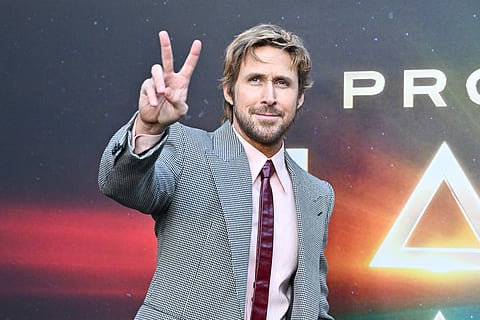
Dubai: When most audiences think of modern space films, they imagine actors standing in front of massive green screens while entire galaxies are added later on computers. But Project Hail Mary, the sci-fi film starring Ryan Gosling and directed by Phil Lord and Christopher Miller, took a very different approach.
Instead of relying heavily on green screen environments, the production team built large physical sets and used practical filmmaking techniques to create a more realistic space environment. One of the most talked-about production decisions behind Project Hail Mary was the filmmakers’ claim that the movie was shot without using any green screen at all.
However, this does not mean the film avoided digital effects altogether. The directors later clarified that the film still contains thousands of visual effects shots, including space environments, spacecraft exteriors, and the alien character but these were added to footage that was filmed on real sets rather than against green screens. In simple terms, the movie still uses CGI, but the actors were not acting in empty green rooms.
Much of the film takes place inside the spacecraft called the Hail Mary, and instead of creating it digitally, the production team constructed the interior of the spaceship as a full physical set. They also built sections of the exterior so actors could interact with real surfaces and lighting.
This approach allowed the cinematographer to use real lighting bouncing off walls and objects, which makes scenes look more natural on camera. In many green screen films, lighting can look artificial because the environment is added later.
For Project Hail Mary, the filmmakers used dark or black backgrounds for some space scenes instead of green screens, which helped maintain realistic lighting while still allowing digital space environments to be added later. It was not a CGI-free film, but it is a hybrid style of filmmaking that combines practical sets, puppetry, real lighting, and digital visual effects. This method is often considered more time-consuming and expensive, but many filmmakers believe it results in more realistic visuals and better performances from actors.
The practical effects in Project Hail Mary are already being recognised as one of the film’s standout achievements. According to Variety, after attending a screening, filmmaker Guillermo del Toro praised the production, saying the extensive use of practical sets, puppetry and physical effects was inspiring to witness. "What Phil and Chris did here, the amount of practical sets and effects and puppets is just so beautiful to see, so inspiring to hold it’s a goal and aspiration and a commitment. Specially now so much now.” He said.
Article contributed by Saarangi Aji


