You won’t be holding a 6G phone before 2030, CEO of UAE's e& says at WGS2026
e& says 5.5G is already delivering ultra-fast speeds and low latency across the UAE
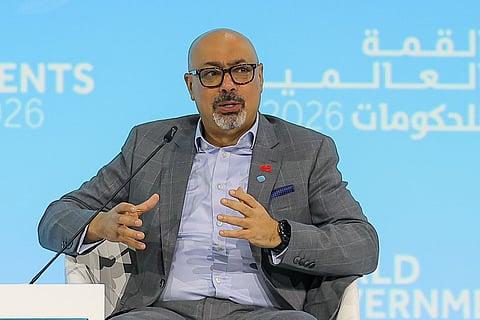
Dubai: You won’t be holding a 6G phone before 2030, the CEO of e& said at the World Government Summit in Dubai, urging consumers to temper expectations around the next generation of mobile technology.
“You probably will not have a phone in your hand that shows 6G before 2030,” Hatem Dowidar said on Thursday.
Dowidar explained that while excitement around 6G is growing, the technology is still in its early stages. “We expect standards for 6G to be almost finalised in the next two years, by around 2028,” he said. “After that, you will see testing — and only then will networks start to roll out.”
The earliest commercial availability, he added, would be 2030, with gradual deployment after that.
While 6G may still be years away, Dowidar said many of its benefits are already being delivered through 5.5G, which has recently been introduced in the UAE.
“For people living here, we call it 5.5G,” he said. “That already brings a lot of the benefits we expect from 6G — ultra-low latency, super-fast speeds and much better performance.”
Dowidar said 6G will go beyond speed, integrating new technologies that change how devices connect. “6G will probably integrate more with direct-to-device connectivity and satellites,” he said, adding that these features are still being worked out as part of global standards.
Geopolitical tensions
He also warned that geopolitical tensions could complicate the future of global networks. “The challenge today is to remain together,” he said, pointing to the risks of diverging standards.
“If standards split, like different plug types or voltages, it creates complexity, raises costs and hurts affordability,” Dowidar said. “If we want the whole world connected, especially the Global South, we need global standards.”
Dowidar said telecom companies like e& are also evolving beyond connectivity. “We are becoming part of a bigger ecosystem,” he said, pointing to digital payments and financial services for people who may not have access to traditional banks.
On artificial intelligence, his message was direct. “If your expertise is in an area that is repetitive and can be replaced by AI, it’s time to start looking at what you want to do next,” he said.
For now, Dowidar’s message on 6G was clear: “The future is coming — just not as fast as people think.”
The future is coming
Looking beyond connectivity, Dowidar said telecom companies like e& are evolving into broader digital ecosystems, offering services such as mobile payments and financial tools for people who may not have access to traditional banking.
He also offered blunt advice on artificial intelligence, particularly for young people and knowledge workers.
“If your work is repetitive and can be replaced by AI, it’s time to start thinking about what comes next,” he said, urging people to learn how to use AI tools effectively.
As for 6G, Dowidar’s message was clear: the future is coming — just not as fast as the hype suggests.
e& has been working on the building blocks of 6G for several years through advanced 5G and 5G-Advanced deployments, research partnerships and testbeds in the UAE.


