Trying to win back affection in London
Uber’s adoption of a more conciliatory tone could yet see it get back on the road
As a global disrupter, Uber is no stranger to conflict, and its instinct has always been pugilistic.
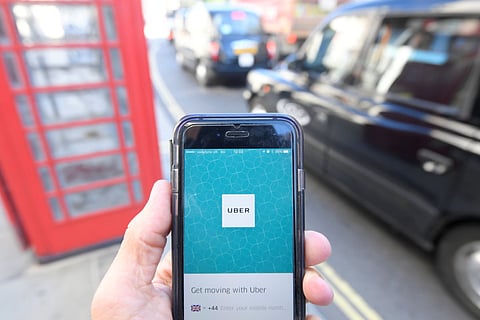
But three days after Transport for London (TfL) said it wouldn’t renew the ride-hailing service’s licence to operate, Uber all but prostrated itself to show its humility. In a full-page ad in The Evening Standard that began “Dear Londoners”, Uber’s new chief executive, Dara Khosrowshahi, apologised “for the mistakes we’ve made”, and acknowledged that “we must also change”.
He added, “You have my commitment we will work with London to make things right and keep this great global city moving safely.” In a letter to employees, Khosrowshahi said that “change comes from self-reflection” and that “the truth is that there is a high cost to a bad reputation”.
He pledged to be a “better partner to every city we operate in”. Welcome to the kinder, gentler Uber. The action in London is the first major public test for Khosrowshahi, the former chief executive of the online travel service Expedia, who succeeded the embattled Uber co-founder Travis Kalanick in August.
While it may be premature to compare him with Kalanick after he has been in the job for only a few weeks, his tone offers a marked contrast. Khosrowshahi “has been careful, tactful and humble, all quite a contrast from his predecessor”, said Mark Mahaney, chief internet analysts at RBC Capital Markets. “He’s not confrontational.”
No one expects Uber’s reputation for being brash, aggressive and, at times, immature to change overnight, but Khosrowshahi’s softer approach appears to be bearing fruit. Sadiq Khan, the popular mayor of London, said that he welcomed Khosrowshahi’s apology and would encourage transport regulators to meet with him. Despite the conciliatory words, Uber isn’t lying down entirely.
It is appealing the ruling, a move that will allow it to keep operating after its licence expires. It is still fighting in court over the status of its drivers and their lack of benefits. In a show of force, it mobilised its considerable user base — Uber says it has 3.5 million riders and 40,000 drivers in London — with a Change.org petition, “Save Your Uber in London”.
And as anxieties mount in London over the British withdrawal from the European Union, even Khosrowshahi’s reference to the city as a “great global city” was a not-so-subtle reminder that, without Uber, it wouldn’t be. It’s unclear how much of the change at the top of Uber has filtered down to the rank and file.
Khan pointedly contrasted Khosrowshahi’s approach to that of officials in Uber’s London operation, whom he described as arrogant. “I just wish Uber UK had acted in a similar manner in the recent past,” Khan told The Evening Standard. “This arrogance where big companies that have lots of customers don’t have to play by the rules is one that I think is wrong.”
Sam Knight, a journalist based in London, told me that the old Uber was on display when he did his interviews at the company’s headquarters in London’s financial district, known as the City. “London Uber is basically staffed by white people from Goldman Sachs in their 30s,” he said. “They’re slick City people executing a business plan that originated in San Francisco.
“They totally drank the Travis Kool-Aid. They just saw the backlash against Uber as a natural part of disruption and couldn’t see that there might be some legitimate objections.”
That’s not to say that the transport regulators’ stated objections — under the rubric that Uber isn’t “fit and proper” to hold a transport licence — are entirely what the dispute is about. As Uber has pointed out, the regulators’ specific concerns, about failing to report potentially criminal acts to the police and whether its medical and background checks on drivers were adequate, could have been resolved relatively easily.
The company insists that it complies with all London regulations but is open to negotiations and revisions. As in many cities, Uber has disrupted powerful interests in London, starting with the drivers of black cabs, who trace their lineage to 1634, and their influential Licensed Taxi Drivers Association.
Many people in London — and in the rest of Europe — view giant US technology companies, and Uber in particular, with intense suspicion and resentment. Even Khosrowshahi’s apology and conciliatory comments drew scathing retorts on Twitter.
Khosrowshahi has “been wise to approach this as both a political and business issue”, Mahaney said. “As head of Expedia, Dara had to deal with many disagreements with local governments over taxes and other policies, especially San Francisco and New York City. They all got resolved, generally without any public, aggressive confrontations.”
And Uber has prominent defenders in London. Britain’s minister for London, Greg Hands, criticised Khan, saying that banning Uber would “cause massive inconvenience to millions of Londoners, showing that the mayor is closed to business and innovation”.
“I don’t have that much sympathy for the black cab fleet,” Knight said. “You respect their craft, and they’re a skilled group of people. But you pay through the nose. They’re nearly all white males.
“They gripe all the time about immigration. The only reason I’d take one is if I was in the middle of London at rush hour and someone else was paying.”
In any event, banning Uber in London is unlikely to return the city to what some consider the more genteel status quo that existed before the company’s arrival. Although Uber is the only ride-hailing operation licensed there, its rival Lyft is eager to expand internationally and enter the London market.
Lyft officials have met with transport regulators in the past year. “I’d say the genie is out of the bottle,” Mahaney said. “The regulators may be able to tilt the playing field a little, but ride-sharing is a fact of life and I’d say a benefit of life in all major cities.”
Uber recognises the importance of what’s at stake: Kalanick has called London the “Champions League” of transportation. “This must be one of their most prestigious markets, and we’re a bulwark for Europe, which is much more hostile towards Uber than we are,” Knight said.
Both he and Mahaney predicted that Uber’s large dose of humility would help. In the end, “to be world class, London needs ride-sharing,” Knight said. “Uber will survive, clean up its act, and Khan will declare victory.”

