When will Elon Musk’s net worth hit $1 trillion?
Elon Musk's trillion-dollar milestone: Could it happen before end-2026?
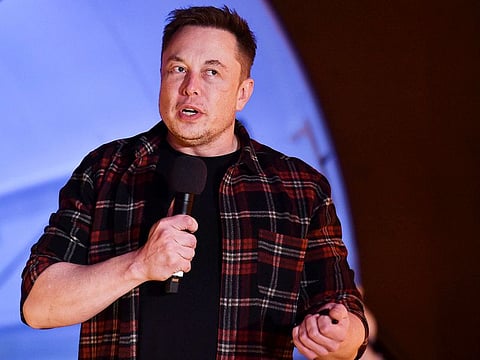
Elon Musk, the world’s richest man, could hit $1 trillion in net worth as early as end-2026, according to latest estimates.
As of February 26, 2026, Forbes data shows that the Tesla & SpaceX CEO’s real-time net worth at $849.3 billion (up $5.8B or 0.68% from the prior trading day’s close).
This makes him the world’s richest person by a wide margin and the first to cross $800 billion.
Bloomberg's estimate is lower, around $670 – $680B, due to more conservative private-company valuations. In general, prediction markets resolve based on Forbes.
On Tuesday, tech titans dominated the leaderboard while luxury and industrial giants took heavy hits, according to Forbes’ Real-Time Billionaires List, which tracks net-worth changes since 5 pm EST the previous trading day.
Musk led all winners with a stunning $5.7 billion gain, pushing his fortune further ahead of the pack.
Mark Zuckerberg followed closely, adding $4.8 billion as Meta shares climbed.
Former Microsoft CEO Steve Ballmer gained $2.9 billion, while Dell founder Michael Dell and Nvidia chief Jensen Huang each rose $2.3 billion.
Wealth tied to tech
The five biggest daily winners were all tied to technology and innovation-driven companies.
On the downside, LVMH chairman Bernard Arnault suffered the steepest loss, down $2.4 billion.
CATL chairman Robin Zeng shed $2.3 billion, L’Oréal heiress Françoise Bettencourt Meyers dropped $1.6 billion, Reliance Industries chairman Mukesh Ambani lost $1.4 billion, and biotech billionaire Patrick Soon-Shiong gave back $1.2 billion.
The contrasting fortunes reflect ongoing market rotation: investors rewarded AI, electric vehicles, and cloud computing while punishing exposure to luxury goods, batteries, and traditional conglomerates amid shifting economic signals.
Forbes’ Real-Time Billionaires List, updated continuously from public market data, offers the most transparent daily snapshot of the world’s wealthiest individuals.
Prediction game
As for Musk hitting $1 trillion, no one can predict the exact date — it’s highly speculative and depends on volatile factors like Tesla's stock price, SpaceX/xAI valuations, market conditions, and potential IPOs or mergers.
In general, prediction markets and analysts point to a “strong chance” in late 2026 or 2027.
Musk needs roughly another $150–$151 billion to hit $1 trillion.
His wealth breaks down mainly as:
~12% stake in Tesla (publicly traded, so highly volatile).
~42% stake in SpaceX (valued at $800B via a December 2025 private tender offer).
Stakes in the merged X (formerly Twitter)/xAI entity (valued around $125B+ including debt in recent reports), plus smaller holdings like Neuralink and The Boring Company.
The current movements in wealth serve as a vivid reminder that even the richest fortunes remain tightly linked to stock-market volatility.
In a single trading session, more than $25 billion in combined paper wealth changed hands among just these ten names.
Kalshi (which resolves strictly on Forbes' real-time billionaires list) currently shows:
69% chance before 2027 (i.e., sometime in 2026).
86% chance before 2028.
90–91% chance before 2029.
Other sources align closely:
Polymarket has hovered around 66% for before end-2026.
Analysts and AI models (e.g., recent ChatGPT estimates) often cite 75%+ odds for 2026 or a more conservative 2027.
Drivers
Key drivers of Musk’s wealth could include Tesla's robotaxi/AI growth, SpaceX milestones (or IPO), or the X/xAI merger boosting private valuations.
There’s a realistic shot at late 2026 if growth continues at recent paces, but 2027 is the safer consensus bet.
It’s all paper wealth tied to illiquid/private assets and stock swings — no guarantees, and a market dip could delay it by years.


