Swiss watch moment for diamonds: Can Dubai end the war?
DMCC’s Ahmed Bin Sulayem says neutrality and the Swiss watch playbook can steer diamonds
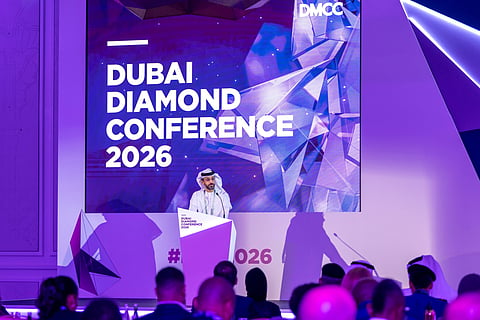
Dubai: Ahmed Bin Sulayem, Executive Chairman and CEO of DMCC, says Dubai’s neutrality gives the diamond trade a place to settle its disputes. He also urged the industry to copy Swiss watchmakers, who recovered from the quartz shock.
“I’m a civil servant. I don’t have mines. I don’t have stock of diamonds. I am not affiliated with the big brands,” he said. That position lets DMCC deal with any company or region without a conflict of interest, he argued. Buyers and sellers can also discuss real prices in Dubai without a cloud over the deal.
The Swiss parallel report
Bin Sulayem was speaking on the sidelines of the Dubai Diamond Conference, where they also presented the Swiss Parallel report. The report makes a wider case for the natural diamond industry to learn from the Swiss watch industry on how to navigate the disruptions caused by the lab-grown diamond players.
Back when the discovery of quartz hit the mechanical watch makers, it offered the same basic function but at a far lower price, backed by industrial-scale production. Today lab-grown diamonds do the same. Both industries rely on deep technical skill and sprawling supply chains. But Swiss makers did more than survive. The report records an industry that grew to multiples of its pre-quartz size. And even though volumes fell, the overall value rose as brands moved up-market. The Swiss could have given up. They refused. “That is the biggest lesson,” he said.
Bin Sulayem also drew parallels to the pearl industry, pointing out how that isn’t a route the diamond trade can go. “Cultured pearls from Japan hit the Gulf’s pearling trade in the 1920s and 1930s, but the industry failed to respond. Overfishing and a wartime shift from luxury to necessity compounded the damage then,” he said.
He sees a similar risk for diamonds. Suppliers pushed them from royal luxury into every household, he argued. “You can’t have both” a common product and a premium price. Natural stones make up more than 95 per cent of Dubai’s diamond trade by value, he noted.
Should lab-grown diamonds be labeled as ‘synthetic’?
Labelling is the immediate fight. Investment in lab-grown stones is far higher in 2026 than in 2016, when he first urged the trade to tackle traceability. China grows the stones, India cuts and polishes them, and the US remains the market that counts. He puts US buyers at 55 to 60 per cent of demand.
But there is growing clamor within the trade to call lab-grown diamonds synthetic. He expects the Federal Trade Commission to rule if the industry cannot come to a consensus in New Delhi next. This would however come with a compromise that would brand natural stones as “mined” diamonds.
Shoppers sit at the weak end of the chain. Many cannot tell the stones apart, and some shopkeepers cannot either. Education has to close that gap, he said.


