Dubai’s diamond strategy: Why lab-grown stones need their own market
Dubai is building dedicated infrastructure as lab-grown diamonds move beyond jewellery
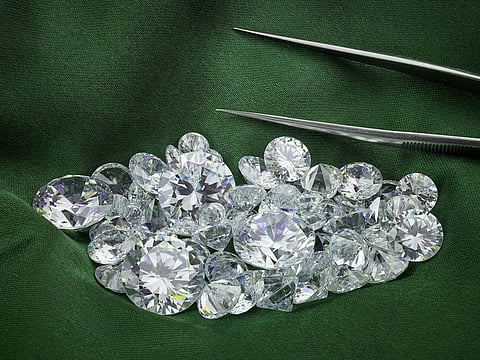
The global diamond industry is undergoing a structural evolution driven by technological disruption. Today, more lab-grown diamonds (LGDs) and recycled stones are available in the market than the total annual physical output produced by their natural counterparts.
This reality requires a clear-eyed reassessment of how we trade, classify, and value precious materials, and is also a fundamental reason why DMCC has formally announced a dedicated Lab-Grown Diamond vertical.
Ideated for an industry whose expansion is increasingly driven by advanced manufacturing, deep tech, and consumer demand, this new vertical establishes an explicit operational separation between lab-grown and natural diamonds. The formalisation comes as the UAE records its highest-ever LGD trade volume of 76.9 million carats in 2025, up 91.5 per cent year-on-year, valued at USD 1.3 billion.
Natural diamonds offer an experience built on geological rarity, heritage, beauty, and durability, and while lab-grown diamonds possess two of these attributes, they cannot compete on rarity or legacy. Where scarcity and heritage are not primary considerations for the buyer, the natural value proposition is genuinely challenged; however, where rarity matters, natural remains unmatched.
Conversely, lab-grown diamonds offer a unique growth vector into deep tech, defence, medicine, and high-performance computing, a sector estimated to be worth close to USD 30 billion. Rather than forcing these two distinct products to fulfil the same economic role, a mature market must maintain absolute clarity. LGDs belong alongside gold, precious metals, and critical minerals; commodities valued for their specific utility, industrial scalability, and technical performance rather than geological scarcity.
The tripartite engine of growth
The commercial momentum of LGDs is anchored by a tripartite global engine that controls virtually 100 per cent of the global market: American consumer demand, Indian cutting-and-polishing mastery, and Chinese industrial-scale synthesis. Cumulative production of gem-quality rough across these three nations is estimated at 125 to 170 million carats (25 to 34 tonnes), led by China at 85 to 115 million carats, India at 28 to 45 million carats, and the US at 9 to 15 million carats.
At its foundation, China industrialised the growing process via massive HPHT and CVD reactor capacity led by powerhouses like Henan Huanghe Whirlwind, while India fulfilled the transformation into a global consumer product. Centred in Surat, which processes roughly 90 per cent of the world's diamonds across 8,000 to 10,000 reactors, Indian manufacturers scaled CVD production following strategic state support, including the elimination of seed duties in 2023. Consequently, India's worked LGD exports reached 18.84 million carats in FY2026, surpassing polished natural exports for the first time. Meanwhile, the US remains the primary engine of retail consumption, accounting for over 50 per cent of engagement ring sales.
A dedicated ecosystem in Dubai
Just as Dubai established itself as the leading hub for natural diamonds, it is today ensuring China, India, the United States, and other global partners have a permanent institutional home for LGDs. This reflects Dubai’s significant growth in synthetic and industrial trade volumes, which account for approximately 39 per cent of its total diamond carat volumes, reaching a record USD 41.7 billion in 2025.
DMCC’s LGD vertical, similar to DMCC’s financial community, FinX, seamlessly bridges precious commodities with our wider technology infrastructure, which encompasses over 4,000 tech companies. This ecosystem is supported by targeted sector reports, a dedicated portal, and our flagship LGD Symposium, which returns in 2027. At the same time, early movers such as Silicon Valley-backed Diamond Foundry selected the DMCC for international sales operations as early as 2020. This progressive approach is validated by major trading institutions and supported by leaders from the World Diamond Council, the International Diamond Manufacturers Association, and the Bharat Diamond Bourse.
Beyond jewellery: Deep tech, strategic computing
While budget-conscious consumers and brands like Swarovski benefit from accessible price points, the most compelling future for lab-grown diamonds lies far beyond jewellery.
The thermal conductivity, optical clarity, and wide-bandgap semiconductor properties of synthetics make them an indispensable strategic material for advanced technologies. As hyperscale investments accelerate globally in artificial intelligence, advanced compute, and quantum infrastructure, exemplified regionally by the UAE's commitments to next-generation AI gigawatt campuses and initiatives like Stargate, synthetic diamond wafers offer unmatched thermal dissipation capabilities critical for power-dense microchips, space hardware, quantum sensors, and precision medical instruments.
Lab-grown diamonds gave an industry under pressure a bridge rather than an exit. For DMCC, its LGD vertical will unite investors, producers, manufacturers, traders, technology companies and industrial users, while strengthening Dubai's links with the industry's main global markets. By providing dedicated infrastructure, transparent regulatory standards, and market access, DMCC is ensuring that both natural and lab-grown diamonds thrive, each on their own distinct terms.

Ahmed Bin Sulayem is Executive Chairman and CEO, DMCC


