Suppliers forced 'to take a haircut' as UK imposes austerity measures
Strategy to slash public spending could leave economy struggling
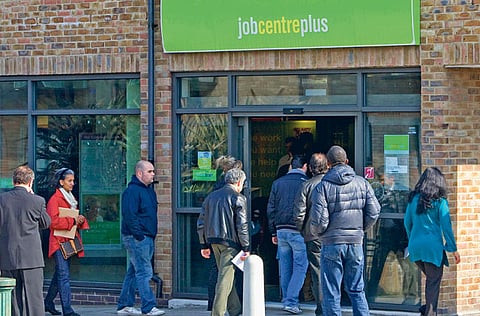
London: It was a bright, sunny day when 19 senior executives, each representing one of the government's biggest suppliers, trooped into Admiralty House off Whitehall to meet the Cabinet Office minister Francis Maude.
They left, three hours later, unable to disguise the shell-shocked look on their faces. Maude had asked them "to take a haircut" on new and existing contracts.
What a haircut. Ministers are seeking public-sector cuts of £6.5 billion (Dh36.8 billion) this year, and that is just the start. As public spending is reined in, forecasters reckon 600,000 private-sector jobs will be axed.
Maude said: "I am laying down the challenge to major government suppliers to ask them what they can do to take costs out of contracts. Some of this will come out of margins, but we also want ideas on how we can structure things differently to reduce complexity and cost."
The executives who met him were from some of the world's best-known firms: Vodafone, Siemens, BT, Capita, Logica, IBM, Microsoft and Accenture.
Many of these companies are quoted on the London stock market, where share prices have been volatile.
Investors expect private companies will benefit as David Cameron pushes ahead with his masterplan to shrink the role of the state.
Outsourcing companies
Outsourcing companies such as Capita are bound to reap dividends from the new era of austerity, as government contracts are shifted to the private sector. Last week, figures showed gross domestic product (GDP) surged 1.1 per cent, apparently backed by growth from private construction companies.
But shareholders fear it could take a few years before those new outsourcing deals are in place.
"The private sector should get a lot more work but if margins are squeezed till the pips squeak, profits diminish. That's why the share prices of some companies have been going up and down like a yo-yo. No one knows how all this is going to pan out," one institutional investor said.
Andrew Sugden, policy director of the local British Chambers of Commerce, said: "We are already seeing layoffs as the spending tap is turned off. We accept that public debt must be reduced, but along the way some people are going to be hit hard."
Newcastle has been hammered by the government's decision to scrap Labour's Building Schools for the Future scheme.
An observer said: "Since the announcement that the new schools programme is to be wound down, contractors have cut hundreds of staff, almost overnight."
John Cridland of the Confederation of British Industry said Britain's economic woes mean that "palliative medicine is needed. A strengthening of the national balance sheet is in the interests of British industry."
But he added: "Don't expect a smooth ride because if companies get less profitable public-sector work or none at all, that will affect returns to shareholders."
The construction industry, which has had a nasty recession, is expecting life to get tougher.
"We are still reeling from the banking crisis and the slump that followed, which has cost us more than 200,000 jobs. Our assessment is that capital spending on education alone will nearly halve to £4.5 billion over the next few years. That will lead to further substantial job losses for our members," Noble Francis, economics director of the Construction Products Association, said.

