New BYD plant to add pressure on established Japanese carmakers in Pakistan
Chinese automaker prepares Karachi plant as competition intensifies with Japanese brands
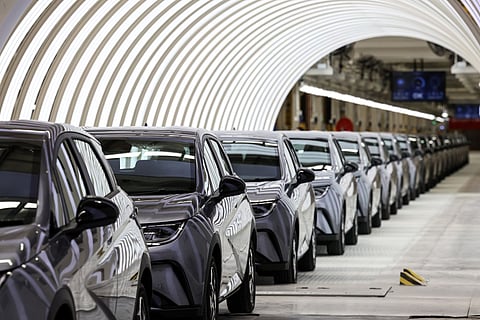
Dubai: China’s largest electric vehicle maker, BYD, is preparing to begin local assembly in Pakistan in the second half of 2026, positioning the country as a key pillar of its South Asia expansion as the auto market opens further to new entrants.
The company’s first assembly plant in Pakistan is being developed near Karachi through its local partner Mega Motor Company. The facility is expected to become operational between the third and fourth quarters of 2026, Danish Khaliq, vice president for sales and strategy at Mega Motor, told Nikkei Asia.
Once operational, the plant is expected to have an annual capacity of 25,000 vehicles and represents an estimated investment of around $150 million. Locally assembled vehicles are expected to reach customers later in 2026.
BYD entered Pakistan’s market in 2024 with imported electric vehicles and has since expanded its dealer presence. While official sales figures have not been disclosed, local media have estimated sales of about 2,000 units in 2025.
Reuters and Bloomberg reported last year that BYD would assemble both electric and plug-in hybrid models in Pakistan, partnering with Mega Motor Company, a subsidiary of Hub Power Company. The Karachi-area site places BYD close to established manufacturing clusters dominated by Japanese and Korean brands.
Pressure on key players
Pakistan’s passenger vehicle market has long been led by Japanese automakers such as Toyota, Suzuki and Honda, particularly in small cars and sedans. Chinese brands, however, have gained ground in SUVs, hybrids and electric vehicles.
Analysts say this shift is beginning to challenge Japanese dominance. A recent China Global South report noted how Chinese EV makers are “shaking up Pakistan’s automotive sector, challenging the long-standing dominance of Japanese and local players,” as lower-priced electric and hybrid models gain traction.
Industry insiders say policy incentives have played a key role. Chinese automakers now account for about 20% of Pakistan’s passenger vehicle market, benefiting from cost advantages under Pakistan’s Auto Industry Development and Export Policy 2021–2026.
Boost from concessions
Nikkei cited Shehryar Qadir, senior vice chairman of the Pakistan Association of Automotive Parts & Accessories Manufacturers (PAAPAM), as saying Chinese automakers now account for about 20% of Pakistan’s passenger vehicle market.
“New entrants under [Pakistan’s new auto] policies had 20% concession on parts imports, which is huge in the auto parts manufacturing industries, where profit margins are around the 5% mark,” he added.
That expansion has been supported by Pakistan’s Auto Industry Development and Export Policy 2021–2026, which offers reduced duties and tax incentives for new entrants establishing local assembly.
Looking beyond assembly
Pakistan has set a target for electric vehicles to account for 30% of car sales, imports and production within five years, backed by incentives such as lower electricity tariffs for charging stations and reduced duties on EV components.
Khaliq added environmental and economic pressures are accelerating the shift. “Rising smog levels in major cities and the transport sector’s contribution to air pollution have made clean mobility an urgent consideration rather than a distant goal,” he said. “At the same time, the growing fuel import bill has strengthened the case for alternative energy solutions.”
With incentives currently favouring new entrants, established manufacturers will continue to face growing pressure to adjust pricing, product mix and electrification strategies.