Spending power swings women's way
UAE women wield the highest annual disposable income in the GCC. So what do they do with all the money? Well, they like to buy bigger brands of clothes and shoes...
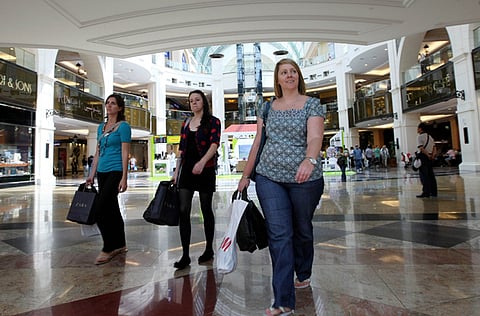
What does a woman want? That was the great question that baffled Sigmund Freud for a long time despite "30 years of research into the feminine soul". To this day, many still strive to figure out the right answer.
Over the years, women's financial power has been rising. By 2014, their earning capacity is forecast to hit $18 trillion (Dh66 trillion), much bigger than the estimated 2014 gross domestic product of India and China, according to World Bank figures.
Analysts recognize that the balance of power is definitely shifting and women are now a strong economic force to be reckoned with. This powerful demographic is expected to control $15 trillion or 70 per cent of total global consumer spend in a few years, according to Boston Consulting Group.
As of 2009, every woman in the UAE has about Dh9,000 extra money to spend on anything that catches her fancy. By 2014, the annual discretionary income per capita is expected to reach a little over Dh11,000, based on estimates by Euromonitor International.
UAE women also wield the highest annual disposable income in the GCC, apparently showing more affluence than the females in Kuwait, Qatar, Bahrain and Saudi Arabia.
Judging by women's sheer buying power, it doesn't come as a surprise that many marketers are obsessed with talking to them and companies are busy churning out products aimed at the female consumer.
There's been a rising number of lifestyle publications and TV programs devoted to women, while sprawling malls are packed with women-only fashion boutiques, footwear stores and jewellery shops, all vying for the attention of this mighty demographic. But going back to the question, what do women really want?
Various studies have revealed different answers. A local study focusing on young consumers who are predominantly UAE nationals shows that women rank fashion on top of their shopping list. A similar study conducted globally, however, claims that most women prefer to spend their extra income on gold jewellery.
According to the Nielsen company, a young UAE woman spends on average a little over Dh2,000 a month on fashion. The female group prefers branded products and is generally loyal to brands. Young women also have more gadgets compared to other groups.
"[The UAE female] loves brands and likes to have the latest of everything she owns. She is impulsive in her shopping, going to stores whenever she feels like it. The majority of her overall shopping is fashion focused, over half of her spends is on fashion products," the Nielsen company says.
The Nielsen company, which conducted a syndicated survey among 600 men and women in 2008, found that UAE females who are predominantly UAE nationals (aged 16 to 29) and come from richer families, spend most of their money (30 per cent) on clothes and footwear.
Mobile phone calls also share the same size of the pie (30 per cent), while eating out constitutes 14 per cent of the female spend. Fashion accessories figure third on the purchase list of women (10 per cent), followed by movies (7 per cent), books (6 per cent) and music (5 per cent). "Companies are increasingly focusing on females in the region as a growing and significant consumer demographic, both from a traditionally ‘female' product point of view (cosmetics, fashion, accessories, luxury) as well as in terms of products formerly viewed to be unisex or products for which the purchase decision was previously perceived to be driven by their male counterparts," notes Himanshu Vashishtha, Nielsen's managing director for Middle East and Pakistan.
However, according to the latest round of the World Gold Council's What Women Want: Global Discretionary Spending Report, gold jewellery remains the top choice for many women across the globe.
As of 2008, about 48 per cent of women said they were willing to spend $1,100 on gold. This corresponds closely with the number who chose gold when they had $500 to spend in 2005 (44 per cent). The report says this only confirms that rising prices have not eroded women's desire to buy and own gold.
In Saudi Arabia, more than half of women (60 per cent) would spend $1,100 on gold if they had money to spend. The proportion is lower in China (29 per cent), Italy (17 per cent) and USA (38 per cent).
Indian women, however, express the strongest desire for gold, with 90 per cent of them willing to put their $1,100 on the yellow metal.
The study, which looked into gold in the context of other luxury items and consumables, was conducted in 2008, covering more than 7,000 females aged 15 to 65 in Saudi Arabia, Turkey, US, China, India and Italy.
Do you expect the gold's investment bubble to burst anytime soon? Which is your preferred investment commodity? Why?


