Caution key word amid UK changes
Investors need to respect uncertainty at home as across euro zone
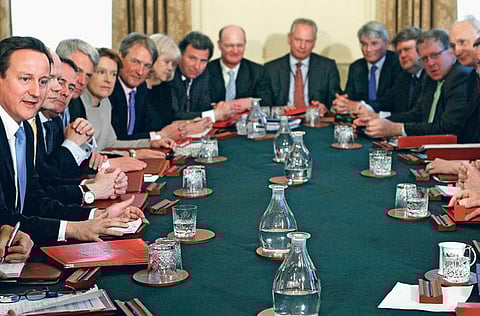
The outcome of the UK election finally being decided after five days, with David Cameron, the youngest ever prime minister, leading a coalition government made up of the Conservatives and Liberal Democrats, British expatriates and those back home must have all heaved a sigh of relief.
The uncertainty of the outcome of the UK election coupled with the uncertainty of the financial stability of countries in the euro zone, such as Greece, have lead to stockmarkets being particularly volatile over the last couple of weeks. This is likely to continue certainly in the short term. Many may be wondering whether in the UK we could potentially see a double dip recession. Even though the latest GDP figures show that the economy is growing, the growth really is low and, therefore, it is being questioned whether the economic growth is sustainable.
This is in part linked to what steps are taken by the coalition government to deal with the UK budget deficit — how deep the cuts will be and how fast such cuts will be made.
Right up to the end of his tenure, former Labour prime minister Gordon Brown argued that the policies proposed by both Conservatives and Liberal Democrats were too aggressive and could choke the growth. It remains to be seen whether this would be the case. On Tuesday evening when the coalition was announced, Sterling rallied marginally.
Unclear
However, it remains unclear as to how the new Government is going to tackle the UK debt pile. On that depends, critically so, on what happens to Sterling and the markets in the medium term. The unstable nature of the euro zone at the present time also is having an impact on the financial markets as it is still uncertain whether the measures put in place will work. It still looks unlikely that Greece will be unable to repay the loans and could therefore default at some point in the future.
Amid such an unsettled scenario, it is important that you review your investment portfolios to ensure that the level of risk is in line with the objectives. Furthermore, it is recommended that you ensure that any portfolio of investments you have remain balanced, with component investments not reliant on a single economy or currency.
The continued volatility in the market is likely to throw up a number of buying opportunities but as an investor you need to be comfortable with the level of volatility that you will experience. There remains the threat of inflation in the future and, therefore, despite the volatility, equities remain attractive investments in terms of valuations compared with other asset classes such as cash and corporate bonds.
Last week gold touched an all-time high as concerns over euro sovereign debt remain. Gold and the US dollar have shown heir strongest correlation in 14 months, though traditionally they are negatively correlated. This move towards a modestly positive relationship indicates the concern over the euro.
Gold is a safe haven and a good "diversifier" in portfolios and exposure can be achieved through buying the BlackRock Gold and General fund.
Sterling reacted positively to the announcement of the coalition government but continues to remain weak against the dollar. This trend is likely to remain for the foreseeable future with the potential for it to weaken further, particularly if the markets are not comfortable with how the budget deficit is tackled. That means if you are concerned about sterling weakening further you may wish to ensure that you keep exposure to dollar-denominated investments or alternatively you can achieve this through holding dirhams.
In the last few days a number of announcements on what changes the new government is going to make in relation to personal taxation have ben made. Many of the changes could ultimately have a significant impact on how expats manage their finances.
During the election campaign, the Liberal Democrats campaigned hard on their desire to reduce the level of income tax paid by increasing the personal allowance, which is effectively the income tax exemption level, to £10,000 (Dh54,145) (currently £6,475 per annum).
Likely change
It has been reported that the Conservatives have agreed to this proposal from the Liberal Democrats and this change is likely to take place at the start of the new tax year (April 6, 2011). However, it has subsequently been reported that the increase in this allowance will be gradual and over years to come.
Ultimately, this increase in the personal allowance is good news for expats living in the region, particularly, those that are receipts of rental income from property in the UK or investment income as the threshold at which you start to become liable for UK income tax, will increase by 54 per cent and therefore some expats are likely to not be subject to UK income tax.
It would appear that this rise in the personal allowance to £10,000 will effectively be paid for by not going ahead with the Conservatives' previous proposal of reversing Labour plans to increase the employee element of national insurance contributions. It has been confirmed though that the reversal of Labour plans to increase employer's national insurance contributions will go ahead. As an expat you would not be subject to this increase in National Insurance Contributions.
However, to ensure that you are entitled to a UK state pension at retirement you should regularly review your National Insurance Contributions to ensure that you are "up to date" with them. You can always make up missed National Insurance Contributions through a lump sum payment.
An increase in the rate of Capital Gains tax is to be at the heart of the package of financial reforms agreed by the new coalition government led by the new Conservative prime minister. It has been announced that Capital Gains Tax (CGT) paid on "non-business assets" such as second homes, currently liable for a flat rate of 18 per cent, is likely to rise and be aligned to the 40 per cent income rate tax. This would imply that if you have non-business assets with significant capital gain on them and were considering selling, such as a second property or antiques, and you have been non-UK resident for more than five years, you may wish to consider disposing of these assets before the new Capital Gains Tax measures come into effect.
Married couples
During the election campaign the Conservatives emphasised that they would increase the Inheritance Tax threshold to £1 million. It is looking likely that they will not be looking to do this immediately. The level at which your estate could become subject to Inheritance tax will remain at £325,000 for individuals and £650,000 for married couples, which is relatively low. Therefore, even though you are non-UK resident you should review your inheritance tax situation and if necessary start to take steps to mitigate any potential liability.
As always is the case, the devil is in the detail. Only over time will the true measures of the taxation changes become clear. George Osborne, the new Chancellor of the Exchequer, is now in the process of putting together an emergency budget, which will be delivered within the next 50 days. There will no doubt be more announcements within this that will provide further clarity on the taxation changes to take place which are likely to affect British expats living in the region.
Then you can start to really analyse what impact the changes will have on you personally. While the tax changes require further detail you would be best to consider how the proposed changes would affect you but not necessarily take any action until full information is available following the budget.
Finance/Investments to consider:
- Review investment portfolio to ensure that you are comfortable with the level of risk you are taking.
- Consider the overall asset allocation of your investment portfolio: equities remain attractive investments in terms of valuations compared with other asset classes such as cash and corporate bonds.
- If you are concerned about sterling weakening against the dollar you may wish to ensure that you keep exposure to dollar-denominated investments or alternatively you can achieve this through holding dirhams.
- Diversify your portfolio through exposure to gold.
- Consider whether you would be affected when the proposed rules come into force from a taxation perspective, particularly Capital Gains Tax. But wait until the detail is clear before taking action.
The writer is Wealth Planning Director at Killik and Co, Dubai. The views expressed here do not necessarily reflect the views of Gulf News and all are advised to consult a professional adviser when reviewing one's finances and investments.


