Nearly 60% of Emirati families took loans in first quarter
Report shows majority of money borrowed in first quarter of 2013 was spent on buying cars
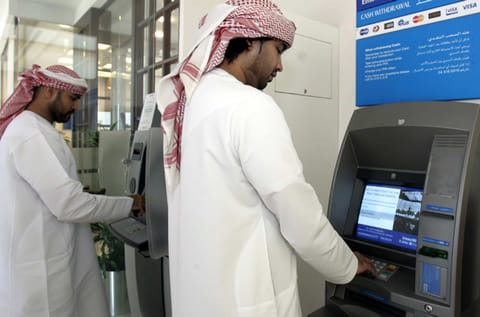
Abu Dhabi: Up to 58.4 per cent of Emirati families in Abu Dhabi took loans from financial institutions during the first quarter of 2013, according to a national family status report issued by Studies Directorate of Abu Dhabi Department of Economic Development (ADDED).
“It was found that 60 per cent of borrowing families spent their loans on buying cars, 25 per cent of respondents obtained loans to buy houses for their families, while 12 per cent of respondents revealed that they borrowed to meet the expenses of marriage. Those who borrowed for travelling purposes comprised 3 per cent of respondents,” the report showed.
The number of borrowers decreased in the quarter, according to the report, although figures showing how much are not expected to be released until the end of June.
Mohammad Al Asoomi, a UAE-based economist, told Gulf News that the decrease can be attributed to public and personal factors.
“Through the interest rates on loans has dropped remarkably, the number of Emirati borrowers from banks has dropped. This decrease is attributed to the UAE Central Bank’s regulations to banks and financial institutions not to grant loans to Emiratis unless they meet up the criteria set by the Central Bank in order not to get into the trap of loans once again,” said Al Asoomi.
He added: “The other reason is that the Central Bank asked the banks not to deduct more than 50 per cent of the transferred salary; this in most cases does not apply.”
Al Asoomi remarked that the third reason is that there has been public awareness about the risks of falling into debts. “Many media programmes and newspapers had started to warn people, particularly Emiratis against falling under debts whatever the pretexts where: credit cards or personal loans. All of these had been mushrooming in the past and this has been scrutinised by the Central Bank to restrict loans to Emiratis,” Al Asoomi said.
The report showed that 26.6 per cent of Emirati families have dependents who study in schools, institutes or universities in UAE. “The average household spending on education inside UAE is estimated at Dh39,821 per annum,” the study showed.
“The report revealed that the average expenditure of households on education outside UAE was approximately Dh3,000 per year, whereas 25.4 per cent of national families which have sons had spent Dh6,347 on private tutoring on average during The first quarter,” said ADDED.
ADDED said that the average number of fixed telephone lines maintained by the head of a national family is one. However, the average number of mobile phones is five, with average fixed landline phone bills during The first quarter of 2013 amounting to Dh919 and mobile phone bills at Dh4,414.
ADDED said 32 per cent of heads of national families changed their mobile phones during The first quarter of 2013.
National families who have their own properties or homes constitute 82.6 per cent with only 17.4 per cent renting houses.
Esmail Mohammad, a UAE sociologist, told Gulf News that in Middle East and North African countries, including the UAE, people like to have the most modern technologies at any price. “We have been witnessing that many people, particularly youngsters, try to acquire the latest cellphones, with some of them having more than one at the same time to show off amongst their friends and colleagues. They would buy it at any price just for the sake of having the latest mobile phone,” said Mohammad.
Working family members
ADDED study showed that in average two members of each Emirati family work with at least 41.3 per cent of the families having at least on individual with a subsidiary income other than his main work from selling crops, livestock, pensions and rents from real estate. “Up to 11.8 per cent of heads of households said that their farms income represented approximately 16.7 per cent on average of the total family income, while 10.5 per cent reported that pensions constituted approximately 40.2 per cent on average of their total family income,” said ADDED.
The report said that 2.8 per cent of the Emirati families stressed that the income of government aid comprises about 27.8 per cent on average of their total household income, 8.5 per cent said that 20 per cent of their family income stems from rented properties, 2 per cent said that family assistance represents 40.3 per cent on average of their total income, while 1.3 of Emirati families said that 13 per cent of their total family income comes from savings, investments and bank accounts.
The government has said the issues can be summed in two main points: There are jobs but Emiratis don’t accept these openings and the other one they mostly prefer to work in the public sector as they will be well-paid, enjoying more days off, which in the public sector is an extra 52 days on an average than in the private sector.
Ali Al Nuaimi, a Federal National Council member, previously told Gulf News that the unemployment rate amongst Emiratis has increased more than 13 per cent and this has prompted the government to take action through its employment campaigns in the private and public sectors including Absher, a campaign launched by the Ministry of Presidential Affairs last December, to employ young Emiratis in the private sector as there are more than 550,000 job opening in the next five years.

