World is weathering US trade tariff storm ‘surprisingly well’: OECD
Global policy body still sees hit as ‘full effects of levies on trade have yet to be felt’
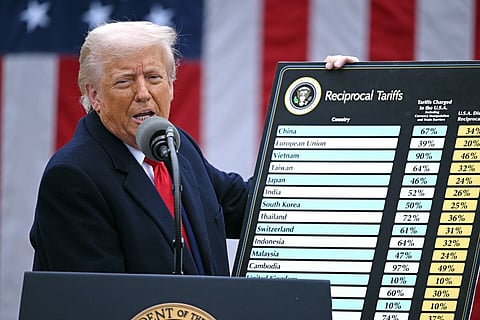
Dubai: The world economy is holding up better than many experts thought, even as US tariffs add pressure. The Organisation for Economic Co-operation and Development (OECD) said strong investment in artificial intelligence and supportive government policies are helping keep growth steady.
In its latest outlook, the OECD raised its growth forecasts for the US and the euro area for this year and 2025. It made smaller upgrades for other major economies. The group still expects global growth to slow to 2.9% in 2026 from 3.2% in 2025 as the impact of higher US tariffs becomes clearer.
Secretary General Mathias Cormann said the global economy has shown resilience this year, despite worries about rising trade barriers. He noted a slowdown in trade in the second quarter and said higher tariffs will likely raise prices, affecting household spending and business investment.
Tariff effects
The impact of Donald Trump’s tariff measures has been hard to read. The OECD expected US growth of 1.6% in June, increased that to 1.8% in September, and now sees 2% as AI-related spending grows. Construction of data centers and other tech-related projects is lifting output, with technology production expanding faster than other industries. The OECD estimates the US economy would have slipped by 0.1% in the first half without the boost from AI investment, which helped make up for slower consumer spending and lower government purchases.
Luiz de Mello, the OECD’s director of country studies, said companies are investing in new equipment to stay competitive as digital tools evolve, which is adding to economic activity even while tariff uncertainty persists.
AI risks
The OECD also warned that the rapid rise in AI investment brings risks. High valuations in the tech sector leave room for sudden market corrections if revenue expectations change or if financial conditions tighten. The group said the broader outlook remains sensitive as governments adjust trade rules and supply chains react to shifting costs.
The picture shows both progress and pressure. Some major economies are gaining momentum, but they still face policy swings, uneven demand, and volatility in technology markets.
Extra spending on AI-related equipment has made this phase of growth more dependent on a narrow group of drivers. The OECD’s figures show how much US performance hinges on tech investment. Without it, weaker consumption and falling government spending would have pulled growth into negative territory.
The slowdown in global trade in the second quarter adds another challenge. Goods flows react quickly to tariffs, shifting costs, and policy signals. Higher levies are expected to feed into prices, squeezing households and prompting firms to hold back on spending. Even small changes here can weigh on growth across regions.
Outlook
The stronger forecasts for the US and the euro area suggest steadier near-term growth, but the OECD stresses that the outlook remains “fragile.” Tariff changes, timing of trade impacts, and supply chain adjustments all add uncertainty. Stretched valuations in the tech sector also raise the risk that a sharp move in one area could spill into broader markets.
Smaller upgrades for other major economies point to some resilience outside the US and the euro area. Still, the OECD highlights 2026 as a likely turning point, when the delayed effects of tariffs could slow global growth. The contrast between improving short-term data and a softer medium-term outlook shapes the report’s message: growth is continuing, but it relies on limited drivers that remain vulnerable to shifts in policy, prices, and investment sentiment.
- with inputs from Agencies