What the Prada takeover means for Versace and luxury fashion
Prada closes $1.37b Versace deal, sending Milan luxury ownership into a new phase
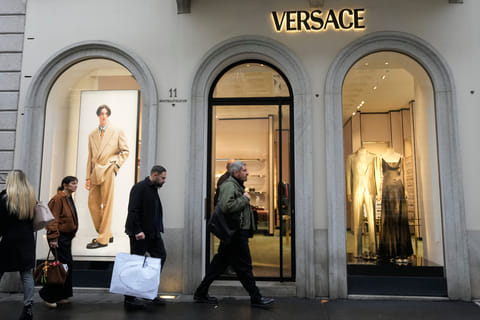
Milan no longer has a clean divide between fashion tribes. Versace, known for maximal visual codes, is now part of the Prada Group, which owns Prada and Miu Miu. The deal, closed on November 15, 2025, ends Versace’s post-pandemic run under Capri Holdings, where retail growth lagged from 2022 onwards, and brand performance softened against pre-pandemic M&A momentum.
A single line statement from Prada confirmed the closing, noting the acquisition was completed after receiving all regulatory clearances. Capri Holdings, which also owns Michael Kors and Jimmy Choo, said the sale proceeds will go toward debt reduction, a move the group described as strengthening its financial footing.
Capri Holdings chairman and CEO John D. Idol said, “With the successful completion of the sale of Versace, we plan to use the proceeds to repay the majority of our debt, which will substantially strengthen our balance sheet.
“As a result, this transaction will significantly reduce our leverage ratio and provide greater financial flexibility to both invest in our growth as well as return capital to shareholders in the future," he added.
“We remain focused on executing our strategic initiatives across Michael Kors and Jimmy Choo to maximise the potential of our iconic brands. Looking ahead, we believe we are on track to stabilise our business this year while establishing a solid foundation for a return to growth in fiscal 2027.”
Those comments arrived in alignment with the company’s public filing cycle on Tuesday, signalling a clean post-closing path.
Milan’s luxury leadership table
The revenue math behind the deal highlights exactly why this acquisition carries industry weight. Versace drove 20% of Capri Holdings’ 2024 revenues, which stood at €5.2 billion. Prada disclosed earlier in April that the brand will now make up roughly 13% of the Prada Group’s projected pro-forma revenue structure.
The rest of the group composition remains unchanged at a corporate level: Prada contributes 64% and Miu Miu 22%. Last year, the Prada Group posted €5.4 billion in revenues, a 17% uptick from 2023, backed by manufacturing investments and revamped regional production plans.
Manufacturing system, shared expertise, talent pipelines
The Prada Group has long positioned itself on one specific pillar control over its manufacturing chain. Last week, Lorenzo Bertelli, Prada Group marketing director, spoke to reporters at the Scandicci leather goods factory with direct clarity on Versace’s upcoming production path.
“Making a bag for one brand or another, the know-how is the same,” Bertelli said.
That Scandicci site already builds leather goods for Prada and Miu Miu and will soon add Versace outputs, folding it into a 25-year-old artisan training pipeline. The programme trains talent across Tuscany, Marche, Veneto and Umbria. Prada hired 70% of its 120 trainees last year. This year, trainee numbers climbed 28% to 152.
Investment planning mirrors the breadth of intent. The Prada Group deployed €60 million into its supply chain this year, including new factories near Siena and Perugia. That comes on top of €200 million in investments between 2019 and 2024.
Market contrast as a growth lever
Luxury desks say the deal brings more than scale; it brings contrast, a known lever for global portfolios looking to reset retail pace. Versace’s print is immediate and bold, whereas the Prada Group leans on controlled drop cycles, selective retail mapping and youth sell-through, largely driven by Miu Miu’s category bets.
Industry experts close to the deal said centralising capital, licensing spend and manufacturing inputs under a single Milan portfolio may help rationalise pace, budgets and distribution focus. The view is that Versace moves faster when backed by debt flexibility, regulated capital planning and a single manufacturing core.
The transaction is not expected to be reversed or redesigned beyond contractual closing terms, per Idol’s published filing trail.
The next phase
While the Prada Group has signalled no immediate executive changes within Versace's leadership layer, the brand will now benefit from group-level capital planning. Lorenzo Bertelli, heir to the Prada Group directors Miuccia Prada and Patrizio Bertelli, takes the lead next at Versace as executive chairman, bringing regulatory experience, manufacturing oversight and global marketing under one seat.
- With inputs from AP.