Trump’s clash with the Fed rattles markets. What UAE investors should watch next
Threats to Fed independence could hit the dollar, gold and UAE-linked markets
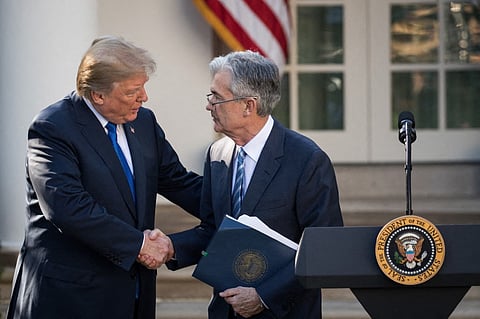
Dubai: Financial markets are once again being forced to price politics into monetary policy. The US Justice Department’s move to issue subpoenas to the Federal Reserve has reignited fears about political pressure on the central bank, unsettling currencies, bonds and equities at a time when investors were expecting policy stability.
Market strategists say the episode raises uncomfortable questions about the independence of the world’s most influential central bank and what that means for the dollar, global capital flows and investors in dollar-linked economies such as the UAE.
Michael Brown, senior research strategist at Pepperstone, described the subpoenas as “another blatant attempt to erode policy independence.”
“This is nothing to do with building renovations,” Brown said. “This isn’t a construction case, but one that strikes at the very heart of Fed policy independence.”
Brown expects the Federal Reserve to comply with the subpoenas, though the legal process is likely to be prolonged and politically charged. That, he said, complicates President Donald Trump’s plans to appoint a successor to Fed Chair Jerome Powell, especially with bipartisan resistance in the Senate.
From a market perspective, Brown warned that confidence in US institutions is being tested. “Both the USD and USTs will now have to price a considerably higher risk premium,” he said, adding that criminal charges or prosecution would trigger far sharper selling pressure. Equities could also come under strain, though dip buyers may remain active while earnings and growth hold up.
Let's call a spade a spade though. This is nothing to do with building renovations, even if it would be quite ironic for a serial bankrupt property developer to try and pursue that path. Instead, it's Trump acting like little more than a petulant child, throwing a strop yet again because he hasn't got his own way, in this instance lower interest rates. This isn't a construction case, but one that strikes at the very heart of Fed policy independence.

How markets are reacting so far
Wael Makarem, financial markets strategists lead at Exness, said markets have not panicked yet, but they are paying attention.
“Concerns of a more politicised Fed could drive inflation expectations higher, tarnish the dollar’s safe-haven role, and lift long-term yields,” he said. Selling pressure on the dollar and increased demand for gold are early signs that credibility risks are being reassessed.
Makarem noted that foreign exchange, bonds and equities tend to react together when central bank independence comes into question. Bond markets may see outflows from US Treasuries, while equity investors turn more cautious and precious metals benefit from uncertainty.
Vijay Valecha, chief investment officer at Century Financial, said recent market moves show investors are not dismissing the situation as political noise.
“The prospect of a criminal investigation against the Federal Reserve is unprecedented and appears to be quite aggressive,” he said. The dollar index fell around 0.39% after the news, while investors rotated into short-term Treasuries and safe-haven assets.
The White House’s threats put the US central bank’s independence and credibility on the line. Concerns of a more politicised Fed could drive inflation expectations higher, tarnish the dollar’s safe‑haven role, and lift long‑term yields.

Valecha pointed to rising volatility as a key indicator. Equity indices weakened, the VIX jumped into the mid-teens and gold surged as investors reassessed risk. “Markets are already showing early stress signals,” he said, citing a steeper yield curve and sustained pressure on the dollar.
What UAE investors should watch
The implications are direct for investors in the UAE. Gulf currencies are pegged to the US dollar, making US monetary credibility especially relevant.
Makarem said dollar volatility could spill into regional markets if doubts around the Fed persist. “UAE investors may also face swings in local stock indices if sentiment deteriorates,” he said, adding that diversification and exposure to non-dollar assets such as precious metals can help buffer portfolios.
Valecha expects short-term volatility rather than systemic disruption. Banks, real estate developers and high-dividend stocks tend to react most to shifts in US rate expectations because of the peg. REIT-linked names could benefit if markets begin to price lower rates, while bank margins may face pressure that is partly offset by stronger lending activity.
If the investigation takes a turn for the worse, markets are likely to perceive that as a threat to the Fed’s independence, which could elevate equity risk premiums. UAE investors should see that their portfolios include high-quality, defensive stocks while managing exposure to high-beta stocks driven by momentum or cyclicality.

Brown believes the broader risk lies in the precedent being set. “We must all hope that Trump’s efforts to pressure Powell go absolutely no further,” he said, warning that politically driven monetary policy would be damaging not just for the US but for the global economy.
Markets will be watching a narrow set of signals in the weeks ahead. Legal developments around the subpoenas, communication from the Federal Reserve, movements in long-term yields and the nomination of a new Fed chair will shape whether this remains a headline risk or turns into a structural one.