Sharjah ports can help protect supply chain, reassures FDI Office chief
Sharjah pitches Port Khalid, Hamriyah as supply-chain shield for global investors

Dubai: Sharjah is positioning its ports, industrial zones and investor services as a buffer for companies facing higher costs and supply-chain pressure across the region.
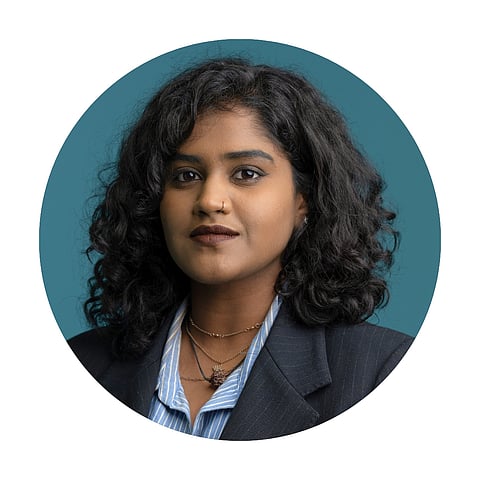
Mohamed Juma Al Musharrkh, CEO of the Sharjah FDI Office, Invest in Sharjah, said the emirate’s approach to protecting investor confidence is built around flexibility, connectivity and operational continuity.
Get updated faster and for FREE: Download the Gulf News app now - simply click here.
“Sharjah’s approach to protecting investor confidence is anchored in flexibility, connectivity, and operational continuity. The emirate’s access to both the Arabian Gulf and the Gulf of Oman, through Port Khalid, Hamriyah Port, and Khorfakkan Port, provides companies with multiple routes to regional and international markets,” he told Gulf News in an exclusive interview.
That access, he said, reduces reliance on a single trade corridor and gives companies more room to respond when market conditions change.
The message comes at a time when investors are looking more closely at how regional economies perform under pressure. Rising logistics costs, supply-chain disruption and geopolitical uncertainty are making operational resilience a bigger part of investment decisions.
Investors ask about continuity
Al Musharrkh said investor conversations have changed in recent months. Companies are still looking for opportunity, but they are now placing more weight on whether operations can continue smoothly during periods of disruption.
“Investor conversations today are less about identifying opportunity, and more about validating continuity at scale,” he said.
According to him, investors are asking how trade flows are sustained, how quickly supply chains can adapt and whether business models are built on flexibility instead of dependence on one route or system.
“There is a clear shift toward assessing structural resilience, the diversity of trade corridors, the strength of logistics networks, and the ability to absorb cost fluctuations without disrupting business continuity,” he said.
Sharjah is therefore being assessed not only on its investment appeal, but also on whether its ecosystem allows businesses to operate, adapt and grow during uncertain periods.
Ports and dry port strengthen the network
Sharjah’s logistics pitch rests on its dual-coast access and inland connectivity.
The emirate has access to Port Khalid, Hamriyah Port and Khorfakkan Port, giving companies routes through both the Arabian Gulf and the Gulf of Oman. This is supported by Sajaa Dry Port, which links cargo movement from ports into production, storage and distribution.
Al Musharrkh said this network helps businesses manage pressure through efficiency and predictability.
“The objective is not to eliminate cost pressures, but to manage them through efficiency and predictability. In periods of volatility, predictability becomes a defining factor in protecting margins, ensuring delivery timelines, and reinforcing long-term investor confidence,” he said.
He added that Sharjah’s regulatory environment and integrated investor services also support confidence by helping businesses adapt without disruption.
Manufacturing remains a core draw
Manufacturing continues to be one of Sharjah’s strongest investment drivers. The sector contributes around 18% of the emirate’s economy and is supported by more than 2,800 factories across 21 industrial zones. Sharjah’s exports reach more than 120 countries.
Al Musharrkh said investor interest is increasingly moving toward sectors tied to real demand, production and continuity of supply.
“Investment in Sharjah is increasingly directed toward sectors anchored in real demand, production capacity, and continuity of supply,” he said.
Logistics is also seeing stronger interest as companies look for regional bases that combine port access, warehousing, inland connectivity and proximity to end markets.
Healthcare, education, food security and essential services are also attracting attention because they are tied to long-term population needs and economic stability.
“What we are seeing is a clear shift in investor priorities, toward sectors that are not only positioned for growth, but built for resilience,” he said.
Resilient bases gain importance
Companies are also reassessing how they structure regional operations. Al Musharrkh said sectors such as logistics, light manufacturing, healthcare, education and food-related industries are becoming more important because they depend on reliable infrastructure and consistent demand.
“In Sharjah, these sectors are supported by a connected ecosystem of ports, industrial zones, free zones, and logistics infrastructure, enabling businesses to integrate production, storage, and distribution within one environment,” he said.
That model, he said, reduces reliance on extended supply chains and improves operational resilience.
The numbers show continued investor activity in manufacturing. In 2025, Sharjah attracted 31 FDI projects in manufacturing, with $434.6 million in capital investment. Over the past five years, the emirate attracted 99 manufacturing projects worth $957.3 million.
Sharjah also accounts for around 40% of the UAE’s industrial establishments, giving it a production-driven base within the wider national economy.
Support after setup
Al Musharrkh said Sharjah’s investor support extends beyond licensing and setup.
Through Invest in Sharjah and the Sharjah Investors Services Centre, SAEED, investors have a single coordinated interface for licensing, approvals and engagement with government entities.
“Sharjah’s investor support is designed to remove friction from the entire investment journey, from first enquiry to full operation,” he said.
He added that support continues after setup, including help during growth phases, access to talent and adjustments to market changes.
“Invest in Sharjah also plays an active role in aligning investors with the right opportunities, based on sector priorities and long-term economic direction,” he said.
Sharjah is presenting itself as an operating base built on production, logistics, industrial depth and regulatory stability.
“In periods of uncertainty, that combination becomes a competitive advantage. Sharjah offers investors a market where they can continue to operate, produce, and grow with clarity, stability, and purpose,” Al Musharrkh said.