Pakistan stocks swing sharply as KSE-100 reverses losses
Pakistan's KSE-100 swings 2,288 points lower then 2,593 higher in two sessions
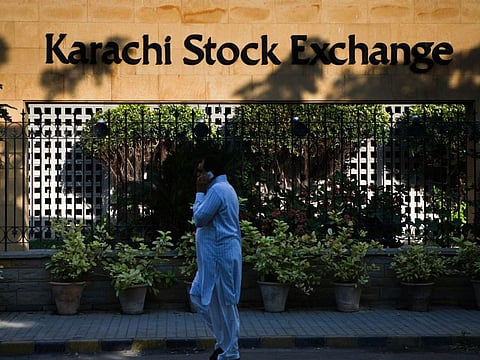
Dubai: Pakistan’s benchmark KSE-100 index has swung sharply this week, with investors moving from heavy selling on Monday to aggressive buying on Tuesday and rather flat trade on Wednesday. Expectations of progress on the country’s International Monetary Fund programme helped revive sentiment.
The KSE-100 fell 2,288 points, or 1.36 per cent, on Monday to close at 165,867.31, extending the market’s recent weakness. The index had started the session at 167,918.38 and fell to an intraday low of 165,764.20.
The sell-off was followed by an almost complete reversal on Tuesday. The index jumped 2,592.79 points, or 1.56 per cent, to close at 168,460.10 after trading as low as 165,651.67 and as high as 168,626.18. Trading volume also increased sharply to about 192.4 million shares, compared with 169.5 million on Monday. The sharp rebound was linked largely to expectations that Pakistan's ongoing discussions with an IMF staff mission could conclude positively later this week.
Get updated faster and for FREE: Download the Gulf News app now - simply click here.
The much-awaited IMF booster
According to market reports, a successful review could clear the way for around $1.2 billion in disbursements under Pakistan's $7 billion Extended Fund Facility and $1.4 billion Resilience and Sustainability Facility. The prospect of continued IMF support has helped ease some concerns around Pakistan's external financing and macroeconomic stability.
The market's reaction was broad rather than concentrated in a handful of stocks. On Tuesday, the KSE-30 rose 1.67%, while the KMI-30 gained 1.89%. The oil and gas sector index climbed 2.37%, while the banking sector index gained 1.40%. On Wednesday, the index remained around the 169,000 levels following the recovery.
Other external factors at play
But concerns over higher oil prices, inflationary pressures and geopolitical uncertainty continue to weigh on sentiment.
Oil remains an important variable for investors. Higher crude prices have put pressure on Pakistan's import bill and external financing requirements. It has also raised concerns over stubborn inflation. The market therefore remains sensitive to movements in global energy prices alongside developments on the IMF programme.
Another issue investors are watching is Pakistan’s tax reform agenda. The Federal Board of Revenue has told the IMF that only 1,016 retailers and shopkeepers have filed returns under its Aasan Tax Scheme, with just 91 classified as new filers. The scheme has generated Rs86 million in tax so far, against a government target of Rs 50 billion for the current fiscal year.
The week's trading pattern highlights how quickly sentiment can change when investors receive signals. Monday's 2,288-point fall was followed within 24 hours by a 2,593-point recovery, leaving investors focused on whether the IMF review can deliver the expected funding and whether the improvement in sentiment can hold through the rest of the week.


