Indian rupee hits new record below 26 as oil surge boosts UAE remittance value
Indian expats in the UAE get over Rs26 per dirham as rising crude prices
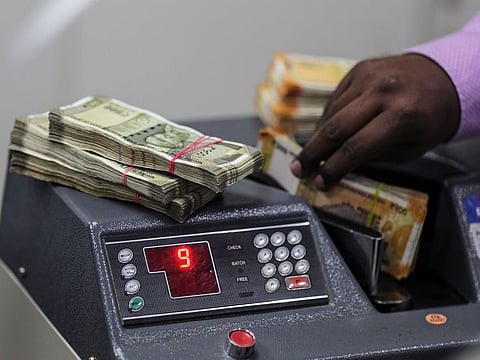
Dubai: The Indian rupee slid to a record low against the US dollar, giving UAE-based remitters one of the strongest exchange-rate opportunities in recent years as rising oil prices and sustained foreign investor outflows intensified pressure on Asia’s third-largest economy.
Get updated faster and for FREE: Download the Gulf News app now - simply click here.
At 7pm UAE time, Dh1 fetched Rs26.08, according to XE.com, while the rupee weakened to 95.80 against the dollar. The decline means Indian expatriates in the UAE now receive significantly more rupees for every dirham sent home, benefiting workers and families managing school fees, loan repayments, property expenses and household costs in India.
A Dh1,000 transfer would return roughly Rs26,080 before exchange-house charges and margins, making the current rate especially attractive for larger remittances.
The rupee had closed at 94.39 per dollar on Monday before weakening further as the effect of earlier support measures by the Reserve Bank of India began fading. Traders warned the currency could remain under pressure as surging crude oil prices sharply raise India’s import bill and fuel wider concerns about the country’s external balances.
Brent crude climbed 3.4 per cent to $107.72 per barrel, while US benchmark West Texas Intermediate rose nearly 4 per cent. Oil prices have surged since conflict-related disruptions affected tanker movement through the Strait of Hormuz, one of the world’s most critical oil shipping routes.
'Highly vulnerable'
India remains highly vulnerable to rising energy prices because it imports the majority of its crude oil requirements. Higher oil costs increase demand for dollars to pay import bills, widening the trade deficit and putting additional strain on the rupee.
Analysts said the latest oil rally has become a major driver behind movements across currencies, bonds and broader financial markets.
Pressure on the rupee has also intensified because of weaker foreign investment flows. Global investors have pulled nearly $20 billion from Indian equities during the first four months of 2026, surpassing last year’s full-year record outflow as concerns grow around valuations and slowing growth momentum.
Economists are now widening estimates for India’s balance-of-payments deficit, the broadest measure tracking money flowing in and out of the economy. Kotak Mahindra Bank expects the deficit to reach $50 billion this fiscal year, while IDFC First Bank estimates a gap between $40 billion and $50 billion.
“The fundamental balance of payments picture continues to look weak, so the pressure on the rupee may persist,” Rahul Bajoria, head of India economics research at BofA Securities India, told Bloomberg, recently.
India’s foreign exchange reserves currently stand at $703 billion, although analysts note that future dollar obligations continue limiting the Reserve Bank of India’s room for aggressive intervention.
Most global banks expect the rupee to remain weak in the coming months. Goldman Sachs this week raised its oil-price forecast because of prolonged disruptions linked to the Strait of Hormuz, with Brent now expected to average $100 per barrel in the fourth quarter.